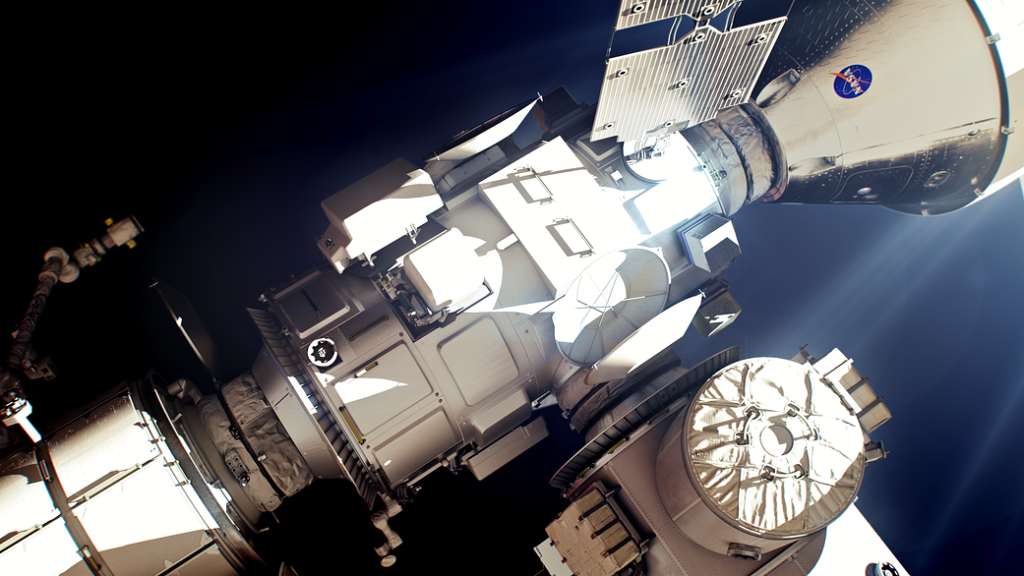
Living beyond Earth is one of the hardest challenges in space exploration. Sending astronauts to the Moon or Mars is difficult, but keeping them alive, healthy, protected, and productive for weeks or months is even harder. A spacecraft can carry people through space, but a habitat must become their home, laboratory, shelter, life-support center, workspace, and safe zone.
NASA space habitat technology in 2026 is not about building a science-fiction city overnight. It is about developing the systems that could make long-duration human presence beyond Earth possible: pressurized modules, life support, radiation protection, water recycling, 3D-printed construction, inflatable structures, surface habitats, analog Mars missions, and lunar infrastructure.
The most accurate way to understand this topic is simple: NASA is building the foundation for future homes beyond Earth step by step. Some technologies are already proven on the International Space Station. Some are being tested in analog habitats on Earth. Some are connected with Artemis and Moon-to-Mars planning. Others are still future concepts that require more testing before astronauts can depend on them.
Editorial Note
This article uses careful wording for reader trust and premium ad-network quality. NASA has not built a permanent human city on the Moon or Mars in 2026. Instead, NASA is developing, testing, and refining habitat-related technologies that could support future lunar and Mars missions.
Confirmed examples include NASA’s Moon to Mars Architecture, Gateway/HALO habitation work, CHAPEA Mars habitat simulations, Environmental Control and Life Support Systems, 3D-printed construction technology, expandable habitat demonstrations, and Johnson Space Center surface habitat engineering. NASA’s Moon to Mars Architecture defines elements needed for long-term human-led scientific discovery in deep space, while its current architecture is organized around Human Lunar Return, Foundational Exploration, Sustained Lunar Evolution, and Humans to Mars.
Key Facts About NASA Space Habitat Technology
| Key Point | Simple Explanation |
|---|---|
| Space habitats must do more than provide shelter | They must support air, water, pressure, temperature, communication, safety, sleep, work, and science. |
| NASA studies habitats for orbit, the Moon, and Mars | Different environments need different designs. |
| Gateway HALO is a lunar-orbit habitation module | HALO is designed to support astronauts living and working near the Moon. |
| CHAPEA simulates Mars habitat life on Earth | Crews live inside a 1,700-square-foot Mars habitat analog to study health and performance. |
| 3D printing may reduce launched materials | NASA and partners are studying construction using local Moon or Mars resources. |
| Life support is central | ECLSS controls air, pressure, oxygen, ventilation, waste, and water supply. |
| Expandable habitats save launch volume | Inflatable or expandable structures launch compactly and expand after deployment. |
| 2026 is a development and planning year | It is not the year NASA completes a permanent Moon or Mars home. |
What Is Space Habitat Technology?
Space habitat technology refers to the systems that allow humans to live and work safely beyond Earth. A habitat is not only a room with walls. It must create a controlled environment in places where humans cannot naturally survive.
On the Moon, there is no breathable atmosphere, temperature swings are extreme, micrometeorites can strike at high speed, and radiation exposure is much higher than on Earth. On Mars, the atmosphere is thin, the air is mostly carbon dioxide, temperatures are cold, dust is a major problem, and radiation remains a serious risk.
A real space habitat must solve several problems at once. It must hold air pressure, supply oxygen, remove carbon dioxide, manage water, regulate temperature, protect against radiation, support hygiene, store food, handle waste, provide communication, support science, and give astronauts enough space to live and work.
That is why NASA’s habitat work connects with many other technologies. A future habitat will need navigation support, communication, power, life support, robotics, environmental monitoring, and safe landing systems. For example, a Mars crew cannot benefit from a habitat if the spacecraft cannot land safely nearby, which connects this topic with NASA Mars atmospheric entry technologies.
Why Space Habitats Are Harder Than Normal Buildings
A house on Earth depends on the environment around it. Earth provides air, gravity, weather protection, a magnetic shield, water systems, roads, supply chains, and emergency services. A space habitat cannot depend on those things.
On the Moon or Mars, a habitat must work like a small artificial Earth. It must keep pressure inside, keep dangerous conditions outside, recycle resources, and operate even when help from Earth is far away.
This is why space habitats are closer to spacecraft than ordinary buildings. Every system must be carefully designed, tested, and maintained. If a wall leaks, if oxygen systems fail, if water recycling stops, or if temperature control breaks, the crew can be in danger.
For readers, the benefit of understanding this topic is clear: space exploration is not only about rockets. Long-term exploration depends on reliable homes beyond Earth.
NASA’s Moon to Mars Habitat Vision
NASA’s Moon to Mars Architecture is the larger planning framework for future human exploration. It is not a single mission or a single building. NASA describes the architecture as a way to define the elements needed for long-term human-led scientific discovery in deep space.
The Moon is especially important because it can act as a testing ground. Technologies developed for lunar operations may help prepare for Mars, where missions will be longer, farther away, and harder to support from Earth.
NASA’s Artemis program is designed to return humans to the Moon, support lunar science, and prepare for future human missions to Mars. NASA’s Artemis overview connects Moon exploration with deep space exploration, Gateway, spacesuits, rovers, commercial lunar payloads, and the broader space economy.
This does not mean Mars homes are ready today. It means NASA is building experience through staged exploration. First come short missions, then longer stays, then more advanced surface systems, and eventually more independent habitats.
Gateway HALO: A Habitat in Lunar Orbit
One of the most important habitation-related projects is HALO, the Habitation and Logistics Outpost. HALO has been described by NASA as Gateway’s first habitation module and a pressurized command hub designed to support astronauts living and working hundreds of thousands of miles from Earth.
NASA’s Gateway page explains that HALO is designed to provide space for astronauts to live, conduct research, manage operations, and prepare for missions to the lunar surface.
HALO is not a large luxury space station. It is a compact deep-space module. That is important because lunar orbit habitats must be efficient. Every kilogram launched into space costs energy, planning, and money. The goal is not comfort in the normal Earth sense. The goal is safe, functional, carefully engineered living and working space.
NASA reported in 2025 that HALO arrived in the United States for final outfitting, with systems such as command and control, data handling, energy storage, power distribution, thermal regulation, and communications/tracking functions connected with the module’s role.
For readers, HALO is a useful example because it shows how a space habitat is more than a bedroom. It is also a control center, research platform, docking node, communication system, and mission support hub.
2026 Update: Habitat Planning Is Changing
NASA habitat planning should be described carefully because space programs evolve. In March 2026, NASA announced initiatives connected with national space policy and described a phased approach to building a lunar base. NASA also said it intended to pause Gateway in its current form and shift focus to infrastructure that enables sustained surface operations, while repurposing applicable equipment and leveraging international partner commitments.
This means writers should avoid outdated or absolute claims such as “Gateway will definitely be the permanent center of every future lunar mission.” The safer wording is that Gateway and HALO are important parts of NASA’s habitation development history and architecture, while 2026 planning emphasizes sustained lunar surface infrastructure.
For AdSense, Journey, Mediavine, and Raptive quality, this kind of careful update matters. Readers trust content more when it explains what is confirmed, what is being tested, and what may change.
CHAPEA: Testing Mars Habitat Life on Earth
NASA’s CHAPEA program is one of the best real-world examples of habitat research. CHAPEA stands for Crew Health and Performance Exploration Analog. NASA describes CHAPEA as a series of missions that simulate year-long stays on the surface of Mars. Each mission includes four crew members living inside an isolated 1,700-square-foot habitat.
The CHAPEA habitat is not on Mars. It is an Earth-based analog habitat at NASA’s Johnson Space Center. But it is designed to help NASA study what long-duration Mars-like living could mean for crew health, behavior, performance, teamwork, food systems, mission tasks, isolation, and stress.
NASA says the 3D-printed CHAPEA structure simulates a Mars habitat to support long-duration, exploration-class space missions, with separate areas for living and working.
This is a strong example for readers because it shows that habitat technology is not only about walls. It is also about human life. Astronauts need privacy, sleep, exercise, food preparation, work areas, medical planning, communication routines, and mental health support.
CHAPEA Mission 2 and the 2026 Connection
The 2026 connection is especially relevant because NASA announced that the second CHAPEA mission began in October 2025 and is planned as a 378-day simulated Mars mission. NASA’s report said the crew entered the habitat on October 19, 2025, marking the start of the second mission.
Another NASA announcement said the Mission 2 crew would live and work like astronauts for 378 days and conclude the mission on October 31, 2026.
This makes CHAPEA one of the most important current examples for a 2026 article. It is not a real Mars base, but it is a serious NASA analog mission collecting data that can support future Mars habitat planning.
Life Support: The Heart of Every Space Habitat
A space habitat is only useful if it can keep people alive. That is why life support systems are central to NASA space habitat technology.
NASA’s Environmental Control and Life Support Systems, or ECLSS, provide or control atmospheric pressure, fire detection and suppression, oxygen levels, ventilation, waste management, and water supply. NASA explains that ECLSS includes three key components: the Water Recovery System, the Air Revitalization System, and the Oxygen Generation System.
In simple words, ECLSS is the system that helps astronauts breathe, drink, stay safe, and live inside a sealed environment.
For long missions, recycling becomes essential. Carrying all water and oxygen from Earth is not practical for sustained exploration. NASA reported that the International Space Station’s ECLSS reached the important goal of recovering 98% of the water that crews bring along at the start of a long journey.
This technology matters beyond space. Water recycling, filtration, air purification, and closed-environment systems can also inspire better environmental technologies on Earth.
Water Recycling: Turning Waste Into Survival
Water is heavy, and launching heavy supplies from Earth is expensive and difficult. A habitat on the Moon or Mars cannot simply depend on frequent water deliveries forever.
That is why water recovery is one of the most important parts of future space homes. In a closed habitat, water can come from humidity, sweat, urine, hygiene systems, and other sources. The goal is to recover, clean, and reuse as much water as possible.
NASA’s work on ECLSS and water recovery shows how the International Space Station acts as a technology testbed for future missions. If astronauts can recycle most of their water in orbit, similar principles can support future habitats on the Moon and Mars.
A simple example is this: if a crew uses water for drinking, food preparation, hygiene, and oxygen generation, the habitat must capture as much used water as possible, purify it, test it, and return it safely to the system. This reduces the need for constant resupply.
3D-Printed Habitat Technology
One of the most exciting areas of NASA habitat research is 3D-printed construction. The idea is to reduce the amount of material launched from Earth by using local resources, such as lunar or Martian soil-like material.
NASA’s 3D-Printed Habitat Challenge was a Centennial Challenges competition designed to advance additive construction technology for sustainable housing solutions on Earth, the Moon, Mars, and beyond. The competition ran in multiple phases and awarded more than $2 million in prize money.
NASA has also supported construction technology for Moon and Mars exploration through partnerships and demonstrations. In 2025, NASA highlighted ICON’s next-generation Vulcan construction system 3D-printing a simulated Mars habitat for CHAPEA missions.
The key benefit is local construction. If astronauts can use resources already available on the Moon or Mars, they may not need to bring every brick, wall panel, or protective layer from Earth.
ICON and Lunar Construction Technology
NASA and ICON have worked on technologies for off-world construction. NASA reported that an SBIR Phase III award supported ICON’s Olympus construction system, which is designed to use local resources on the Moon and Mars as building materials. The contract runs through 2028 and has a value of $57.2 million.
This is not the same as saying NASA has already printed a working city on the Moon. The correct wording is that NASA and partners are advancing construction systems that could one day support lunar and Martian infrastructure.
Why does this matter? Because future habitats may need more than pressurized rooms. They may need landing pads, roads, blast walls, protective berms, storage areas, and equipment shelters. Dust and rocket plume effects can be dangerous on the Moon, so infrastructure may be essential for repeated landings.
MMPACT and Using Local Materials
NASA’s MMPACT project focuses on using lunar in-situ materials for on-demand construction of large-scale infrastructure elements. NASA TechPort describes the project as focused on lunar in-situ materials for construction.
In-situ resource utilization, often called ISRU, means using materials found at the destination instead of carrying everything from Earth. For the Moon, that may involve regolith, the dusty rocky material covering the surface. For Mars, it could involve local soil, atmospheric carbon dioxide, water ice, or other resources, depending on the mission and location.
This is one of the biggest ideas behind future space habitats. If astronauts can build with local materials, long-term exploration becomes more realistic.
Expandable and Inflatable Habitats
Another important idea is expandable habitat technology. Expandable habitats launch in a compact form and then expand after deployment. This can save launch volume while providing more usable interior space.
NASA describes the Bigelow Expandable Activity Module, or BEAM, as an expandable habitat technology demonstration on the International Space Station. NASA explains that expandable habitats require minimal payload volume on a rocket but expand after deployment to potentially provide a comfortable area for astronauts to live and work.
NASA also explains that expandable habitats can weigh less and take up less room on a rocket while allowing additional space for living and working.
This does not mean every future habitat will be inflatable. Some may be rigid metal modules. Some may be hybrid systems. Some may be covered by regolith for protection. But expandable habitats remain important because launch volume is one of the biggest limitations in space architecture.
Surface Habitats: Living on the Moon or Mars
A surface habitat is different from a spacecraft cabin or orbital module. It must operate on another world’s surface.
NASA’s Johnson Space Center describes itself as a leader in the design, development, testing, and verification of habitation systems used to support astronauts living and working comfortably and safely in space. Its surface habitat work includes design and testing of in-space and surface inflatable softgoods, airlocks, pressurized transfer tunnels, structural restraint layers, and material testing.
This matters because a habitat must survive real engineering stress. Materials must handle pressure loads, temperature changes, radiation exposure, micrometeorite risk, abrasion, dust, and repeated crew use.
A lunar habitat may need airlocks, dust-control systems, spacesuit interfaces, power connections, storage, robotics support, radiation shielding, and emergency backup systems.
Radiation Protection: A Major Design Challenge
Radiation is one of the biggest challenges for homes beyond Earth. On Earth, the atmosphere and magnetic field provide strong natural protection. On the Moon and Mars, astronauts have far less protection.
Habitats may need shielding through materials, water storage, regolith cover, storm shelters, or location choices. A habitat could include a protected room where astronauts go during solar particle events. Designers may also use equipment, supplies, or water tanks as part of the shielding strategy.
This connects with your article on NASA magnetosphere observation missions, because Earth’s magnetic shield helps explain why radiation protection becomes harder beyond our planet.
A good reader-friendly explanation is this: Earth already gives us a natural shield. Space habitats must create artificial protection where nature does not provide enough.
Dust: The Hidden Enemy of Moon and Mars Habitats
Dust may sound like a small problem, but on the Moon and Mars it can become a serious engineering challenge.
Lunar dust is sharp, abrasive, and electrostatically sticky. It can cling to suits, seals, tools, solar panels, and equipment. Martian dust can cover solar panels, enter mechanical systems, and reduce visibility during storms.
A future habitat must manage dust carefully. Airlocks may need dust removal systems. Spacesuits may need to stay outside or attach to suitports. Filters must protect indoor air. Doors, seals, and mechanical parts must be designed to handle dust exposure.
This is one reason habitat design is not only architecture. It is also environmental engineering.
Power and Energy Storage
A habitat cannot survive without power. Power is needed for oxygen production, water recycling, heating, cooling, communication, computing, lighting, science equipment, air circulation, medical systems, and emergency systems.
Future lunar habitats may use solar power, batteries, fuel cells, nuclear power systems, or a combination of technologies. At the lunar south pole, some locations may receive long periods of sunlight, but power planning remains difficult because shadows, terrain, and lunar night conditions can create challenges.
Energy storage is as important as energy generation. A habitat must keep working when sunlight is unavailable or when systems need backup power.
This is why NASA habitat technology must connect with power infrastructure. A home beyond Earth is only as reliable as the systems that keep it alive.
Communication: A Habitat Must Stay Connected
A space habitat also needs communication. Crews must talk to mission control, send science data, receive updates, monitor systems, and coordinate with rovers, landers, satellites, or other habitats.
For lunar and Mars missions, communication systems must handle delays, limited windows, relay networks, and possible disruptions. That is why future habitats connect naturally with NASA deep space laser communication.
A simple example is a Mars habitat. A message from Mars to Earth cannot arrive instantly. The habitat must support delayed communication, autonomous operations, data storage, and emergency procedures. Crew members may need to solve problems locally before Earth can respond.
Robotics and Autonomous Habitat Support
Future space habitats may use robots for construction, inspection, maintenance, cargo movement, and emergency support.
Robots could help prepare a landing site before astronauts arrive. They could build protective berms, inspect habitat walls, move cargo, clean dust, check power systems, or assist with repairs. This reduces risk for astronauts and allows infrastructure to be prepared before crewed missions.
This connects with NASA AI navigation systems for deep space, because future habitats may depend on autonomous robots that can move safely across lunar or Martian terrain.
The realistic future is not robots replacing astronauts. It is robots helping astronauts live and work more safely.
How Habitat Technology Helps Future Mars Missions
Mars is much harder than the Moon in some ways. It is farther away, communication delays are longer, resupply is more difficult, and emergency return is not simple.
A Mars habitat must support long-duration living. It may need to operate before astronauts arrive, survive dust storms, manage limited resources, recycle water, support food systems, and protect the crew from radiation.
CHAPEA helps NASA study the human side of this challenge. 3D printing and ISRU research help address construction. ECLSS helps address air and water. Autonomous systems help address delays and maintenance.
For readers, the main idea is this: a Mars habitat must be more independent than a lunar habitat because Mars is much farther from Earth.
Practical Example: A Future Lunar Habitat
Imagine a future lunar habitat near the Moon’s south pole.
Before astronauts arrive, robotic systems inspect the area, prepare power systems, and help place cargo. A pressurized habitat is delivered and checked remotely. Solar arrays and batteries provide power. Communication relays connect the habitat with Earth. A rover supports surface travel. An airlock helps astronauts exit and re-enter safely.
Inside the habitat, ECLSS controls oxygen, pressure, humidity, carbon dioxide, and water. Crew members sleep, eat, exercise, conduct science, maintain equipment, and plan surface operations. During high-radiation events, they move into a more protected area.
This example shows why a habitat is a complete system, not just a building.
Practical Example: A Future Mars Habitat
Now imagine a future Mars habitat.
It may be delivered before the crew arrives. Robotic systems could verify pressure integrity, test power systems, check life support, and prepare supplies. The habitat may use local resources where possible, such as carbon dioxide from the Martian atmosphere or water ice from nearby deposits.
When astronauts arrive, they need a safe place immediately. The habitat must support months of living and working. It must handle dust, delayed communication, limited resupply, health monitoring, exercise, food systems, science work, and emergency planning.
This is why NASA tests Mars habitat concepts on Earth before sending humans to Mars.
Confirmed Facts vs Future Possibilities
| Confirmed Fact | Future Possibility |
|---|---|
| NASA’s Moon to Mars Architecture defines elements for long-term human-led exploration. | Future lunar infrastructure may support longer surface stays and Mars preparation. |
| HALO is a Gateway habitation module developed for lunar-orbit operations. | Some Gateway-related hardware or systems may be repurposed as plans evolve. |
| CHAPEA simulates year-long Mars habitat missions on Earth. | CHAPEA data may improve future Mars habitat design and crew planning. |
| NASA’s ECLSS provides or controls air, oxygen, pressure, water, waste, and ventilation. | Future systems may become more closed-loop and independent for Mars missions. |
| NASA’s 3D-Printed Habitat Challenge advanced additive construction concepts. | Future habitats may use local regolith-based construction on the Moon or Mars. |
| BEAM demonstrated expandable habitat technology on the ISS. | Future expandable habitats may provide larger living volumes with lower launch volume. |
| NASA announced a phased lunar base approach in 2026. | Surface infrastructure may become a stronger priority for sustained lunar operations. |
What People Often Get Wrong
One common misunderstanding is that NASA already has a finished Moon city or Mars base in 2026. That is not correct. NASA is developing technologies, testing systems, and planning staged exploration.
Another misunderstanding is that a habitat is simply a house. In reality, a space habitat is closer to a life-supporting spacecraft that happens to stay in one location.
A third misunderstanding is that 3D printing alone solves the habitat problem. 3D printing may help create structures, but astronauts still need pressure vessels, airlocks, power, life support, communication, radiation protection, and maintenance systems.
A fourth misunderstanding is that living on Mars will be easy once rockets arrive. In reality, the habitat challenge may be one of the hardest parts of human Mars exploration.
Reader Benefits: Why This Topic Matters
Understanding NASA space habitat technology helps readers see the real future of human space exploration.
First, it explains why long-term Moon and Mars missions require more than rockets.
Second, it shows how life support, water recycling, and air systems keep astronauts alive.
Third, it helps readers understand why NASA tests Mars-like habitats on Earth before sending humans to Mars.
Fourth, it explains why 3D printing and local materials could reduce dependence on Earth.
Fifth, it shows why radiation, dust, power, and communication are serious design challenges.
Sixth, it gives readers a realistic view of future space homes without exaggeration or science-fiction claims.
Challenges NASA Must Still Solve
Space habitat technology still faces major challenges.
Habitats must be lightweight enough to launch but strong enough to protect crews. Life support must be reliable for long missions. Water recycling must work with minimal failure. Air systems must remove carbon dioxide and maintain oxygen. Power must remain available during darkness or emergencies. Dust must be controlled. Radiation protection must be improved. Crew health and mental well-being must be supported.
Maintenance is another major issue. On Earth, if a system breaks, parts can be delivered quickly. On the Moon, repairs are harder. On Mars, they are much harder. Future habitats must be repairable by astronauts with limited tools, spare parts, and Earth support.
This is why NASA’s habitat work is slow and careful. A space home cannot be experimental in the same way a normal building can be. It must be safe before humans depend on it.
Future Outlook: Will Humans Live Beyond Earth?
Humans may live and work beyond Earth for longer periods in the future, but this will happen gradually. The likely path is not instant colonization. It is step-by-step exploration.
First, astronauts return to the Moon. Then missions become longer. Then surface systems improve. Then habitats, rovers, power systems, landing systems, and communication networks become more capable. Over time, the same lessons help prepare for Mars.
NASA’s 2026 habitat-related work should be viewed as part of that long-term path. It includes real engineering, real testing, and real planning, but it is not yet a completed permanent settlement.
The future of homes beyond Earth will likely combine many technologies: rigid modules, expandable structures, 3D-printed shielding, local materials, water recycling, closed-loop life support, robotics, AI support, communication relays, and human-centered design.
Frequently Asked Questions
What is NASA space habitat technology?
NASA space habitat technology includes the systems needed for astronauts to live and work safely beyond Earth, including pressurized structures, life support, water recycling, air systems, radiation protection, power, communication, waste management, and crew living areas.
Has NASA built a permanent Moon base in 2026?
No. NASA has not completed a permanent Moon base in 2026. NASA is developing and testing technologies that could support future lunar surface infrastructure and longer-duration missions.
What is CHAPEA?
CHAPEA is NASA’s Crew Health and Performance Exploration Analog. It is a series of Earth-based missions that simulate year-long stays on the surface of Mars inside a 1,700-square-foot habitat.
What is HALO?
HALO stands for Habitation and Logistics Outpost. It is a habitation module developed for Gateway, designed to support astronauts living and working in lunar orbit.
Why is life support important in space habitats?
Life support is essential because astronauts need breathable air, clean water, pressure control, ventilation, temperature regulation, waste management, and safety systems inside a sealed habitat.
Can NASA 3D-print habitats on the Moon or Mars?
NASA has supported 3D-printed habitat research and construction technology development, but fully operational 3D-printed lunar or Mars habitats are still future goals, not completed settlements.
Why are expandable habitats useful?
Expandable habitats can launch in a compact form and expand after deployment, saving rocket volume while providing more interior space for astronauts.
What is the biggest challenge for Mars habitats?
Mars habitats must handle radiation, dust, long mission durations, limited resupply, communication delays, life support reliability, crew health, and high independence from Earth.
Why does NASA test Mars habitats on Earth?
NASA uses analog habitats like CHAPEA to study crew behavior, health, performance, isolation, mission tasks, food systems, and operational challenges before sending humans to Mars.
Will space habitats benefit Earth technology?
Yes. Research into water recycling, air purification, waste management, efficient construction, robotics, and sustainable living systems can inspire useful technologies on Earth.
Conclusion
NASA space habitat technology in 2026 is about building the foundation for future homes beyond Earth. It is not about claiming that permanent Moon or Mars cities already exist. The real story is more practical and more valuable: NASA is testing the systems that could one day allow astronauts to live safely in deep space.
Gateway HALO shows how compact orbital habitats can support lunar missions. CHAPEA shows how NASA studies Mars-like living conditions on Earth. ECLSS shows how air, water, oxygen, and waste systems make survival possible. 3D printing and local-material construction show how future habitats may reduce dependence on Earth. Expandable habitats show how engineers can create more living volume from limited rocket space.
For readers, the lesson is simple: rockets may take astronauts beyond Earth, but habitats will allow them to stay. Building homes beyond Earth requires engineering, biology, architecture, robotics, life support, psychology, power systems, and careful planning working together.
The future of human exploration will not be built by one invention. It will be built by many tested technologies combining into safe, sustainable, human-centered habitats. That is why NASA space habitat technology remains one of the most important foundations for the next era of space exploration.
Sources and Further Reading
NASA Moon to Mars Architecture
NASA Moon to Mars Architecture Components
NASA Artemis Program
NASA Gateway Overview
NASA HALO Gateway Module Update
NASA CHAPEA
NASA CHAPEA Habitat
NASA Environmental Control and Life Support Systems
NASA Water Recovery Milestone on the ISS
NASA 3D-Printed Habitat Challenge
NASA and ICON Lunar Construction Technology
NASA Bigelow Expandable Activity Module
NASA Johnson Space Center Surface Habitats