Pluto is no longer called the ninth planet in the official planetary list, but scientifically, it has never stopped being one of the most fascinating worlds in the solar system.
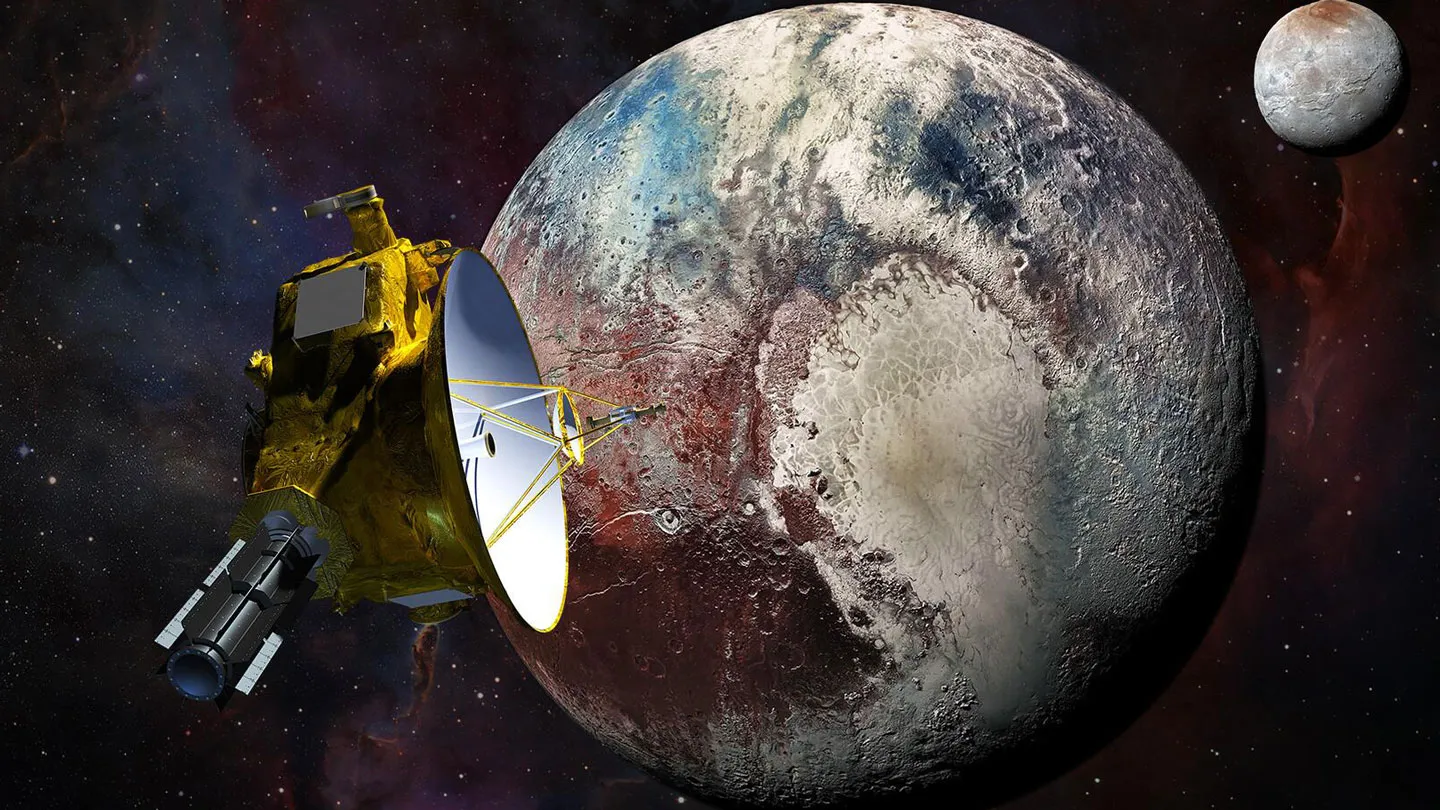
Before NASA’s New Horizons spacecraft reached Pluto in 2015, Pluto was mostly a distant dot in telescope images. Scientists knew it was cold, small, and far away, but they did not know how complex it really was. Then New Horizons flew past Pluto and changed the story completely.
The spacecraft revealed icy mountains, smooth nitrogen-ice plains, hazy atmospheric layers, possible cryovolcanic features, strange surface chemistry, and a surprisingly active dwarf planet at the edge of the solar system.
That historic flyby created a new question:
Should NASA go back?
NASA Pluto Flyby Follow-Up Mission 2026 is a powerful topic, but it must be explained carefully. As of 2026, NASA has not approved a new dedicated Pluto flyby or Pluto orbiter mission for launch in 2026. The real story is more accurate and more interesting: scientists are studying how a future Pluto follow-up mission could work, what it might discover, and why the dwarf planet frontier still matters after New Horizons.
NASA’s official Pluto exploration page states that New Horizons was the first and, so far, only mission to Pluto. NASA’s New Horizons mission page also explains that the spacecraft flew by Pluto in 2015 and later explored the Kuiper Belt object Arrokoth in 2019.
In simple words, a Pluto follow-up mission is not yet a confirmed 2026 launch. It is a future mission idea built on a real scientific need: New Horizons gave humanity a fast, close look at Pluto, but it could not stay there. A future mission could return with more time, better instruments, and possibly an orbiter to study Pluto and its moons in detail.
For readers who want related background, our guide on NASA Kuiper Belt Explorer Proposals 2026 explains why Pluto is part of a much larger outer solar system frontier.
Editorial Note
This article uses careful confirmed-vs-future wording for Raptive, Mediavine, Journey, and AdSense-quality publishing.
NASA has not confirmed a mission officially named “Pluto Flyby Follow-Up Mission 2026.” The confirmed mission is New Horizons, which flew by Pluto in 2015 and continues extended operations in the outer solar system.
Future Pluto follow-up missions, including Pluto orbiter concepts, Kuiper Belt explorer concepts, and advanced propulsion ideas, should be described as proposed concepts, scientific studies, or future possibilities unless NASA officially selects and funds such a mission.
This article avoids false claims, exaggerated launch timelines, and unsupported wording.
Key Facts About NASA Pluto Flyby Follow-Up Mission 2026
| Feature | Details |
|---|---|
| Main Topic | NASA Pluto Flyby Follow-Up Mission 2026 |
| Correct Status | No confirmed dedicated NASA Pluto follow-up launch in 2026 |
| Confirmed Pluto Mission | NASA’s New Horizons |
| Pluto Flyby Date | July 14, 2015 |
| New Horizons Launch Date | January 19, 2006 |
| Second Major Target | Arrokoth, a Kuiper Belt object, visited in 2019 |
| Current Mission Status | Extended outer solar system and Kuiper Belt science |
| Future Mission Possibility | Pluto orbiter, Kuiper Belt explorer, or advanced propulsion mission |
| Main Scientific Need | Long-term study of Pluto’s surface, atmosphere, moons, and interior |
| Best Reader Understanding | A future follow-up mission is scientifically valuable but not yet an approved 2026 NASA mission |
These facts are important because the title can easily sound like NASA has already scheduled a new Pluto spacecraft for 2026. That is not the confirmed situation. The accurate article angle is that Pluto remains a major future exploration target after New Horizons.
Why Pluto Still Matters After New Horizons
Pluto matters because it is not a dead frozen rock.
New Horizons revealed a world with complex geology, active-looking surface regions, volatile ices, haze layers, mountains, plains, and a dynamic relationship with its moons. Pluto’s famous heart-shaped region, Tombaugh Regio, became one of the most recognizable images in planetary science.
NASA’s Pluto overview explains that Pluto is a dwarf planet located in the Kuiper Belt, the distant region beyond Neptune. The Kuiper Belt is scientifically important because it contains icy bodies that preserve clues from the early solar system.
Pluto is valuable because it is both a dwarf planet and a Kuiper Belt object. That means studying Pluto helps scientists understand not only one world, but also the broader population of icy objects beyond Neptune.
A follow-up mission could help answer questions New Horizons could not fully solve.
What powers Pluto’s geological activity?
How does its thin atmosphere change over time?
Does Pluto have a subsurface ocean?
How do Pluto and Charon influence each other?
What can Pluto teach us about the early solar system?
These are serious scientific questions, not just nostalgia for the old “ninth planet” idea.
New Horizons: The Mission That Changed Pluto Forever
NASA launched New Horizons on January 19, 2006. After a long journey, it flew past Pluto on July 14, 2015. NASA describes New Horizons as the first spacecraft to explore Pluto and its moons up close through the official New Horizons mission page.
The spacecraft did not orbit Pluto. It performed a fast flyby. That means it collected data during a short encounter window as it passed through the Pluto system.
This was still a historic achievement.
New Horizons gave scientists the first close-up images of Pluto and Charon. It measured Pluto’s atmosphere, studied surface composition, observed geology, and discovered details that could never be seen clearly from Earth.
After Pluto, New Horizons continued deeper into the Kuiper Belt. On January 1, 2019, it flew past Arrokoth, making the first close exploration of a Kuiper Belt object beyond Pluto.
This matters because New Horizons was not only a Pluto mission. It became a mission to the outer frontier of the solar system.
For more outer-solar-system context, readers can explore our article on NASA Next Gen Space Telescopes Tech 2026, where future telescopes also help scientists study distant worlds that spacecraft cannot easily reach.
Why a Flyby Was Not Enough
A flyby mission is powerful, but it has limits.
New Horizons passed Pluto quickly. It could not stop, orbit, or observe seasonal changes over many years. It could not map every region at equal resolution. It could not repeatedly study the same surface features under changing sunlight.
A flyby is like taking a high-speed snapshot of a world.
An orbiter is like moving into the neighborhood.
That is why many scientists have discussed the value of a Pluto orbiter or a broader Pluto-Kuiper Belt explorer. An orbiter could study Pluto for months or years. It could map the entire surface, track atmospheric changes, study Charon and the smaller moons, and investigate whether Pluto has an internal ocean.
New Horizons answered many questions, but it also created new ones.
That is often how good exploration works. The first mission reveals enough to prove that a second mission is worth considering.
What Would a Pluto Follow-Up Mission Study?
A serious Pluto follow-up mission could investigate several major science areas.
First, it could study Pluto’s surface geology in detail. New Horizons saw icy plains, mountains, possible cryovolcanic features, and strange landforms. A future mission could map these features more completely.
Second, it could study Pluto’s atmosphere. Pluto has a thin atmosphere mostly made of nitrogen, with traces of methane and carbon monoxide. Because Pluto’s orbit is highly elliptical, scientists want to understand how the atmosphere changes as Pluto moves farther from the Sun.
Third, it could study Charon. Pluto’s largest moon is so big compared with Pluto that the two worlds are often described as a double system. Charon has its own geology, canyons, surface color differences, and history.
Fourth, it could investigate Pluto’s interior. Some scientists have proposed that Pluto may contain a subsurface ocean beneath its icy crust. A future orbiter with the right instruments could help test that idea.
Fifth, it could study the smaller moons: Styx, Nix, Kerberos, and Hydra. These moons have unusual rotations and may preserve clues about the formation of the Pluto system.
Sixth, it could continue outward to study more Kuiper Belt objects, depending on mission design.
This is why a follow-up mission could be scientifically valuable.
Example: Why a Pluto Orbiter Would Be More Powerful Than a Flyby
Imagine visiting a city for only five minutes while driving past it at highway speed. You might see a few buildings, a river, some roads, and a skyline. You would learn something, but you would miss most of the story.
Now imagine staying in that city for one year. You could study neighborhoods, weather, traffic patterns, history, people, and seasonal changes.
New Horizons was the high-speed drive-by.
A Pluto orbiter would be the long-term stay.
That is the main scientific argument for a follow-up mission. New Horizons showed Pluto was worth studying. A future orbiter could study it properly over time.
Pluto Orbiter Concepts: Future Possibility, Not Confirmed Mission
Several Pluto follow-up concepts have been discussed in the scientific community.
One important concept is a Pluto orbiter and Kuiper Belt exploration mission sometimes associated with the name Persephone. The Southwest Research Institute describes a study that developed a mission concept capable of orbiting Pluto and later touring the Kuiper Belt. You can read the overview here: Pluto Orbiter and Kuiper Belt Exploration Mission.
This type of mission would be much more ambitious than New Horizons. It would not simply fly past Pluto. It would enter orbit, observe the Pluto system for an extended period, and potentially continue to another Kuiper Belt target.
NASA has also supported early-stage advanced concept studies related to Pluto exploration. One example is the NIAC-supported Fusion-Enabled Pluto Orbiter and Lander, which examined whether advanced propulsion could make a Pluto orbiter and lander concept more feasible.
However, these concepts should not be described as approved NASA missions. They are studies or early-stage concepts, not confirmed 2026 launches.
That distinction is essential for trust.
Why Getting Back to Pluto Is So Hard
Pluto is extremely far away.
New Horizons took more than nine years to reach Pluto, and it was one of the fastest spacecraft ever launched from Earth. A future orbiter would face an even harder problem because it would need to slow down when it reached Pluto.
A flyby spacecraft can pass quickly.
An orbiter must brake.
That braking requires fuel, advanced propulsion, gravity assists, or other mission design strategies. The spacecraft must also survive long travel times, cold temperatures, low sunlight, and deep-space communication delays.
Solar power is weak at Pluto’s distance, so missions usually require nuclear power sources such as radioisotope power systems. These are valuable but limited resources.
Communication is also difficult. Signals from Pluto take hours to reach Earth, and data rates are low compared with missions near Earth or Mars.
This is why Pluto follow-up missions are challenging. The science case is strong, but the engineering is difficult and expensive.
Flyby Mission vs Orbiter Mission
| Feature | Pluto Flyby Mission | Pluto Orbiter Mission |
|---|---|---|
| Example | New Horizons | |
| Time at Pluto | Short encounter period | |
| Main Strength | Faster and simpler than orbit insertion | |
| Main Limitation | Cannot stay and observe long-term changes | |
| Science Return | High-value first reconnaissance | |
| Orbiter Advantage | Long-term mapping and repeated observations | |
| Orbiter Challenge | Needs major propulsion and power capability | |
| Best Use | First exploration or fast target reconnaissance | |
| Future Value | Useful for additional Kuiper Belt flybys | |
| Best Follow-Up | Orbiter if cost, power, and propulsion allow |
A future NASA Pluto follow-up mission might not repeat New Horizons exactly. The strongest scientific case would likely be for an orbiter, because it could do what a flyby cannot.
New Horizons in 2026: Still Exploring the Frontier
New Horizons is not at Pluto anymore. It is far beyond it, continuing through the outer solar system.
NASA announced in 2023 that New Horizons would continue operations until the spacecraft exits the Kuiper Belt, expected around 2028 through 2029. NASA explained the extension through its update: NASA’s New Horizons to Continue Exploring Outer Solar System.
NASA also reported that New Horizons entered its longest hibernation period, with the spacecraft possibly being awakened in late June 2026 depending on final fiscal year 2026 budget decisions. You can read the update here: NASA’s New Horizons Enters Mission’s Longest Hibernation Period.
This means New Horizons remains part of the 2026 outer solar system story, but it is not returning to Pluto. It is continuing outward, making distant observations and studying the space environment near the edge of the Kuiper Belt.
That is different from a dedicated Pluto follow-up mission.
Why the Kuiper Belt Makes Pluto Even More Important
The Kuiper Belt is a vast region of icy bodies beyond Neptune. NASA describes it as a doughnut-shaped region that contains Pluto, most known dwarf planets, and many comets. You can read NASA’s overview here: The Kuiper Belt.
Pluto is the most famous Kuiper Belt world, but it is not alone.
Other dwarf planets and icy bodies in the Kuiper Belt may preserve material from the early solar system. Studying them helps scientists understand how planets formed, how Neptune migrated, and how small icy worlds evolved over billions of years.
A Pluto follow-up mission could therefore be more than a Pluto mission. It could be part of a larger Kuiper Belt exploration strategy.
This connects directly with our related article on NASA Kuiper Belt Explorer Proposals 2026, which explains why future missions may target multiple icy bodies beyond Neptune.
What a Future Pluto Mission Could Carry
A future Pluto follow-up spacecraft would likely need a powerful science payload.
Possible instruments could include:
High-resolution cameras for surface mapping.
Infrared spectrometers for identifying ices and organic compounds.
Ultraviolet instruments for studying Pluto’s atmosphere.
Thermal instruments for measuring surface temperatures.
Plasma and particle instruments for studying solar wind interaction.
Radio science systems for atmosphere and gravity studies.
Radar or gravity instruments for probing interior structure.
A future orbiter could also study how Pluto changes over time. That is important because Pluto’s atmosphere and surface ices may be seasonal. A short flyby cannot fully capture long-term behavior.
A more advanced mission could even include a small lander or atmospheric probe, but that would be much more difficult and expensive. Such ideas should be described as future concepts, not confirmed NASA plans.
Example: What Scientists Could Learn From Pluto’s Atmosphere
Pluto’s atmosphere is thin, cold, and fragile. It is mainly nitrogen, with methane and carbon monoxide also present.
As Pluto moves farther from the Sun, scientists want to understand whether parts of its atmosphere freeze onto the surface. New Horizons provided a close look during one period of Pluto’s orbit, but Pluto’s seasons are extremely long.
A future mission could repeatedly measure atmospheric pressure, haze layers, escape rates, and surface frost changes.
That would help scientists understand how small icy worlds keep or lose atmospheres.
This matters beyond Pluto. Similar processes may occur on other dwarf planets, icy moons, and Kuiper Belt objects.
Pluto, Charon, and the Double-World Mystery
One reason Pluto is scientifically special is Charon.
Charon is Pluto’s largest moon, but it is unusually large compared with Pluto itself. The Pluto-Charon system is sometimes described as a double dwarf-planet system because both bodies orbit a center of mass outside Pluto.
New Horizons showed that Charon is not just a simple icy moon. It has canyons, plains, color variations, and signs of a complex past.
A future Pluto orbiter could study Charon in much greater detail. It could map its surface, investigate its geology, study its interaction with Pluto, and examine how the smaller moons behave in the system.
This kind of long-term study would help scientists understand how large impacts, tidal interactions, and icy geology shape distant worlds.
Confirmed Facts vs Future Possibilities
| Topic | Confirmed Fact | Future Possibility |
|---|---|---|
| New Horizons | First and only spacecraft to visit Pluto | |
| Pluto follow-up mission in 2026 | No confirmed NASA launch with this exact mission name | |
| New Horizons status | Extended outer solar system mission continues toward Kuiper Belt exit | |
| Pluto orbiter | Studied as a concept, not currently approved as a NASA flight mission | |
| Pluto lander | Advanced concept idea, not confirmed mission | |
| Kuiper Belt explorer | Scientifically valuable future mission direction | |
| Return to Pluto | Strong science case, but requires funding, selection, and difficult engineering | |
| 2026 article framing | Current discussion and future mission pathway, not operational mission |
This table is important for publishing quality. It protects the article from sounding misleading while still keeping the topic exciting.
How a Pluto Follow-Up Mission Connects to Future Space Technology
A Pluto follow-up mission would require more than scientific interest. It would require advanced technology.
Deep-space communication would be essential because Pluto is billions of miles from Earth. NASA’s future optical communication systems could eventually help outer solar system missions send more data, though deep-space laser communication at Pluto distances would be very challenging. For a related technology overview, read our article on NASA Deep Space Laser Communication 2026.
Autonomy would also matter. A spacecraft near Pluto cannot wait for instant commands from Earth. It would need onboard systems to manage observations, protect itself, and respond to unexpected conditions.
Reusable or advanced interplanetary spacecraft ideas may also influence future mission planning. Our guide on NASA Reusable Interplanetary Spacecraft 2026 explains why long-distance missions need better propulsion, power, sustainability, and mission architecture.
Robotic coordination may matter too, especially if future outer solar system missions ever use deployable probes, small landers, or distributed instruments. You can explore that wider concept in our article on NASA Robotic Swarm for Planetary Mapping 2026.
Why 2026 Matters for the Pluto Follow-Up Discussion
The year 2026 matters because Pluto exploration is entering a new phase of discussion.
New Horizons is more than a decade past its Pluto flyby.
The spacecraft is still contributing outer solar system science.
Pluto remains scientifically important because New Horizons revealed unexpected complexity.
Mission concepts for Pluto orbiters and Kuiper Belt explorers have shown that future missions are possible in principle.
Outer solar system exploration is now connected with broader questions about planetary formation, icy worlds, subsurface oceans, and the early solar system.
However, 2026 should not be described as the launch year of a confirmed NASA Pluto follow-up mission unless NASA officially announces one.
The best Raptive-safe wording is:
“In 2026, Pluto follow-up mission discussions remain scientifically important, but a dedicated NASA return mission has not yet been approved.”
Strengths of a Future Pluto Follow-Up Mission
A future Pluto mission would have several strengths.
It could study Pluto for much longer than New Horizons.
It could map the entire surface at higher resolution.
It could observe seasonal changes in Pluto’s atmosphere and surface ices.
It could study Charon and the smaller moons in detail.
It could investigate whether Pluto has a subsurface ocean.
It could compare Pluto with other Kuiper Belt objects.
It could help scientists understand how small icy worlds remain active far from the Sun.
It could inspire public interest in planetary science.
These strengths explain why many planetary scientists continue to see Pluto as a valuable target.
Main Challenges of Returning to Pluto
The challenges are serious.
Pluto is extremely far away.
A mission could take many years or decades.
Power is difficult because sunlight is weak.
Communication delays are long.
Data transmission is slow.
Orbit insertion requires major propulsion capability.
Mission cost could be high.
Nuclear power availability may limit mission options.
NASA must prioritize many competing targets, including Mars, the Moon, Venus, icy moons, asteroids, and outer planets.
A fair article should mention these challenges. A Pluto follow-up mission is exciting, but it is not easy.
What People Often Get Wrong About a NASA Pluto Follow-Up Mission
Many people think NASA already has a confirmed Pluto return mission launching in 2026. That is not correct.
Another mistake is thinking New Horizons can turn around and revisit Pluto. It cannot. New Horizons is traveling outward through the outer solar system.
Some people think Pluto was fully understood after the 2015 flyby. In reality, New Horizons revealed many new mysteries.
Another misunderstanding is thinking a second mission would only be about Pluto’s planet status. The scientific reason to return is not about the label “planet” or “dwarf planet.” It is about geology, atmosphere, moons, interiors, and Kuiper Belt science.
A final mistake is assuming a flyby and an orbiter are the same. A flyby gives fast reconnaissance. An orbiter gives long-term study.
Timeline: Pluto Exploration and Follow-Up Mission Ideas
| Year or Period | Event |
|---|---|
| 1930 | Pluto discovered by Clyde Tombaugh |
| 2006 | NASA launches New Horizons |
| 2006 | International Astronomical Union reclassifies Pluto as a dwarf planet |
| 2015 | New Horizons flies past Pluto and its moons |
| 2019 | New Horizons flies past Arrokoth in the Kuiper Belt |
| 2023 | NASA extends New Horizons operations toward Kuiper Belt exit |
| 2025–2026 | New Horizons continues outer solar system mission planning and hibernation cycles |
| 2026 | Pluto follow-up remains a future mission concept, not a confirmed NASA launch |
| Future | A Pluto orbiter or Kuiper Belt explorer could revisit the dwarf planet frontier if selected and funded |
This timeline shows the correct story. Pluto exploration did not end in 2015, but a confirmed NASA return mission has not yet begun.
Practical Reader Takeaway
NASA Pluto Flyby Follow-Up Mission 2026 should be understood as a future exploration discussion, not an approved launch.
The confirmed mission is New Horizons. It visited Pluto in 2015, explored Arrokoth in 2019, and continues outward through the Kuiper Belt.
The future possibility is a Pluto orbiter or broader Kuiper Belt explorer that could return to the dwarf planet frontier with better instruments and more time.
The scientific case is strong because Pluto is geologically complex, atmospheric, icy, and connected to the early history of the solar system.
The engineering challenge is also strong because Pluto is far away, cold, difficult to reach, and difficult to orbit.
The most accurate conclusion is this:
NASA has not confirmed a Pluto follow-up mission for launch in 2026, but Pluto remains one of the most compelling future targets in planetary science.
Frequently Asked Questions
What is NASA Pluto Flyby Follow-Up Mission 2026?
NASA Pluto Flyby Follow-Up Mission 2026 is best understood as a future mission topic or concept discussion, not a confirmed NASA launch. It refers to the scientific interest in returning to Pluto after New Horizons.
Has NASA approved a new Pluto mission for 2026?
No. NASA has not confirmed a dedicated Pluto follow-up mission launching in 2026.
What was the first mission to Pluto?
NASA’s New Horizons was the first and so far only spacecraft to visit Pluto. It flew by Pluto on July 14, 2015.
Is New Horizons going back to Pluto?
No. New Horizons is continuing outward through the outer solar system and the Kuiper Belt. It cannot turn around and revisit Pluto.
Why do scientists want to return to Pluto?
Scientists want to study Pluto’s geology, atmosphere, moons, surface ices, possible interior ocean, seasonal changes, and relationship with the Kuiper Belt.
Would a future Pluto mission be a flyby or an orbiter?
A future mission could be a flyby, but an orbiter would provide much deeper science because it could study Pluto over a long period.
What is a Pluto orbiter?
A Pluto orbiter would be a spacecraft designed to enter orbit around Pluto and repeatedly observe the dwarf planet and its moons.
Why is a Pluto orbiter difficult?
A Pluto orbiter is difficult because the spacecraft must travel billions of miles and then slow down enough to enter orbit. That requires major propulsion, power, and mission design capability.
What did New Horizons discover at Pluto?
New Horizons revealed icy mountains, nitrogen-ice plains, atmospheric haze, complex geology, and a surprisingly active dwarf planet system.
Why is Pluto important if it is a dwarf planet?
Pluto is important because it is a complex Kuiper Belt world. Its scientific value does not depend on whether it is called a planet or dwarf planet.
Conclusion
NASA Pluto Flyby Follow-Up Mission 2026 is an exciting topic, but it must be explained accurately.
The real story is not that NASA has already launched or approved a new Pluto mission for 2026. The real story is that New Horizons transformed Pluto from a distant mystery into a scientifically rich world, and that transformation created a strong case for future exploration.
A follow-up mission could study Pluto’s surface, atmosphere, moons, interior, and seasonal changes in ways New Horizons could not. A Pluto orbiter would be especially powerful because it could remain in the system and observe changes over time.
But Pluto is difficult to reach. A return mission would require long travel times, advanced propulsion, nuclear power, deep-space communication, and major funding.
That is why Pluto remains both a dream and a serious scientific target.
New Horizons gave humanity the first chapter. A future Pluto follow-up mission could write the next one.
Until NASA officially selects such a mission, the safest and most accurate wording is clear: Pluto is a compelling future destination, but a dedicated NASA Pluto follow-up mission is not confirmed for 2026.
Sources and Further Reading
NASA: New Horizons Mission
NASA: Pluto Exploration
NASA: Pluto Overview
NASA: The Kuiper Belt
NASA: New Horizons to Continue Exploring Outer Solar System
NASA: New Horizons Enters Mission’s Longest Hibernation Period
Johns Hopkins APL: New Horizons Mission
Southwest Research Institute: Pluto Orbiter and Kuiper Belt Exploration Mission
NASA NIAC: Fusion-Enabled Pluto Orbiter and Lander
Internal Links Used
NASA Kuiper Belt Explorer Proposals 2026
NASA Next Gen Space Telescopes Tech 2026
NASA Deep Space Laser Communication 2026
NASA Reusable Interplanetary Spacecraft 2026
NASA Robotic Swarm for Planetary Mapping 2026