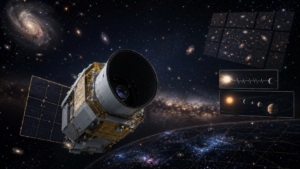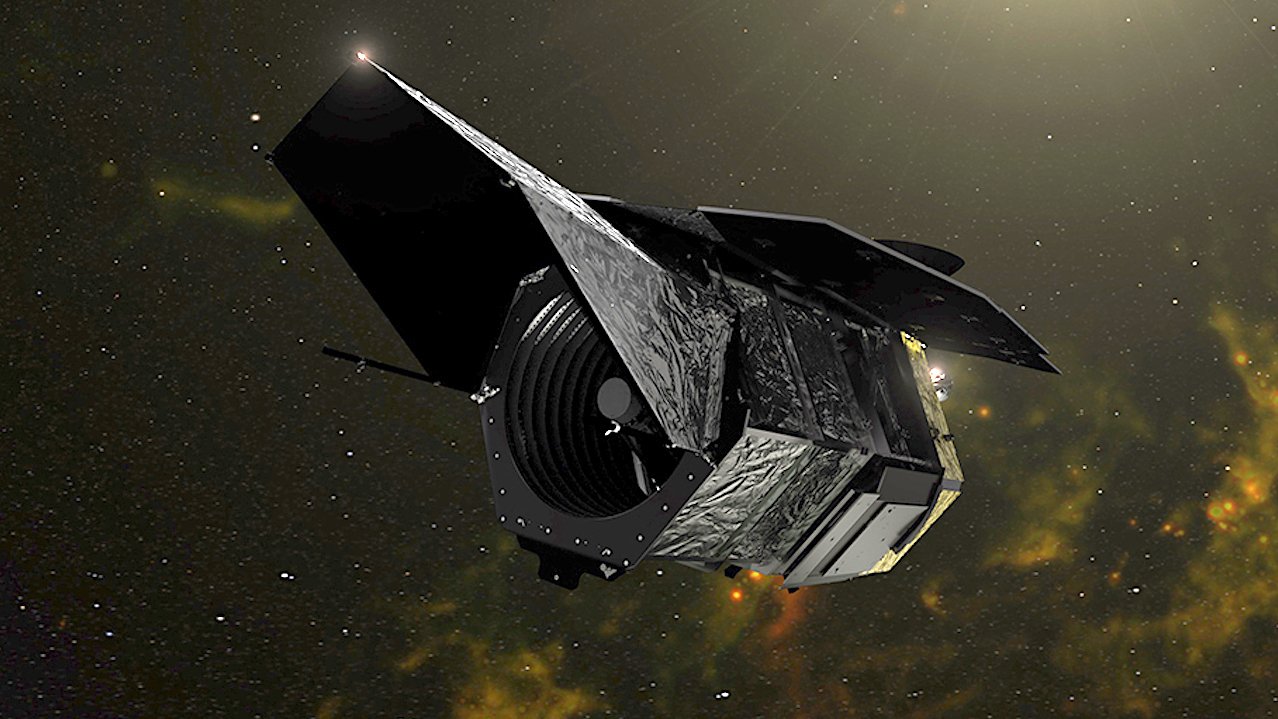
NASA next-gen space telescopes tech in 2026 is not about one single telescope suddenly changing astronomy. It is about a new generation of active missions, upcoming observatories, advanced instruments, infrared detectors, wide-field surveys, coronagraph technology, and future telescope concepts that are helping scientists study the universe with greater depth, speed, and precision.
In simple words, NASA is entering a new era of space observation. The James Webb Space Telescope is already studying the early universe, stars, galaxies, planets, and exoplanet atmospheres. The SPHEREx mission is active and designed to map the entire sky in infrared light. The Nancy Grace Roman Space Telescope is preparing for launch, with NASA targeting launch as soon as early September 2026. Meanwhile, the Habitable Worlds Observatory remains a future mission concept focused on directly imaging potentially habitable planets around other stars.
For more related space science explainers, visit our NASA section and Space & Beyond category.
This article explains what NASA next-gen space telescope technology means, what is confirmed in 2026, what is still a future possibility, and why these observatories matter for astronomy, exoplanet science, dark energy research, and the search for life beyond Earth.
Table of Contents
ToggleEditorial Note
This article clearly separates confirmed NASA missions from future telescope concepts. It does not claim that NASA has launched a single new dedicated “next-generation space telescope” in 2026 unless NASA has officially confirmed that mission status.
Webb and SPHEREx are active missions. Roman is preparing for launch. Habitable Worlds Observatory is a future mission concept under study and technology development. This distinction is important for accuracy, reader trust, and premium ad-network quality standards.
Key Statistics and Facts
NASA’s James Webb Space Telescope launched on December 25, 2021. It operates near the second Lagrange point, about 1.5 million kilometers from Earth, and studies every phase in the history of the universe, from early galaxies to stars, planets, and objects in our own solar system.
NASA’s SPHEREx mission launched in 2025 and is an active space observatory. NASA says SPHEREx will provide an all-sky spectral survey and collect data on more than 450 million galaxies and more than 100 million stars in the Milky Way during its planned mission.
NASA reported in April 2026 that the Roman Space Telescope is targeting launch as soon as early September 2026 on a SpaceX Falcon Heavy rocket from Kennedy Space Center in Florida.
NASA describes the Habitable Worlds Observatory as a future space telescope concept designed to directly image potentially habitable planets and search their atmospheres for possible biosignatures.
What Is NASA Next-Gen Space Telescope Technology?
NASA next-gen space telescope technology refers to the advanced tools, instruments, observatories, mirrors, detectors, data systems, and light-control methods that help astronomers study objects that are too faint, too distant, or too hidden for older telescopes to observe easily.
A normal telescope collects light. A next-generation space telescope does much more than that. It can separate light into different wavelengths, measure chemical fingerprints, scan huge regions of the sky, block the glare of bright stars, and send valuable scientific data back to Earth.
This is why space telescopes are so important. Earth’s atmosphere blocks, absorbs, or distorts many types of light. Space telescopes avoid much of this interference and allow scientists to observe the universe more clearly in infrared, visible, ultraviolet, and other wavelengths.
In 2026, NASA’s next-generation telescope technology should be understood as a connected system:
Webb provides deep and highly sensitive observations.
SPHEREx provides wide all-sky infrared mapping.
Roman is designed to provide large-area, high-resolution cosmic surveys.
Roman’s coronagraph will test technology for direct exoplanet imaging.
Habitable Worlds Observatory represents a future goal for directly studying potentially habitable planets.
This is why the phrase “unlocking the universe” is powerful when used correctly. NASA is not unlocking the universe through one telescope only. It is building a larger ecosystem of missions and technologies that work together.
Confirmed Missions vs Future Concepts
This section is very important because many space articles become misleading when they mix confirmed missions with future ideas.
| Telescope or Technology | Status in 2026 | Accurate Explanation |
|---|---|---|
| James Webb Space Telescope | Active mission | Already operating and studying galaxies, stars, planets, and exoplanets |
| SPHEREx | Active mission | Launched in 2025 and conducting all-sky infrared survey science |
| Nancy Grace Roman Space Telescope | Upcoming mission | Preparing for launch, with NASA targeting as soon as early September 2026 |
| Roman Coronagraph Instrument | Technology demonstration | Designed to advance direct imaging of exoplanets by blocking starlight |
| Habitable Worlds Observatory | Future mission concept | Under study and technology development, not launched |
| Search for biosignatures on Earth-like exoplanets | Future goal | A major scientific objective, not a confirmed discovery |
In simple words, Webb and SPHEREx are active. Roman is the next major NASA space telescope preparing for launch. Habitable Worlds Observatory is a future concept that could push the search for life to a new level.
James Webb Space Telescope: The Deep-Universe Powerhouse
The James Webb Space Telescope is already one of the most powerful observatories ever sent into space. NASA describes Webb as a major observatory designed to study every phase in the history of the universe, from the first luminous glows after the Big Bang to the formation of stars, planets, and our own solar system.
Webb is important because it observes mainly in infrared light. Infrared astronomy helps scientists see through cosmic dust, study cooler objects, and observe extremely distant galaxies whose light has been stretched by the expansion of the universe.
When astronomers look at very distant galaxies, they are also looking back in time. Light from those galaxies took billions of years to reach us. Webb’s sensitivity allows scientists to study the early universe in a way that was not possible with older observatories.
Webb also plays a major role in exoplanet research. By studying how starlight changes when it passes through an exoplanet’s atmosphere, scientists can learn about atmospheric chemistry, clouds, heat, and possible planetary conditions.
This does not mean Webb has confirmed alien life. It means Webb gives scientists better tools for studying distant worlds.
To understand how future telescopes may photograph planets around other stars, read our guide on NASA exoplanet direct imaging technology.
SPHEREx: Mapping the Whole Sky in Infrared Light
The SPHEREx mission is one of NASA’s important active observatories for wide-field infrared survey astronomy. Its full name is Spectro-Photometer for the History of the Universe, Epoch of Reionization and Ices Explorer.
NASA says SPHEREx will provide an all-sky spectral survey and collect data on more than 450 million galaxies and more than 100 million stars in the Milky Way during its planned two-year mission.
Unlike Webb, which focuses deeply on selected targets, SPHEREx is designed to scan the whole sky. This makes it useful for mapping large cosmic patterns and identifying objects that other telescopes can study later in greater detail.
NASA explains that SPHEREx observes the sky in 102 infrared wavelengths, or colors. This allows scientists to study the composition and distance of cosmic objects, search for water ice and organic molecules, and explore large-scale questions about the origin of the universe.
In simple words, Webb is like a powerful zoom lens, while SPHEREx is like a full-sky infrared scanner. Both are valuable, but they serve different scientific purposes.
Roman Space Telescope: The Next Big Step in Cosmic Surveys
The Nancy Grace Roman Space Telescope is one of NASA’s most important upcoming astrophysics missions. Roman is designed to study dark energy, dark matter, exoplanets, infrared astrophysics, and the large-scale structure of the universe.
Roman’s biggest advantage is its combination of sharp space-based vision and wide sky coverage. NASA says Roman will have a field of view at least 100 times larger than Hubble’s. This means Roman can survey large areas of the sky much faster while still producing detailed observations.
This matters because many cosmic mysteries require large data sets. Dark energy, for example, cannot be understood by looking at only a few galaxies. Scientists need to study huge populations of galaxies, supernovae, and cosmic structures.
Roman is designed for this type of large-scale survey work. It will help scientists investigate why the universe’s expansion is accelerating, how cosmic structure formed, and how common different types of planets are in the galaxy.
NASA reported in April 2026 that Roman is targeting launch as soon as early September 2026 on a SpaceX Falcon Heavy rocket from Launch Complex 39A at Kennedy Space Center.
This is the safest wording for your article: Roman is preparing for launch and targeting early September 2026. Do not write that Roman has already launched unless NASA confirms the launch has happened.
Roman and Webb: Different Telescopes, Stronger Together
Roman and Webb are not competitors. They are complementary observatories.
Webb is designed for deep, highly sensitive observations of selected objects. Roman is designed for wide-field surveys that can cover much larger areas of the sky. This means Roman may identify large populations of galaxies, supernovae, or exoplanet-related signals, while Webb can study selected targets in greater detail.
Together, these telescopes can help answer major questions:
How did the first galaxies form?
How did dark matter shape cosmic structure?
Why is the universe’s expansion accelerating?
How common are planets beyond our solar system?
Which exoplanets deserve deeper atmospheric study?
This is why NASA’s next-generation telescope ecosystem is so important. One telescope cannot answer every question. Different observatories must work together, each contributing a different type of data.
Roman Coronagraph: A Step Toward Direct Imaging of Exoplanets
One of Roman’s most exciting technologies is the Roman Coronagraph Instrument. A coronagraph blocks the bright light of a star so that faint nearby objects, such as planets or disks, become easier to see.
This is extremely important for exoplanet science because planets are much dimmer than their host stars. Trying to see an exoplanet beside a star is like trying to see a tiny firefly beside a bright spotlight from a great distance.
Roman’s coronagraph is a technology demonstration. That means its purpose is not only to collect science data but also to test technology that could support future missions.
This technology is especially important for the future Habitable Worlds Observatory concept. A future telescope designed to search for Earth-like worlds will need powerful starlight-blocking technology to directly image faint planets near bright stars.
For a deeper related explanation, read our article on NASA exoplanet direct imaging technology.
Habitable Worlds Observatory: The Future Search-for-Life Concept
The Habitable Worlds Observatory is one of NASA’s most exciting future astrophysics mission concepts. NASA describes it as a future infrared, optical, and ultraviolet space telescope concept designed to identify and directly image potentially habitable planets around other stars.
Its main objective would be to directly image 25 potentially habitable worlds and use spectroscopy to search for possible chemical biosignatures in their atmospheres. These biosignatures may include gases such as oxygen and methane, but they would need careful scientific interpretation.
This must be written carefully. Habitable Worlds Observatory is not already launched. It is not currently discovering alien life. It is a future mission concept under study and technology development.
In January 2026, NASA selected technology proposals to advance the Habitable Worlds Observatory concept. NASA said the mission would need extremely stable optics and a coronagraph far more capable than any space coronagraph previously built.
This is the correct Raptive-safe angle: Habitable Worlds Observatory is not an active telescope in 2026, but NASA is developing technologies that could support it in the future.
Why Telescope Stability Matters
Future space telescopes need incredible stability. When a telescope is trying to observe a faint planet near a bright star, even tiny vibrations or optical distortions can damage the measurement.
For future missions like Habitable Worlds Observatory, stability becomes one of the biggest engineering challenges. The telescope must separate extremely faint planetary light from overwhelming starlight.
This requires advanced mirrors, thermal control, wavefront sensing, vibration management, ultra-precise pointing, and powerful onboard correction systems.
In simple words, future telescopes must not only be large. They must also be extraordinarily stable.
Why Infrared Astronomy Is So Important
Infrared light is a major part of modern space telescope science. Many cold objects in space glow in infrared wavelengths. Dusty regions where stars and planets form are often easier to study in infrared light. Very distant galaxies are also important infrared targets because the expansion of the universe stretches their light toward longer wavelengths.
Webb and SPHEREx both show why infrared astronomy matters. Webb studies selected objects with extraordinary sensitivity, while SPHEREx maps the entire sky in many infrared wavelengths.
Infrared astronomy helps scientists study:
Star-forming regions hidden by dust
Early galaxies from the young universe
Exoplanet atmospheres
Brown dwarfs and cool objects
Organic molecules and water ice
Large-scale cosmic structure
This is why next-generation telescope technology is not only about bigger mirrors. It is also about better wavelength coverage, better detectors, better spectroscopy, and better data processing.
The Data Revolution Behind Next-Gen Telescopes
Modern telescopes do not only produce beautiful images. They create enormous scientific data sets. Roman and SPHEREx are especially important because they are survey missions. They are designed to observe large areas of the sky and produce data that many researchers can use.
NASA says SPHEREx will map the entire sky multiple times in infrared light and collect data from hundreds of millions of galaxies. This makes it useful not only for one scientific question but for many future research projects.
This is one of the biggest changes in astronomy. Instead of every discovery coming from one telescope looking at one object, discoveries increasingly come from combining data across many missions.
For example, SPHEREx may identify interesting infrared sources. Roman may survey huge regions and identify cosmic patterns. Webb may study selected targets in detail. Future Habitable Worlds Observatory technology could directly study potentially habitable exoplanets.
As NASA missions collect more scientific data, deep-space communication becomes increasingly important. You can also read our article on NASA deep space laser communication technology.
What These Telescopes Could Reveal
NASA’s next-generation telescope ecosystem could help scientists answer some of the most important questions in science.
One major question is how the first galaxies formed. Webb can study extremely distant galaxies, while Roman can survey large galaxy populations to understand cosmic structure.
Another question is why the universe’s expansion is accelerating. Roman is designed to help investigate dark energy, one of the deepest mysteries in modern cosmology.
Another major question is how common planets like Earth are. Roman’s surveys can help reveal exoplanet populations, Webb can study some exoplanet atmospheres, and future Habitable Worlds Observatory technology could directly search for biosignatures on potentially habitable worlds.
These missions also help scientists study star formation, planetary systems, black holes, cosmic dust, organic molecules, and the structure of the Milky Way.
In simple words, next-gen telescope technology helps scientists study where we came from, how the universe evolved, and whether life might exist beyond Earth.
NASA Technology Beyond Telescopes
NASA’s future technology ecosystem is much bigger than space telescopes alone. Telescopes help scientists observe the universe, but other technologies help protect Earth, communicate across space, explore planets, and prepare for future missions.
For example, space telescopes may detect asteroids and distant objects, while planetary defense missions help scientists understand how to respond to potential asteroid threats. You can explore this related topic in our guide on NASA planetary defense asteroid missions.
This internal connection is useful for readers because it shows that NASA’s next-generation technology is not isolated. Space observation, communication, exploration, and planetary protection are all connected parts of the future of space science.
What People Often Get Wrong
Many people think NASA’s next-generation telescope technology means one new telescope will replace all older telescopes. That is not correct.
Webb did not replace Hubble.
Roman will not replace Webb.
SPHEREx does not replace Roman.
Habitable Worlds Observatory will not replace all other observatories.
Each mission has a different scientific role.
Another common mistake is saying Roman has already launched. As of current NASA updates, Roman is preparing for launch and NASA is targeting launch as soon as early September 2026.
Another mistake is treating Habitable Worlds Observatory as an active mission. HWO is a future mission concept, not a launched observatory.
A fourth mistake is claiming that telescope technology will quickly confirm alien life. Future telescopes may search for biosignatures, but biosignatures require careful interpretation. Oxygen, methane, water vapor, and other atmospheric chemicals can be exciting clues, but they do not automatically prove life.
Practical Reader Takeaway
The most important point is this: NASA next-gen space telescopes tech in 2026 is real, but it must be explained accurately.
Webb is active and making deep observations.
SPHEREx is active and mapping the sky in infrared wavelengths.
Roman is preparing for launch, with NASA targeting as soon as early September 2026.
Roman’s coronagraph is a key technology demonstration for future exoplanet imaging.
Habitable Worlds Observatory is a future concept, not a launched mission.
This careful wording makes the article stronger for Raptive, Mediavine, Journey, and AdSense because it avoids hype, false claims, and misleading mission status language.
Frequently Asked Questions
What is NASA next-gen space telescopes tech in 2026?
NASA next-gen space telescopes tech in 2026 refers to active missions, upcoming observatories, and future telescope concepts connected to missions such as Webb, SPHEREx, Roman, and Habitable Worlds Observatory. These technologies include infrared detectors, wide-field surveys, coronagraphs, stable optical systems, spectroscopy, and advanced science data archives.
Has NASA launched a new next-generation space telescope in 2026?
Do not describe this topic as one single confirmed 2026 telescope launch unless NASA officially confirms it. Webb is already active, SPHEREx launched in 2025 and is active, Roman is preparing for launch, and Habitable Worlds Observatory is still a future concept.
What is the Roman Space Telescope?
The Nancy Grace Roman Space Telescope is an upcoming NASA observatory designed to study dark energy, exoplanets, infrared astrophysics, and large-scale cosmic structure. It will provide wide-field space surveys with a field of view much larger than Hubble’s.
When will Roman launch?
NASA reported in April 2026 that Roman is targeting launch as soon as early September 2026 on a SpaceX Falcon Heavy rocket from Kennedy Space Center. If the mission status changes, this section should be updated using the latest official NASA information.
What is SPHEREx?
SPHEREx is a NASA space observatory that provides an all-sky spectral survey in infrared light. NASA says it will collect data on more than 450 million galaxies and more than 100 million stars in the Milky Way during its planned mission.
What is the Habitable Worlds Observatory?
Habitable Worlds Observatory is a future NASA mission concept designed to directly image potentially habitable planets around other stars and search their atmospheres for possible biosignatures. It is not an active launched telescope yet.
Why are coronagraphs important?
Coronagraphs block the bright light of a star so faint nearby planets can be seen more clearly. This technology is important for future direct imaging of exoplanets and for missions that may search for signs of life beyond Earth.
Can NASA’s next-generation telescopes find alien life?
Future telescopes may help search for possible biosignatures in exoplanet atmospheres, but they do not automatically confirm life. Scientists must carefully study atmospheric chemistry, planetary conditions, and non-biological explanations before making any life-related conclusion.
Conclusion
NASA next-gen space telescopes tech in 2026 marks a major turning point in how scientists study the universe. The real story is not one single telescope. It is a powerful network of active missions, upcoming observatories, and future concepts working together to reveal the cosmos in greater detail.
The James Webb Space Telescope is already studying the early universe, exoplanets, stars, galaxies, and objects in our solar system. SPHEREx is mapping the entire sky in infrared wavelengths and creating data that can support many areas of astronomy. The Roman Space Telescope is preparing to bring wide-field space surveys to a new level, helping scientists investigate dark energy, dark matter, exoplanets, and cosmic structure.
The Habitable Worlds Observatory represents the future dream of directly imaging potentially habitable worlds and studying their atmospheres for possible signs of life. However, it should be described accurately as a future mission concept unless NASA officially confirms a new mission phase or launch status.
The safest and most accurate way to explain this topic is clear: Webb and SPHEREx are active, Roman is preparing for launch, and Habitable Worlds Observatory is a future concept under technology development. This distinction makes the article more trustworthy, more accurate, and stronger for premium ad-network review.
NASA’s next-generation telescope technology is unlocking the universe not through hype, but through precision: sharper images, wider surveys, better infrared data, advanced coronagraphs, open science archives, and future instruments designed to answer some of humanity’s biggest questions.
Sources and Further Reading
NASA: James Webb Space Telescope
https://science.nasa.gov/mission/webb/
NASA: SPHEREx Mission Overview
https://science.nasa.gov/mission/spherex/
NASA: NASA’s SPHEREx Mission
https://science.nasa.gov/blogs/spherex/2025/03/11/nasas-spherex-mission-2/
NASA: Roman Space Telescope Mission Overview
https://science.nasa.gov/mission/roman-space-telescope/
NASA: Roman Space Telescope Early September 2026 Launch Target
https://www.nasa.gov/image-article/nasa-targets-early-september-for-roman-space-telescope-launch/
NASA: Kennedy Prepares Facility for Roman Space Telescope Arrival
https://www.nasa.gov/centers-and-facilities/kennedy/nasa-kennedy-prepares-facility-for-roman-space-telescope-arrival/
NASA/JPL: Roman Coronagraph Instrument
https://www.jpl.nasa.gov/missions/the-roman-coronagraph-instrument/
NASA: Habitable Worlds Observatory
https://science.nasa.gov/astrophysics/programs/habitable-worlds-observatory/
NASA: Optical Vortex Phase Masks for the Detection of Habitable Worlds
https://science.nasa.gov/science-research/science-enabling-technology/technology-highlights/optical-vortex-phase-masks-for-the-detection-of-habitable-worlds/
About the Author
Shahzaib Ali
Shahzaib Ali is the founder and editor of Sanceen, a science, space, NASA, and future technology educational website. He writes beginner-friendly articles about space missions, astronomy, scientific discoveries, and emerging technology.