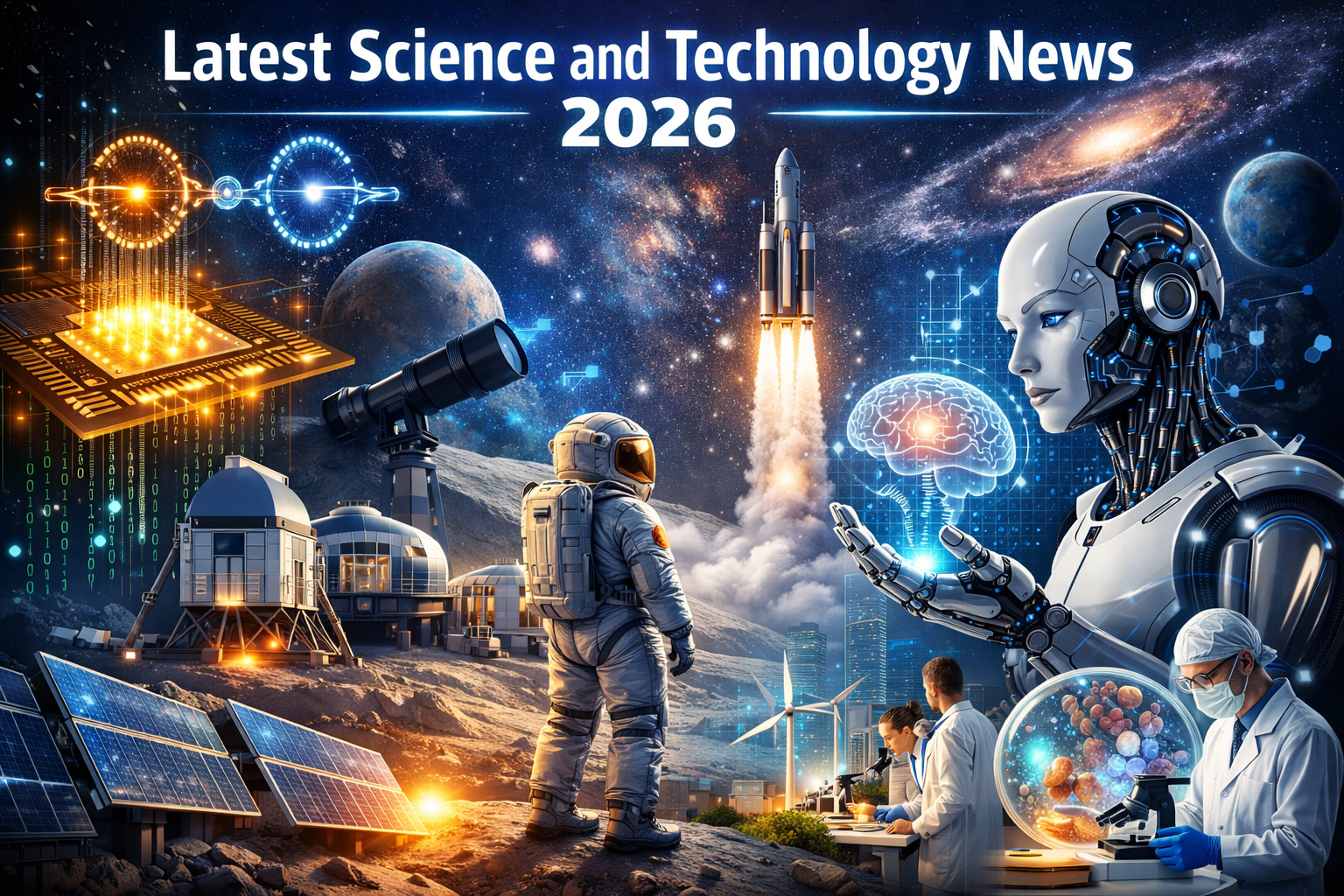
The latest science and technology news in 2026 shows one clear trend: innovation is accelerating across multiple fields at once. From quantum computing and AI to space science, biomedicine, and
Table of Contents
ToggleIn this article, we look at the most important science and tech developments making headlines right now and why they matter in 2026.
1. Quantum computing is becoming a real cybersecurity threat
One of the biggest stories in the latest science and technology news cycle is the growing concern that quantum computers could break widely used encryption sooner than many experts expected. Nature reported in April 2026 that recent analyses suggest quantum advances may threaten common security systems and some cryptocurrencies before the end of the decade. That has raised pressure on governments, companies, and cybersecurity teams to accelerate the move toward post-quantum cryptography.
This matters because modern banking, private communication, online identity systems, and critical infrastructure all depend on encryption. If quantum hardware continues improving at today’s pace, organizations that delay migration may face major long-term security risks. In practical terms, this is turning quantum computing from a research story into a business and policy issue.
2. Space science is revealing surprises about the early universe
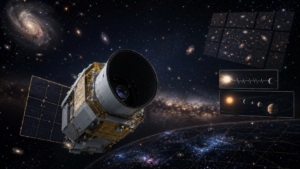
Space remains one of the strongest drivers of public interest in science news, and 2026 has already delivered major discoveries. Reuters reported that astronomers observed a galaxy cluster forming surprisingly early in the universe’s history, with at least 66 potential member galaxies dating to roughly one billion years after the Big Bang. Findings like this can change how scientists understand cosmic structure formation in the early universe.
This is important because astronomy does more than produce dramatic images. It tests the models scientists use to explain dark matter, galaxy growth, and the large-scale evolution of the cosmos. For science readers, this is exactly the kind of discovery that makes the latest science and technology news so compelling: it combines advanced instruments, data analysis, and big unanswered questions.
3. AI is expanding into science, but results remain mixed
Artificial intelligence continues to dominate technology headlines, but the 2026 picture is more nuanced than simple hype. On one side, Nature highlighted AI-driven work that is speeding up the design of devices that convert waste heat into electricity, showing how machine learning can accelerate materials and energy research. On the other side, Reuters reported that for patients seeking medical advice, AI performed no better than standard internet search methods in helping them make better health decisions in one recent study.
Together, these developments show a more realistic view of AI. It can be powerful in research, modeling, automation, and discovery, but it does not automatically outperform existing tools in every real-world setting. That balance is essential for readers and publishers covering technology responsibly. AI is still transformative, but its impact depends heavily on the domain, the data, and the way people use it.
4. Biomedical innovation is moving toward lower-cost treatments
Health and biotech remain central to the latest science news, especially when innovation could improve access as well as outcomes. Reuters reported in March 2026 that Spanish researchers developed an artificial cornea made from fish scales that could become a lower-cost alternative to donor transplants for severe eye diseases. This is an example of how biomedical engineering is increasingly focused not only on technical success, but also on affordability and wider clinical use.
At the same time, Nature reported that new drugs are targeting KRAS, one of cancer’s deadliest and historically hard-to-treat mutations. Progress in this area could have major implications for oncology and precision medicine. These stories show how biotech is advancing on two fronts at once: high-end targeted therapies and scalable solutions for broader patient populations.
5. New antiviral tools could strengthen the biotech pipeline
Another important development comes from molecular biology. Nature reported in April 2026 that researchers mined genomic data from bacteria to create databases containing thousands of antiviral defense proteins. These proteins could inspire new biotechnology tools and potentially open new directions for research into disease defense and bioengineering.
This matters because science often advances through platforms, not just single discoveries. A new database, toolkit, or foundational method can support years of follow-on research. For technology watchers, this is a reminder that some of the most important breakthroughs are invisible to consumers at first. They begin in labs, then later influence medicine, agriculture, diagnostics, and industrial biotechnology.
6. Photonics and advanced materials are getting smarter and more scalable
Behind many major tech leaps are less visible advances in photonics and materials science. Nature’s April 2026 coverage includes research on monolithic 3D integration in nonlinear photonics and pixelated quantum-dot superlattice LEDs with improved brightness, stability, and device lifetime. These developments may sound highly technical, but they can shape the future of communications, computing, displays, and sensing technologies.
This is why science and technology reporting should not focus only on consumer gadgets. The real transformation often starts deeper in the stack, in the components and materials that make later products possible. Faster photonics, more efficient displays, and better integrated devices could influence everything from smartphones and wearables to scientific instruments and industrial systems.
7. Energy innovation is becoming a bigger science-tech story
Climate and energy research are also moving closer to the center of technology coverage. Nature highlighted AI-assisted advances in designing systems that turn waste heat into electricity, while also publishing work on reproducible perovskite solar cell frameworks. These are strong signals that energy innovation is becoming one of the most important intersections between science and technology in 2026.
Why does this matter? Because energy affects everything else: manufacturing costs, electrification, climate goals, data centers, transportation, and economic resilience. Innovations that improve energy capture, conversion, and storage do not just help one sector. They ripple across the entire technology ecosystem.
Why the latest science and technology news matters in 2026
What makes 2026 especially interesting is that the boundaries between science and technology are disappearing. Scientific discoveries are reaching application faster, while technology platforms such as AI, advanced computing, and automation are increasingly driving basic research itself. Current reporting shows this convergence clearly across quantum security, biotech, space science, energy systems, and advanced materials.
For readers, this means following science and technology news is no longer just about curiosity. It is about understanding the next wave of changes in health care, education, business, national security, and the environment.
Final thoughts
The latest science and technology news shows a world moving into a more complex innovation era. Quantum computing is forcing new cybersecurity planning. AI is helping scientists design better systems, even while its limits remain visible in some real-world uses. Space science is rewriting parts of cosmic history. Biotech is creating new possibilities for treatment and lower-cost care. And energy and materials research are quietly laying the foundation for future industries.
For a site like Sanceen, this topic is a strong fit because it naturally connects science discovery, future technology, and space-focused coverage into one publishable theme.
FAQ section
What is the latest science and technology news in 2026?
Some of the biggest 2026 stories include quantum computing’s growing threat to current encryption, new discoveries about early galaxy formation, AI-assisted energy research, progress in anti-cancer drug development, and lower-cost biomedical innovations such as artificial corneas.
Why is quantum computing in the news?
Quantum computing is in the news because recent analyses suggest it may be able to crack some commonly used cybersecurity systems sooner than expected, increasing urgency around post-quantum security upgrades.
How is AI changing science?
AI is helping researchers design new materials and energy systems faster, but recent evidence also shows it does not outperform traditional methods in every domain, such as patient-facing medical advice.
What are the most important science fields to watch right now?
Quantum computing, biotechnology, space science, advanced materials, photonics, and clean-energy research are among the most important science and technology areas to watch in 2026.
About the Author
Shahzaib Ali
Shahzaib Ali is the founder and editor of Sanceen, a science, space, NASA, and future technology educational website. He writes beginner-friendly articles about space missions, astronomy, scientific discoveries, and emerging technology.