NASA reusable interplanetary spacecraft technology is one of the most important ideas in the future of sustainable space exploration. For most of spaceflight history, major spacecraft and mission hardware were designed for limited use. A rocket launched, a spacecraft completed its mission, and many expensive components were never used again. That approach helped humanity reach the Moon, send robotic missions to Mars, explore the outer planets, and build the modern space age. But it is not ideal for frequent, affordable, long-term human exploration beyond Earth.
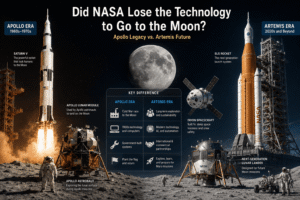
In 2026, the accurate way to explain this topic is not to claim that NASA already has a fully operational reusable spacecraft flying between Earth, the Moon, and Mars. The real story is that NASA’s exploration strategy is moving toward more reusable, repeatable, commercially supported, and sustainable systems. NASA’s Moon to Mars Architecture is an evolving framework for long-term exploration of the Moon, Mars, and deep space. It is not one single spacecraft, but a broad plan for the systems, operations, and technologies needed for future human exploration.
The idea of a reusable interplanetary spacecraft matters because the future of space travel cannot depend only on one-time vehicles. If astronauts are going to travel repeatedly to the Moon, prepare for Mars, and eventually support longer deep-space missions, spacecraft and mission hardware must become more sustainable. That means future systems may need refueling, servicing, inspection, repair, modular upgrades, and stronger integration with lunar infrastructure.
For related background, you can also read our articles on NASA deep space laser communication technology, NASA in-situ resource utilization on the Moon, NASA lunar base power infrastructure, and NASA magnetic shielding for astronauts.
Editorial Note
This article explains NASA’s reusable spacecraft ideas, Artemis systems, and future Moon-to-Mars transportation concepts using currently available official information. It does not claim that NASA already operates a fully reusable interplanetary spacecraft in 2026. Where future systems are discussed, they are presented as developing technologies, planned architecture elements, or possible future exploration pathways.
Key Statistics and Facts
NASA’s Moon to Mars Architecture defines the elements needed for long-term, human-led scientific discovery in deep space. NASA describes it as an evolving blueprint for crewed exploration, not a single mission or one fixed spacecraft.
NASA’s 2026 policy update says that beyond Artemis V, the agency plans to incorporate more commercially procured and reusable hardware for frequent and affordable crewed missions to the lunar surface. The same update says NASA is moving toward a repeatable and modular lunar surface approach. (NASA: National Space Policy Initiatives)
NASA’s Orion spacecraft is built to carry astronauts on Artemis deep-space missions and return them safely to Earth from the vicinity of the Moon. Orion is an important crew spacecraft, but it should not be described as a fully reusable Mars transport ship.
NASA’s Artemis III mission architecture includes SpaceX’s Starship Human Landing System, a storage depot, and a series of reusable tankers that carry propellant to fuel the lunar landing system before it travels toward lunar orbit.
NASA and DARPA’s DRACO nuclear thermal rocket demonstration is intended to test nuclear thermal propulsion technology that could support future Mars missions. It is a propulsion demonstration, not a completed reusable interplanetary spacecraft.
What Is a Reusable Interplanetary Spacecraft?
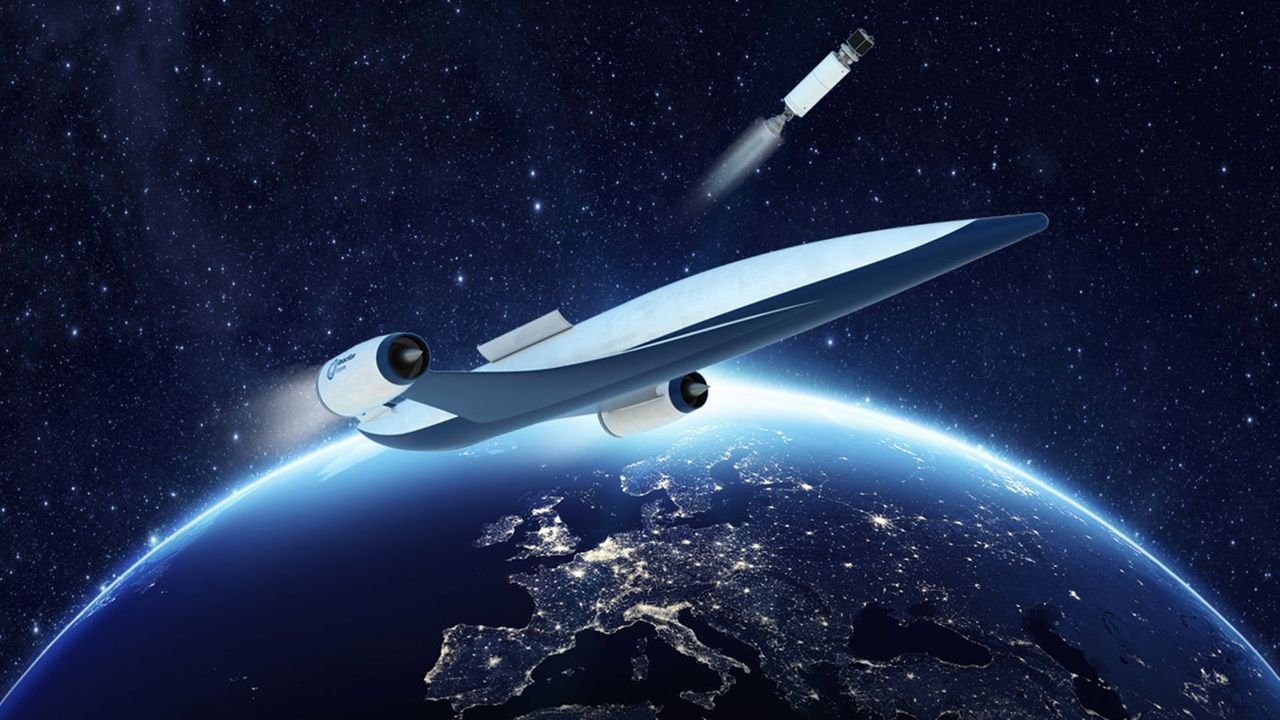
A reusable interplanetary spacecraft is a spacecraft designed to travel beyond Earth orbit more than once. In theory, such a spacecraft could be refueled, inspected, serviced, repaired, upgraded, and sent on repeated missions between destinations such as Earth orbit, lunar orbit, the Moon, Mars orbit, or other deep-space locations.
Example: a disposable spacecraft is like using a vehicle for one trip and then abandoning it. A reusable interplanetary spacecraft would be more like a deep-space transport ship that can be checked, refueled, upgraded, and used again for another mission.
This idea matters because space travel is extremely expensive. If every major mission requires completely new hardware, the pace of exploration remains slow. Reusable systems could eventually make missions more repeatable, reduce waste, improve mission cadence, and help build a more sustainable space economy.
However, reusing spacecraft in deep space is much harder than reusing aircraft on Earth. A deep-space vehicle must survive radiation, vacuum, thermal extremes, micrometeoroids, propulsion stress, communication delays, and long mission durations. It also needs inspection and maintenance systems that can work far from Earth.
Confirmed Facts vs Future Possibilities
| Topic | Status in 2026 | Safe Explanation |
|---|---|---|
| NASA Moon to Mars Architecture | Confirmed strategy framework | Guides long-term exploration planning, not one single reusable spacecraft |
| Orion spacecraft | Active Artemis crew spacecraft | Supports deep-space crew travel and Earth return, not a full Mars transport ship |
| Commercial reusable lunar hardware | Confirmed future direction | NASA says more commercially procured and reusable hardware will be used beyond Artemis V |
| SpaceX Starship HLS | NASA-contracted lunar lander system | Part of Artemis lunar landing architecture |
| Reusable tankers and propellant depot | Artemis III mission architecture | Used to fuel Starship HLS before lunar mission operations |
| Reusable Mars transfer vehicle | Studied concept | Not a confirmed operational 2026 NASA spacecraft |
| Fully reusable interplanetary spacecraft | Future possibility | Should not be presented as already flying in 2026 |
In simple words, NASA’s reusable deep-space future is real as a direction, but a complete reusable interplanetary transport system is not already operating in 2026.
Why Reusability Matters for Sustainable Space Travel
Reusability matters because future space exploration cannot depend only on one-time missions. A long-term Moon and Mars program needs transportation systems that can be repeated, serviced, upgraded, and supported by infrastructure.
Example: if astronauts travel repeatedly between lunar orbit and the Moon’s surface, a reusable lander or reusable transport system could eventually be more efficient than building a new lander for every mission. The vehicle could be refueled, checked, and prepared for another flight when the supporting infrastructure is ready.
Reusability also supports mission cadence. A space program that builds every major vehicle from scratch moves slowly. A program with reusable hardware, refueling systems, and commercial support could eventually perform missions more frequently.
This is why NASA’s 2026 update is important. It does not confirm a reusable Mars spaceship, but it does show that reusable hardware is becoming a key part of NASA’s future lunar strategy. NASA says that beyond Artemis V, it plans to incorporate more commercially procured and reusable hardware for frequent and affordable crewed lunar surface missions. (NASA: 2026 National Space Policy Initiatives)
Orion: NASA’s Deep-Space Crew Vehicle
NASA’s Orion spacecraft is central to the Artemis program. Orion is designed to carry astronauts on deep-space missions, support them during space travel, protect them from the deep-space environment, and return them safely to Earth at high speeds.
Orion should be explained carefully. It is a deep-space crew capsule, not a fully reusable interplanetary transport ship. It is designed to carry astronauts through launch, travel near the Moon, and return through Earth’s atmosphere.
Example: Orion is like the crew safety vehicle for Artemis. It protects astronauts during launch emergencies, supports them in deep space, and brings them home. A reusable interplanetary spacecraft would be a larger transportation system designed for repeated journeys between deep-space destinations.
NASA’s Orion reference information also connects Orion to a broader framework for flexible, reusable, long-duration infrastructure. That is important because Orion is part of the larger Moon-to-Mars system, even though Orion itself should not be described as a complete reusable Mars spaceship.
Starship HLS and Reusable Lunar Transportation
One of the clearest reusable-architecture examples in NASA’s Artemis program is SpaceX’s Starship Human Landing System. NASA selected SpaceX to provide the human landing system that will carry Artemis astronauts from lunar orbit to the Moon’s surface and back.
NASA’s Artemis III mission page explains that before the crew launch, SpaceX will launch a storage depot to Earth orbit. A series of reusable tankers will carry propellant to that depot, and the uncrewed Starship Human Landing System will refuel before traveling toward lunar orbit.
Example: instead of launching one fully fueled lunar lander directly from Earth, this architecture uses orbital refueling. Tanker vehicles help fill a depot, and the human landing system uses that propellant to continue toward the Moon. This is important because propellant is one of the biggest mass challenges in spaceflight.
This architecture does not mean NASA already has a reusable Mars spacecraft in 2026. It means NASA’s Artemis program is using technologies and commercial systems that could help build experience with reuse, refueling, and repeatable lunar operations.
Why Refueling Is Essential for Reusable Spacecraft
Reusable spacecraft need refueling. A vehicle cannot perform repeated missions unless it can receive propellant again. That is why orbital depots, reusable tankers, and in-space propellant transfer are so important.
Example: a reusable airplane works because it can land, refuel, be inspected, and fly again. A reusable spacecraft needs a similar support system, but the space version is much harder. Propellant must be stored in vacuum, kept at proper temperatures, transferred safely, and managed without normal Earth gravity.
The Starship HLS mission concept shows why refueling matters. NASA’s Artemis III description includes a storage depot and reusable tankers as part of the process used to fuel the human landing system.
This also connects naturally with lunar resource use. If future missions can make oxygen, water, or propellant from lunar resources, reusable spacecraft become more practical. For that wider topic, read our article on NASA in-situ resource utilization on the Moon.
Sustainable Space Travel Is More Than Reusing a Vehicle
Sustainable space travel is not only about reusing one spacecraft. A complete sustainable architecture needs reusable transportation, refueling, surface power, communication networks, life support, radiation protection, maintenance systems, local resource use, and mission logistics.
Example: a reusable spacecraft that cannot be refueled or repaired is not truly sustainable. It may survive one mission, but without infrastructure, it cannot become part of a repeating transportation network.
NASA’s Moon-to-Mars approach is important because it looks beyond individual missions. NASA’s Moon and Mars exploration overview describes the approach as reusable and repeatable, with the Moon serving as a testbed for future Mars capabilities.
A sustainable exploration system may include:
Reusable crew spacecraft
Reusable lunar landers
In-space refueling
Surface power systems
Local resource extraction
Radiation protection
Deep-space communication
Autonomous inspection and repair
Human-rated habitats
This is where your related article on NASA lunar base power infrastructure fits naturally. A reusable exploration system cannot work well without reliable energy systems on the Moon and in space.
In-Space Propulsion: The Engine Behind Reusable Exploration
A future reusable interplanetary spacecraft would need efficient propulsion. Chemical propulsion is powerful, but it requires large amounts of propellant. For deep-space travel, NASA researchers have studied options such as solar electric propulsion, nuclear thermal propulsion, nuclear electric propulsion, chemical propulsion, and hybrid systems.
NASA’s Space Nuclear Propulsion program explains that nuclear thermal propulsion can provide high thrust at twice the propellant efficiency of chemical rockets. NASA also explains that nuclear electric propulsion can use propellant more efficiently, although it produces lower thrust.
Example: chemical propulsion is like a powerful sprint. It produces strong thrust quickly. Solar electric or nuclear electric propulsion is more like a slow but efficient marathon. It produces lower thrust over a longer time but can use propellant more efficiently.
A future reusable interplanetary spacecraft could use different propulsion systems for different mission phases. It might need high-thrust propulsion near planets and efficient propulsion during long cruise periods. This remains a technology and architecture challenge, not a completed 2026 NASA transport vehicle.
Nuclear Thermal Propulsion and Future Mars Travel
Nuclear thermal propulsion is one of the technologies often discussed for future deep-space missions. In this system, a reactor heats propellant and expels it through a nozzle to produce thrust.
NASA says nuclear thermal propulsion can provide high thrust at about twice the propellant efficiency of chemical rockets. NASA and DARPA are also working on DRACO, a demonstration program intended to test a nuclear-powered rocket in space as soon as 2027.
Example: for Mars missions, better propulsion could reduce travel time, increase payload capacity, or give mission planners more flexibility. That matters because astronauts traveling to Mars would face long exposure to radiation, microgravity, and isolation.
But this must be written carefully. DRACO is a propulsion demonstration, not a completed reusable NASA passenger spacecraft to Mars in 2026. It is part of the broader technology pathway that could support future deep-space transportation.
Why Mars Makes Reusability Difficult
Mars is much harder than the Moon. The Moon is only a few days away from Earth. Mars missions can take many months, depending on planetary alignment and mission design. Communication delays are longer, rescue options are limited, and spacecraft systems must operate reliably for far longer.
Example: if a reusable lunar lander has a problem, mission teams are still operating relatively close to Earth. If a Mars transport spacecraft has a serious failure during interplanetary cruise, the crew may be millions of kilometers away with no quick rescue option.
A reusable Mars spacecraft would need:
Long-duration life support
Radiation shielding
Reliable propulsion
Spare parts and repair systems
Redundant avionics
Thermal control
High-data communication
Docking and refueling capability
Inspection systems
Crew health systems
This connects naturally with NASA magnetic shielding for astronauts, because radiation protection is one of the biggest challenges for future deep-space spacecraft.
Deep-Space Communication and Reusable Vehicles
Reusable interplanetary spacecraft would produce large amounts of mission data. Engineers would need to monitor propulsion systems, life-support systems, power systems, thermal performance, structural health, navigation, crew status, and repair needs.
Example: if a spacecraft is reused, mission teams must understand its condition after each mission. They need to know which components are wearing down, which systems need inspection, and whether the vehicle is safe for another flight.
This is why communication technology matters. A sustainable spacecraft architecture does not only need engines and fuel. It needs reliable data links so engineers can diagnose and maintain vehicles across deep-space distances.
For related context, read our guide on NASA deep space laser communication technology.
Reusability and Local Resource Use
Reusable spacecraft become much more powerful when they can use resources from the destination. This is called in-situ resource utilization, or ISRU.
If future astronauts can extract oxygen from lunar regolith or process water ice into useful materials, those resources could support life support, propellant production, and mission logistics.
Example: a reusable lunar lander would become more useful if it could eventually refuel using propellant made from lunar resources. That would reduce how much fuel must be launched from Earth.
This does not mean NASA is already refueling spacecraft with Moon-made propellant in 2026. It means ISRU is a major future step toward sustainable and reusable space transportation.
For a full explanation, read our article on NASA in-situ resource utilization on the Moon.
Reusable Spacecraft vs Reusable Rockets
Many readers confuse reusable spacecraft with reusable rockets. They are connected, but they are not the same.
A reusable rocket usually refers to a launch vehicle stage that can return to Earth and fly again. A reusable spacecraft refers to the vehicle that carries crew, cargo, instruments, or mission systems through space and can be used for more than one mission.
Example: a reusable booster helps reduce the cost of reaching orbit. A reusable interplanetary spacecraft would help reduce the cost and complexity of traveling between destinations after launch.
For future exploration, both forms of reuse matter. Reusable launch systems help move hardware from Earth to orbit. Reusable in-space vehicles could help move crew and cargo between lunar orbit, the lunar surface, Mars orbit, or other deep-space destinations.
Why 2026 Matters
The year 2026 matters because NASA’s exploration strategy is increasingly focused on sustainability, repeatability, and commercial support. NASA’s March 2026 update says that beyond Artemis V, the agency plans to incorporate more commercially procured and reusable hardware for frequent and affordable crewed lunar surface missions. It also describes a shift toward repeatable, modular lunar surface infrastructure.
This is the correct 2026 framing:
NASA is not operating a reusable Mars spacecraft in 2026.
NASA is moving toward more reusable lunar hardware in future Artemis operations.
SpaceX Starship HLS uses a refueling architecture involving reusable tankers.
Orion remains NASA’s crew spacecraft for Artemis deep-space missions.
NASA’s Moon-to-Mars strategy continues to guide long-term exploration planning.
Reusable interplanetary spacecraft remain a future goal, not a completed operational system.
This wording keeps the article accurate and avoids misleading mission-status claims.
What People Often Get Wrong
Many people think “reusable interplanetary spacecraft” means NASA already has a spaceship flying repeatedly between Earth and Mars. That is not accurate.
Another mistake is calling Orion a reusable Mars spaceship. Orion is a deep-space crew spacecraft for Artemis missions, but it is not a complete reusable Mars transport system.
Another common mistake is treating Starship HLS as a confirmed operational Mars vehicle for NASA in 2026. NASA selected SpaceX’s Starship-based Human Landing System for lunar landing missions, and the Artemis III plan includes reusable tankers and a propellant depot. But that is not the same as saying NASA has an operational Mars version already flying.
A fourth mistake is ignoring refueling. Reusability is not just about landing a vehicle. A reusable spacecraft must be refueled, serviced, inspected, and safely relaunched.
Finally, some articles use “2026” to make future concepts sound confirmed. The safer wording is to say NASA is developing, studying, planning, or testing a technology when the system is not yet operational.
Practical Reader Takeaway
NASA reusable interplanetary spacecraft technology is best understood as a future direction, not a completed 2026 vehicle.
Orion supports crewed deep-space Artemis missions.
SpaceX Starship HLS introduces reusable lunar landing and refueling concepts into NASA’s Artemis architecture.
NASA’s 2026 strategy emphasizes more commercially procured and reusable hardware for future lunar operations.
Advanced propulsion, refueling, local resource use, radiation protection, power systems, and deep-space communication are all required for future reusable interplanetary travel.
A true reusable Mars transport system remains a future concept that will need years of testing, infrastructure, and mission validation.
Frequently Asked Questions
What is a reusable interplanetary spacecraft?
A reusable interplanetary spacecraft is a vehicle designed to travel beyond Earth orbit more than once. It would need refueling, inspection, repair capability, life support, propulsion, radiation protection, and safe operation over long distances.
Does NASA have a reusable interplanetary spacecraft in 2026?
No fully operational NASA reusable interplanetary spacecraft should be described as active in 2026. NASA is developing sustainable Moon-to-Mars architecture and moving toward more reusable hardware, but a complete reusable Mars transport is still a future goal.
Is Orion a reusable interplanetary spacecraft?
Orion is NASA’s deep-space crew spacecraft for Artemis missions. It supports astronaut travel beyond low Earth orbit and safe return to Earth, but it should not be described as a full reusable interplanetary transport ship.
Is SpaceX Starship part of NASA’s reusable spacecraft plans?
SpaceX Starship HLS is part of NASA’s Artemis Human Landing System program. NASA’s Artemis III concept includes reusable tankers and a propellant depot to fuel the Starship Human Landing System before it travels toward lunar orbit.
Why is refueling important for reusable spacecraft?
A reusable spacecraft cannot perform repeated missions unless it can receive propellant again. In-space refueling could help vehicles travel farther, support repeated missions, and reduce the amount of fuel that must be launched at one time.
Could reusable spacecraft help Mars exploration?
Yes. Reusable spacecraft could help future Mars exploration by reducing the need to build every major vehicle from scratch. However, reusable Mars transportation requires advanced propulsion, life support, radiation protection, refueling, and long-duration reliability.
What propulsion could future interplanetary spacecraft use?
Future spacecraft may use chemical propulsion, solar electric propulsion, nuclear thermal propulsion, nuclear electric propulsion, or hybrid systems. NASA researchers have studied multiple in-space transportation architecture options for future human Mars mission concepts.
Is nuclear thermal propulsion ready for reusable Mars travel?
Nuclear thermal propulsion is being demonstrated as a future deep-space technology pathway, but it is not the same as a reusable Mars crew spacecraft already operating in 2026. NASA and DARPA’s DRACO program is aimed at demonstrating a nuclear-powered rocket in space as soon as 2027.
Why does sustainability matter in space travel?
Sustainability matters because future Moon and Mars missions must become repeatable, affordable, and safer. Reusable hardware, refueling, local resources, power infrastructure, radiation protection, and better communication can all help create a more sustainable exploration system.
Conclusion
NASA reusable interplanetary spacecraft technology in 2026 should be explained with accuracy and caution. The idea is real and important, but it should not be presented as a completed NASA vehicle already flying between planets.
The real story is that NASA is building a Moon-to-Mars exploration architecture that increasingly values reuse, sustainability, commercial partnerships, refueling, and repeatable mission operations. Orion supports crewed deep-space Artemis missions. SpaceX Starship HLS brings reusable lunar lander and tanker concepts into the Artemis architecture. NASA’s 2026 strategy points toward more commercially procured and reusable hardware for future lunar surface missions.
A true reusable interplanetary spacecraft would need far more than a strong engine. It would need deep-space life support, radiation protection, refueling, power systems, repair capability, advanced propulsion, reliable communication, inspection systems, and integration with lunar and Mars infrastructure. That is why reusable space travel is not one invention. It is an entire system.
For readers, the simplest explanation is this: NASA reusable interplanetary spacecraft technology is the long-term shift from one-time exploration missions toward repeatable, sustainable travel between worlds. In 2026, that future is not fully built yet, but NASA’s Moon-to-Mars strategy, Artemis systems, commercial partnerships, and advanced propulsion research are helping move space exploration in that direction.
Sources and Further Reading
NASA: Moon to Mars Architecture
NASA: Moon and Mars Reusable and Repeatable Exploration Approach
NASA: 2026 National Space Policy Initiatives
NASA: Artemis III Mission Overview
NASA: Orion Spacecraft Reference
NASA: Orion Reference Guide PDF
NASA: NASA and DARPA Partner with Industry on Mars Rocket Engine