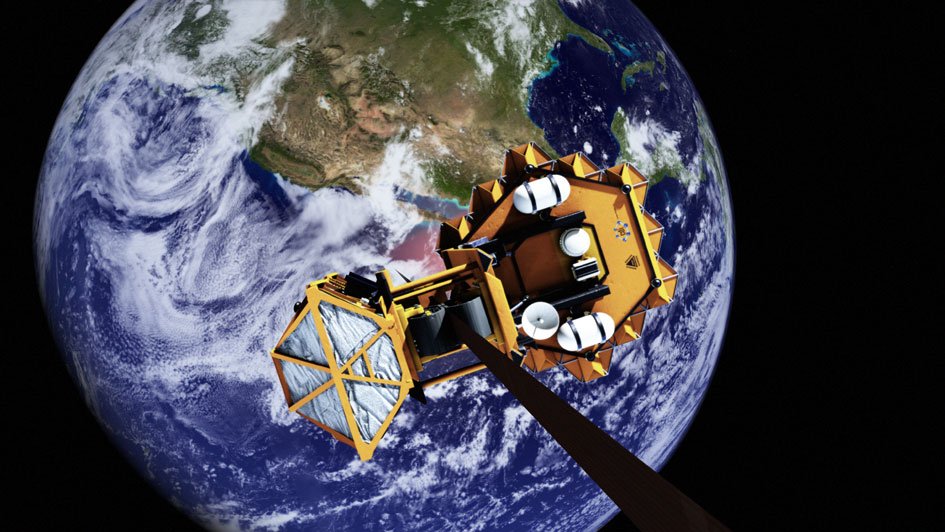
NASA space elevator theoretical studies are among the most ambitious ideas ever discussed in future space transportation. The concept sounds simple at first: build a long, strong tether from Earth toward space, attach it to a counterweight beyond geostationary orbit, and allow electric climbers to move cargo and possibly people upward without launching a traditional rocket every time. In reality, the idea is one of the most difficult engineering challenges ever imagined.
A space elevator is not an active NASA construction project in 2026. It is not a confirmed mission being built for launch. The accurate way to explain this topic is that NASA-funded and NASA-hosted studies have examined space elevator concepts in the past, especially through the NASA Institute for Advanced Concepts, while modern discussion remains mostly theoretical because the required tether materials, orbital safety systems, deployment methods, and economic infrastructure are not yet ready.
NASA’s technical literature describes a space elevator as a physical connection from Earth’s surface to a point beyond geostationary orbit, with the system’s center of mass near geostationary altitude so it remains above the same region of Earth as the planet rotates. The geostationary point is about 35,786 kilometers above Earth’s surface, but many space elevator concepts extend much farther outward to keep the tether under tension.
For related future space technology topics, you can also read our articles on NASA reusable interplanetary spacecraft, NASA deep space laser communication technology, NASA lunar base power infrastructure, and NASA in-situ resource utilization on the Moon.
Editorial Note
This article explains space elevator studies, theoretical engineering ideas, and future transportation possibilities using available NASA technical sources. It does not claim that NASA is building an operational space elevator in 2026. Where future systems are discussed, they are presented as theoretical concepts, long-term engineering possibilities, or early-stage research directions.
Key Statistics and Facts
A traditional Earth space elevator concept would require a tether extending from Earth’s surface to geostationary orbit and beyond. NASA’s technical report describes geostationary orbit as approximately 35,786 kilometers above Earth.
NASA Institute for Advanced Concepts-supported work by Bradley C. Edwards examined a space elevator concept using a carbon nanotube composite ribbon extending about 100,000 kilometers, with a proposed initial elevator capacity of about 20 tons. This was a conceptual study, not an active construction program.
NASA-sponsored space elevator research identified the tether material as the most critical challenge. A NASA technical report stated that an Earth-based elevator would require ultra-high-strength carbon nanotube-reinforced composites in roughly the 100 GPa strength range.
NASA’s current NIAC program supports visionary aerospace concepts that could one day transform future missions, but NIAC-style concept studies are not the same as approved operational missions.
NASA has also used the word “elevator” in a different Artemis context: astronauts tested a sub-scale elevator concept for SpaceX’s Starship Human Landing System. That is a lunar lander crew elevator, not an Earth-to-space elevator.
What Is a Space Elevator?
A space elevator is a proposed transportation system that would use a very long tether instead of a rocket-only launch system. One end of the tether would be anchored near Earth’s equator, while the other end would extend far beyond geostationary orbit. The rotation of Earth and the counterweight beyond geostationary orbit would keep the tether under tension.
A climber would move along the tether, carrying cargo upward from Earth toward space. Instead of burning huge amounts of rocket propellant in a few minutes, the climber could use electrical power, possibly supplied by lasers, solar energy, or another power delivery system.
Example: imagine a railway line stretching from Earth into space. A train cannot simply drive vertically into orbit, but the space elevator concept works like a fixed path that climbers could follow. The main difference is that this “railway” would need to survive gravity, orbital mechanics, wind, lightning, micrometeoroids, radiation, and extreme tension.
The goal of a space elevator would be to reduce the cost and complexity of reaching orbit. If such a system could be built safely, it could theoretically move satellites, materials, fuel, spacecraft components, and possibly people into space more routinely than rockets alone.
Confirmed Facts vs Future Possibilities
| Topic | Status in 2026 | Safe Explanation |
|---|---|---|
| NASA historical space elevator studies | Confirmed | NASA technical reports and NIAC-supported studies examined the concept |
| Operational NASA space elevator | Not confirmed | NASA is not operating or building a space elevator in 2026 |
| Earth-to-geostationary tether | Theoretical concept | Requires materials far beyond ordinary engineering structures |
| Carbon nanotube tether | Proposed material pathway | Major manufacturing and strength challenges remain |
| 100,000 km tether concepts | Studied in NIAC-era work | Conceptual design, not a deployed system |
| Lunar or Mars elevator concepts | Future theoretical ideas | Easier in some ways than Earth due to lower gravity, but still not operational |
| SpaceX Starship HLS elevator | Real hardware test | A crew/cargo elevator for a lunar lander, not a space elevator |
In simple words, space elevator studies are real, but a working NASA space elevator is not a 2026 reality.
Why the Space Elevator Idea Is So Powerful
The space elevator idea is powerful because it tries to solve one of the biggest problems in space travel: launch cost and launch energy. Rockets are extremely powerful, but they must carry both payload and propellant. Much of a rocket’s mass at liftoff is fuel, and large parts of the launch vehicle may be discarded or require major recovery operations.
A space elevator would change the basic transportation model. Instead of launching everything on rockets, cargo could climb along a tether. That could make access to orbit more routine if the system worked.
Example: today, launching a large satellite requires a rocket, launch pad, countdown, fuel loading, safety zones, weather checks, and complex mission operations. In a space elevator scenario, cargo might be moved upward in repeated trips using electric climbers. The result could be more like scheduled freight transport than a one-time launch event.
This is why space elevators are often described as revolutionary. They could theoretically support satellite deployment, orbital manufacturing, space solar power, lunar missions, Mars preparation, and large-scale space infrastructure.
However, the word “theoretically” matters. The idea is attractive, but the engineering is extremely difficult.
The Basic Physics Behind a Space Elevator
A space elevator depends on Earth’s rotation and geostationary orbit. A satellite in geostationary orbit circles Earth once every 24 hours, matching Earth’s rotation. From the ground, it appears to stay above the same point on the equator.
In a space elevator concept, the tether’s center of mass must be near geostationary orbit. The lower part of the tether pulls downward under gravity, while the upper part and counterweight provide outward tension due to orbital motion. This balance keeps the tether stretched.
Example: think of swinging a ball on a string. The string stays tight because the ball is moving in a circle. A space elevator is much more complicated, but the broad idea is that orbital motion and Earth’s rotation help keep the tether under tension.
NASA’s technical description explains that the center of mass is at the geostationary point so the system stays over the same point above Earth’s equator as Earth rotates.
Why Geostationary Orbit Matters
Geostationary orbit is important because the elevator must remain fixed above one region of Earth. If the tether were not synchronized with Earth’s rotation, it would move across the sky, making a fixed ground anchor impossible.
This is why most Earth space elevator concepts place the anchor near the equator. A geostationary orbit exists above Earth’s equator, so the tether must align with that orbital geometry.
Example: if the anchor were placed far from the equator, the tether would not hang straight in the correct orbital plane. This would create severe structural and stability problems.
A practical space elevator would also need an ocean-based or remote equatorial anchor to reduce weather, aviation, shipping, and safety risks. Some historical concepts suggested ocean platforms because they could move slightly to help avoid storms or orbital debris alignment problems.
The Tether: The Biggest Challenge
The tether is the most important and most difficult part of a space elevator. It must be strong enough to support its own weight over tens of thousands of kilometers. Ordinary steel, aluminum, and modern industrial cables are not strong enough for an Earth-based space elevator.
NASA-sponsored research identified ultra-high-strength carbon nanotube-reinforced composite material as a critical requirement. A NASA technical report described the need for tether material in roughly the 100 GPa strength range for an Earth-based elevator.
Example: a normal cable becomes heavier as it gets longer. If a cable is thousands of kilometers long, it can break under its own weight unless the material has an extraordinary strength-to-weight ratio. A space elevator tether must be both extremely strong and extremely light.
Carbon nanotubes became famous in space elevator discussions because they have excellent theoretical strength. But producing long, defect-free, mass-manufactured tether material at the required scale remains a major unsolved challenge.
Carbon Nanotubes and Advanced Materials
Carbon nanotubes are tiny cylindrical structures made of carbon atoms. They can have impressive strength and stiffness at microscopic scales. This is why researchers have discussed them as possible space elevator tether materials.
The problem is not simply whether carbon nanotubes can be strong in a lab sample. The real issue is whether engineers can manufacture a continuous, reliable, damage-resistant, ultra-long composite ribbon with the required strength, quality control, and durability.
Example: a single thread may be strong, but a bridge cable must be strong across its entire length. One weak section can become the failure point. A space elevator tether would be far less forgiving because it would extend through atmosphere, low Earth orbit, radiation belts, and deep-space conditions.
This is why space elevator material science remains a central obstacle. The concept cannot move from theory to construction unless tether materials improve dramatically.
The NIAC Space Elevator Program
The NASA Institute for Advanced Concepts supported early space elevator studies to examine design, deployment, and operations scenarios. Bradley C. Edwards’ NIAC-supported work proposed a carbon nanotube composite ribbon extending about 100,000 kilometers and discussed a small initial elevator with about 20 tons of capacity.
This work was important because it helped move the space elevator from science-fiction imagination toward structured engineering analysis. It examined questions such as tether deployment, climber design, power delivery, debris risks, anchor location, and system growth.
However, a NIAC study is not the same as an approved NASA mission. NIAC supports early-stage concepts that may be technically credible and potentially transformative, but many NIAC concepts remain theoretical for years or decades. NASA describes NIAC projects as visionary ideas that could one day “Change the Possible” in aerospace.
Example: NIAC is like an advanced idea laboratory. It helps researchers test whether bold concepts deserve more attention. It does not mean the concept is ready for construction.
How a Space Elevator Might Be Built
A common space elevator construction concept begins in space rather than from the ground. A spacecraft would place a seed ribbon or tether system in orbit. One part would extend downward toward Earth, while another part would extend outward beyond geostationary orbit as a counterweight.
Once the initial ribbon reached Earth and was anchored, robotic climbers could move upward along it, adding more material to strengthen the tether. Over time, the ribbon could become strong enough to carry heavier payloads.
Example: imagine lowering a thread from space, attaching it to Earth, and then sending machines up the thread to make it thicker and stronger. That is the simplified version of how some space elevator deployment concepts work.
But every step is difficult. The initial tether must survive deployment. The anchor must be secure. The climbers must work reliably. The power system must be efficient. The tether must avoid debris, storms, and vibration. Even small failures could threaten the entire structure.
Powering the Climber
A space elevator climber would need power to move upward. Carrying all power onboard would make the climber heavier, so many concepts have discussed wireless power transmission, laser beaming, solar power, or electrical power delivered through the tether.
Example: a laser-powered climber would receive energy from the ground or another platform. The beam would hit receiver panels on the climber and help power its motors. This sounds simple, but it creates challenges involving beam accuracy, weather, energy conversion, heat, safety, and efficiency.
If power transmission is interrupted, the climber must remain safe. It cannot simply fall like a broken elevator on Earth. The system would need braking, docking, backup power, communication, and emergency procedures.
This is another reason space elevators remain theoretical. The tether is the biggest challenge, but the power system is also extremely complex.
Space Debris and Micrometeoroid Risks
A space elevator would pass through regions where satellites, debris, and tiny high-speed particles exist. Even a small object can cause serious damage when it hits at orbital speeds.
Example: a paint-chip-sized object in orbit can strike with enormous energy. If such objects repeatedly hit a space elevator tether, they could weaken or cut parts of the ribbon.
This is why some space elevator concepts propose a wide, thin ribbon instead of a round cable. A ribbon could survive small holes better than a single cable because damage might affect only part of its width. But this does not eliminate the risk.
A real space elevator would need tracking systems, repair robots, debris avoidance strategies, material redundancy, and constant monitoring.
Weather, Lightning, and Atmospheric Hazards
The lower part of an Earth space elevator would pass through the atmosphere. That creates major problems involving wind, storms, lightning, corrosion, aircraft safety, and mechanical vibration.
Example: a tall building experiences wind loads. A space elevator tether would pass through the entire atmosphere and extend into space. Even if the tether is thin, atmospheric motion could create dangerous vibrations and stress.
A floating ocean anchor near the equator has often been proposed because it could move to avoid severe weather or adjust tether position. But this adds new engineering challenges, including marine operations, security, power supply, and international regulation.
Lightning is another issue. A long conductive or semi-conductive structure connected from Earth into the sky could face serious electrical risks. Designers would need protection systems, safe shutdown procedures, and weather avoidance plans.
Could a Space Elevator Replace Rockets?
A space elevator would not immediately replace all rockets. Even if one were built, rockets would still be needed for many missions, emergency transport, deep-space departure stages, military and scientific launches, and operations from locations not served by the elevator.
A better way to describe the concept is that a space elevator could complement rockets by moving some cargo to orbit more routinely.
Example: rockets might still launch urgent missions, crew vehicles, or spacecraft needing special trajectories. The space elevator could move bulk materials, fuel, satellite components, construction parts, and supplies over time.
This is similar to how airplanes, ships, trains, and trucks all exist together on Earth. No single transportation system replaces every other system. A mature space economy would likely use multiple transport methods.
Earth Space Elevator vs Lunar Space Elevator
An Earth space elevator is the most famous version, but it is also the hardest because Earth has strong gravity, a thick atmosphere, weather, and large orbital debris challenges.
A lunar space elevator could be easier in some ways because the Moon has lower gravity and no thick atmosphere. A lunar tether system could theoretically help move materials from the lunar surface to space or from lunar orbit to the surface.
Example: if future astronauts mine lunar resources, a lunar elevator or tether system could theoretically help move cargo away from the Moon using less energy than rockets. But this is still a future concept, not a current operational system.
A Mars elevator has also been discussed in theoretical work. Mars has lower gravity than Earth but still has an atmosphere, dust storms, and orbital mechanics challenges. These versions may be easier than Earth elevators in some ways, but they remain highly theoretical.
How Space Elevators Connect to Sustainable Space Travel
A space elevator is often discussed as a sustainable transportation idea because it could reduce the need for repeated rocket launches for certain cargo. If powered by electricity, it might reduce propellant use for reaching orbit.
This connects with broader space sustainability. Future exploration will need reusable spacecraft, in-space refueling, local resource use, solar power, nuclear power, advanced communications, and orbital infrastructure.
For a related article, read our guide on NASA reusable interplanetary spacecraft. Reusable spacecraft and space elevators are different ideas, but both aim to make space transportation more repeatable and less wasteful.
Example: a reusable spacecraft could move between orbit and deep space, while a space elevator could theoretically help move cargo from Earth to orbit. Together, these systems could support a future space logistics network.
Why 2026 Matters for Space Elevator Discussion
The year 2026 matters because space technology is moving quickly in areas related to reusability, lunar infrastructure, robotics, materials, and advanced concepts. But it is important not to exaggerate the space elevator itself.
NASA’s current NIAC program continues to support early-stage visionary aerospace concepts, and NASA lists 2026 NIAC-related activities and solicitations. However, that does not mean a NASA space elevator has been selected for construction in 2026.
The safe 2026 framing is:
NASA has historical technical studies on space elevators.
Space elevators remain theoretical.
Tether material is still the core challenge.
NASA’s current advanced concept programs continue to support futuristic aerospace ideas.
No operational NASA space elevator exists in 2026.
Modern space infrastructure work may make some related technologies more relevant in the future.
This wording keeps the article accurate while still allowing the topic to be exciting.
Common Misunderstanding: Starship Elevator vs Space Elevator
NASA has published information about astronauts testing a sub-scale elevator concept for SpaceX’s Starship Human Landing System. This can confuse readers because the word “elevator” appears in both topics.
The Starship HLS elevator is a mechanical lift used to move astronauts and cargo between the Starship cabin and the lunar surface. It is not a tether from Earth to orbit.
Example: the Starship elevator is like an elevator on a tall building or lander. A space elevator is a planetary-scale transportation structure extending from Earth toward space. They are completely different systems.
This distinction is important because articles about “NASA space elevator” should not use Starship HLS elevator tests as proof that NASA is building an Earth-to-orbit space elevator.
Main Challenges of Space Elevator Technology
The first challenge is tether strength. No current mass-produced material has clearly demonstrated all the required properties for a full-scale Earth space elevator.
The second challenge is manufacturing. Even if a material is strong at small scale, producing thousands of kilometers of flawless tether is a completely different problem.
The third challenge is deployment. Building the system would require extraordinary space operations, orbital control, and tether handling.
The fourth challenge is space debris. A permanent tether crossing orbital regions would face collision risks from satellites, debris, and micrometeoroids.
The fifth challenge is weather and atmosphere. The lower tether must survive wind, storms, lightning, aircraft traffic, and environmental exposure.
The sixth challenge is economics. A space elevator would require enormous upfront investment before it could deliver routine transportation benefits.
The seventh challenge is regulation and security. A structure connecting Earth and space would involve international law, airspace, ocean rights, orbital safety, and global security concerns.
Example: even if engineers solved the tether material problem, the project would still need answers for debris avoidance, ocean anchoring, power beaming, climber safety, emergency repair, and global governance.
What People Often Get Wrong
Many people think NASA is building a space elevator in 2026. That is not correct. NASA has supported and hosted theoretical studies in the past, but there is no confirmed NASA operational space elevator project in 2026.
Another mistake is thinking carbon nanotubes automatically solve the problem. Carbon nanotubes are promising at small scales, but producing a reliable, full-scale tether is a much harder challenge.
A third mistake is assuming a space elevator would be like a normal building elevator. A real space elevator would be a planetary-scale orbital structure involving gravity, rotation, orbital mechanics, space debris, atmospheric hazards, and extreme material stress.
A fourth mistake is thinking a space elevator would instantly replace rockets. Even in a successful future, rockets would likely remain part of space transportation.
Finally, some articles confuse a lunar lander elevator with a space elevator. The Starship HLS elevator is a crew/cargo lift for a lander, not a tether from Earth to orbit.
Practical Reader Takeaway
NASA space elevator theoretical studies are best understood as early-stage engineering explorations of a bold transportation concept.
A space elevator would use a long tether from Earth toward geostationary orbit and beyond.
The goal would be to move cargo to space using climbers instead of rockets alone.
The biggest challenge is the tether material.
Carbon nanotube composites have been studied, but full-scale manufacturing remains unresolved.
NASA-supported studies helped define the concept, but NASA is not building an operational space elevator in 2026.
Future versions may be more practical on the Moon or Mars than on Earth.
Space elevators remain one of the most ambitious long-term ideas in space infrastructure.
Frequently Asked Questions
What is a space elevator?
A space elevator is a theoretical transportation system that would use a long tether extending from Earth toward space. Electric climbers could move along the tether to carry cargo or possibly people to high altitude or orbit.
Is NASA building a space elevator in 2026?
No. NASA is not operating or constructing a confirmed space elevator in 2026. NASA has supported and published theoretical studies in the past, but the concept remains a long-term engineering idea.
How high would a space elevator need to reach?
An Earth space elevator would need to extend to geostationary orbit, about 35,786 kilometers above Earth, and usually farther outward to provide tension through a counterweight.
Why are carbon nanotubes important for space elevators?
Carbon nanotubes are discussed because of their high theoretical strength-to-weight ratio. NASA-sponsored research identified ultra-high-strength carbon nanotube-reinforced composites as a critical technology for an Earth space elevator tether.
What is the biggest challenge in building a space elevator?
The biggest challenge is creating a tether material strong, light, durable, and manufacturable enough to survive tens of thousands of kilometers of stress, weather, debris, radiation, and orbital motion.
Did NASA’s NIAC study space elevators?
Yes. NASA Institute for Advanced Concepts-supported work examined space elevator design, deployment, and operations scenarios. Bradley Edwards’ NIAC-supported study proposed a carbon nanotube composite ribbon extending about 100,000 kilometers.
Is a space elevator the same as the Starship lunar elevator?
No. The Starship lunar elevator is a lift system for astronauts and cargo on the Starship Human Landing System. A space elevator is a theoretical tether structure connecting Earth and space.
Could a space elevator make space travel cheaper?
In theory, yes. A space elevator could reduce reliance on rockets for some cargo transport. However, the construction cost, material challenge, safety requirements, and infrastructure needs remain extremely difficult.
Could a lunar space elevator be easier than an Earth space elevator?
Possibly. A lunar elevator could avoid Earth’s thick atmosphere and strong gravity, but it would still require advanced materials, deployment systems, anchoring, power, and operational safety.
Conclusion
NASA space elevator theoretical studies show how bold future space transportation ideas can move from imagination into structured engineering analysis. The concept is simple to describe but extremely difficult to build: a long tether would stretch from Earth toward geostationary orbit and beyond, while climbers would move cargo upward without using rockets for the entire journey.
The potential benefits are enormous. A working space elevator could support routine cargo movement, orbital construction, satellite deployment, space manufacturing, lunar logistics, and future deep-space infrastructure. It could become one part of a larger transportation network involving reusable rockets, reusable spacecraft, orbital depots, lunar resources, and advanced power systems.
But the challenges are just as enormous. The tether material remains the central problem. Engineers would also need to solve deployment, power delivery, debris protection, weather safety, repair systems, orbital stability, economics, and international regulation.
The most accurate way to understand NASA space elevator studies in 2026 is this: the space elevator remains a theoretical but valuable long-term concept. NASA-related studies helped define the engineering questions, but no operational NASA space elevator is being built in 2026. It remains one of the most inspiring ideas for a future where reaching space could become more routine, sustainable, and connected to large-scale space infrastructure.
Sources and Further Reading
NIAC Space Elevator Program Paper
NIAC Phase II Final Report: The Space Elevator
NASA: Astronauts Test SpaceX Elevator Concept for Artemis Lunar Lander