GPS is one of the most useful technologies on Earth. It helps people drive cars, track airplanes, navigate ships, map cities, guide emergency services, and use smartphones every day. But there is one major problem: GPS does not work everywhere in space.
A spacecraft traveling to the Moon, Mars, an asteroid, or the outer solar system cannot simply open a GPS app and find its location. GPS depends on satellite constellations around Earth. Once a spacecraft travels far beyond Earth, it needs other ways to know where it is, how fast it is moving, and when it should adjust its path.
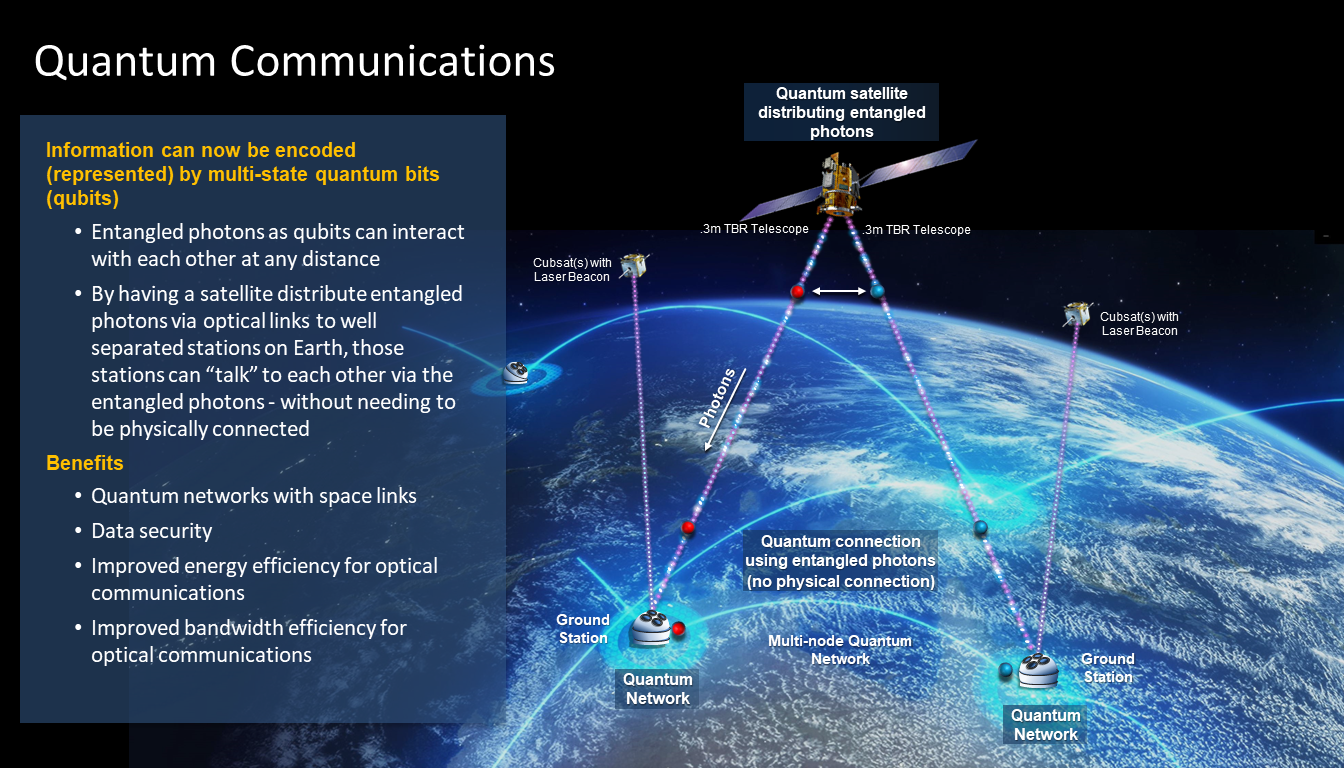
This is where NASA quantum navigation in space becomes an important future technology pathway. It is not a finished GPS replacement system operating across the solar system in 2026. Instead, it is a developing area of research connected to atomic clocks, quantum sensors, atom interferometry, autonomous navigation, and deep space communication.
In simple words, quantum navigation could help future spacecraft navigate with less dependence on Earth-based tracking. NASA has already demonstrated technologies that support this direction, including the Deep Space Atomic Clock and quantum experiments aboard the International Space Station’s Cold Atom Lab. NASA also continues to study quantum sensors, communication, and navigation-related technologies as part of future mission research.
Editorial Note
This article uses careful wording for accuracy and reader trust. NASA has not announced a fully operational “Quantum Navigation GPS replacement system” for all spacecraft in 2026. The correct way to explain this topic is that quantum navigation is a future technology pathway supported by confirmed NASA work in atomic clocks, quantum sensing, Cold Atom Lab research, and autonomous deep space navigation.
That distinction is important for AdSense, Journey by Mediavine, Mediavine, and Raptive-style publishing. It avoids exaggerated claims while still explaining why this technology could become important for future space missions.
Key Facts About NASA Quantum Navigation in Space
| Key Point | Simple Explanation |
|---|---|
| GPS is mainly Earth-based | GPS satellites orbit Earth, so spacecraft far beyond Earth cannot rely on normal GPS coverage. |
| NASA uses deep space tracking today | Spacecraft are tracked using systems such as NASA’s Deep Space Network. |
| Atomic clocks are essential for navigation | Precise timekeeping helps determine distance, speed, and position. |
| NASA tested the Deep Space Atomic Clock | DSAC was designed to support more autonomous deep space navigation. |
| Cold Atom Lab supports quantum research in space | It has demonstrated quantum experiments using ultracold atoms on the ISS. |
| Quantum sensors could improve future navigation | They may measure gravity, acceleration, rotation, and other forces with high precision. |
| The technology is still developing | Quantum navigation is promising, but not yet a universal GPS replacement beyond Earth. |
Why GPS Does Not Work Like Normal in Deep Space
GPS works on Earth because a network of satellites constantly sends timing signals. A GPS receiver compares signals from multiple satellites and calculates its position. This works well on Earth and near Earth because GPS satellites are close enough and arranged for Earth-based users.
Deep space is different. A spacecraft traveling to Mars or Jupiter is far outside normal GPS coverage. It cannot depend on the same satellite geometry used by phones, cars, and aircraft on Earth.
NASA’s deep space missions usually rely on radio tracking, Doppler measurements, ranging, optical navigation, onboard instruments, and ground-based mission control. NASA’s Deep Space Network, or DSN, is the international array of giant radio antennas that supports interplanetary spacecraft missions.
A simple example is a Mars orbiter. To know its path accurately, mission teams may use radio signals between Earth and the spacecraft. By studying signal travel time and frequency changes, navigators can estimate distance, velocity, and trajectory. NASA’s Basics of Space Flight explains that navigators use Doppler and range measurements to determine spacecraft trajectories.
For readers, the main idea is simple: GPS is excellent near Earth, but deep space navigation needs different tools.
What Is Quantum Navigation?
Quantum navigation refers to navigation methods that use quantum physics to measure time, motion, gravity, acceleration, rotation, or other physical changes with extreme precision.
This can include several technologies:
Atomic clocks
Atom interferometers
Quantum accelerometers
Quantum gyroscopes
Quantum gravity sensors
Quantum timing and synchronization systems
These technologies are not magic. They use the behavior of atoms, light, and quantum states to measure small changes very accurately.
A simple way to understand it is this: normal navigation often depends on external signals. Quantum navigation could allow a spacecraft to measure some of its own motion and environment more precisely, reducing dependence on outside signals.
This does not mean quantum navigation will replace every current method. More realistically, future spacecraft may combine several tools: Deep Space Network tracking, optical navigation, atomic clocks, quantum sensors, star trackers, onboard autonomy, and communication links.
For a related topic, read our guide on NASA deep space laser communication, because future navigation and future communication systems are closely connected.
Why NASA Needs Better Navigation Beyond Earth
Spacecraft navigation becomes harder as missions travel farther from Earth. Signals take longer to travel. Ground control cannot respond instantly. Communication windows may be limited. A spacecraft may need to adjust its path without waiting for step-by-step instructions from Earth.
For example, a signal from Earth to Mars can take several minutes depending on planetary positions. For the outer solar system, the delay can be much longer. That means a spacecraft cannot always depend on real-time human control.
NASA’s autonomous navigation work is designed to reduce this problem. NASA educational material on autonomous deep space navigation explains that GPS is not available in deep space, so self-contained navigation can reduce delay and allow faster response to changing conditions.
This is where quantum navigation becomes attractive. If future spacecraft can carry extremely precise clocks and sensors, they may better estimate their own position and motion during long missions.
This would benefit missions to:
The Moon
Mars
Asteroids
Icy moons
Outer planets
Deep space telescopes
Future crewed spacecraft
For example, a Mars mission approaching the planet needs accurate timing and positioning before orbital insertion or atmospheric entry. You can connect this idea with our article on NASA Mars atmospheric entry technologies.
The Role of Atomic Clocks in Space Navigation
Time is one of the foundations of navigation. If a spacecraft can measure time extremely accurately, it can improve calculations involving distance, speed, and signal travel time.
NASA’s Deep Space Atomic Clock, also called DSAC, was a technology demonstration of a small, ultra-precise mercury-ion atomic clock launched in June 2019. NASA describes it as a critical step toward allowing spacecraft to navigate more independently in deep space instead of waiting for directions from Earth.
JPL explains that DSAC was designed to test its potential as a next-generation tool for spacecraft navigation, radio science, and global positioning systems. JPL also notes that the technology was designed to improve spacecraft navigation to distant destinations.
A simple example can explain why this matters.
If a spacecraft sends a radio signal to Earth, mission teams can calculate distance based on how long the signal takes to travel. But if a spacecraft has a very stable onboard clock, it can support more one-way navigation methods instead of always needing a two-way signal loop between Earth and the spacecraft.
In simple words, a better space clock can help a spacecraft become more independent.
Deep Space Atomic Clock: A Step Toward GPS Beyond Earth
NASA’s Deep Space Atomic Clock is one of the clearest confirmed examples linked to the idea of GPS-like navigation beyond Earth.
The important point is that DSAC was not a full deep-space GPS system. It was a technology demonstration. But it showed why precise onboard timekeeping matters for future autonomous navigation.
On Earth, GPS depends on extremely accurate timing. A GPS receiver compares timing signals from satellites to determine position. A similar principle can support future deep space navigation, but deep space missions need different architectures because there is no Earth-like GPS satellite network around Mars, Jupiter, or the outer solar system.
NASA described DSAC as a step toward more efficient and flexible clock architecture for future navigation and radio science.
For readers, this is the safest way to understand the phrase “GPS beyond Earth”:
It does not mean NASA already has a solar-system-wide GPS network.
It means NASA is developing technologies that could make future spacecraft navigation more autonomous, accurate, and scalable beyond Earth orbit.
Cold Atom Lab and Quantum Sensors in Space
Another important part of NASA’s quantum technology work is the Cold Atom Lab on the International Space Station.
NASA’s Cold Atom Lab creates extremely cold atoms in microgravity. At these temperatures, atoms behave in ways that allow scientists to study quantum effects more clearly. NASA reported that the Cold Atom Lab team used an atom interferometer in space, a quantum tool that can precisely measure gravity, magnetic fields, and other forces.
This matters because atom interferometers can become powerful sensors. They may help measure acceleration, rotation, gravity, and changes in motion. These are all useful for navigation and planetary science.
NASA also reported in July 2025 that Cold Atom Lab innovations provide a technical foundation for future quantum systems, including quantum gravity gradiometry and navigation systems more precise than GPS for spacecraft.
This does not mean spacecraft already navigate everywhere using quantum sensors. It means NASA is building and testing the scientific foundation needed for future systems.
A beginner-friendly example is a spacecraft flying over the Moon. A quantum gravity sensor could help detect small changes in gravity caused by underground structures, mass concentrations, or buried ice. That information could help mapping, landing-site selection, and scientific exploration.
Quantum Sensors and Gravity Mapping
Quantum sensors may also help spacecraft understand gravity fields more accurately.
NASA announced in 2025 that researchers were developing the first space-based quantum sensor for measuring gravity, supported by NASA’s Earth Science Technology Office. NASA described this as a mission that could pave the way for observations of Earth systems such as petroleum reserves and global freshwater supplies.
Gravity sensing is important because gravity is connected to mass distribution. If a spacecraft can measure gravity changes very precisely, it can help map what lies beneath a surface.
Possible future uses include:
Mapping lunar underground structures
Studying Mars subsurface features
Identifying possible water resources
Improving planetary gravity maps
Supporting safe spacecraft trajectories
Helping future landers understand local terrain
This is why quantum navigation and quantum sensing are connected. Navigation is not only about knowing a location on a map. It is also about understanding motion, gravity, timing, and the environment through which a spacecraft travels.
How Quantum Navigation Could Work in Future Missions
A future quantum navigation system would likely combine multiple technologies. It would not depend on one device alone.
A spacecraft could use an atomic clock for precise timekeeping. It could use quantum inertial sensors to measure acceleration and rotation. It could use optical navigation to compare stars, planets, or surface landmarks. It could use DSN radio tracking when available. It could use onboard software to combine all the data and estimate the best trajectory.
A practical future workflow might look like this:
The spacecraft measures its own acceleration and rotation using advanced sensors.
It compares star fields or planetary images using optical navigation.
It uses an onboard atomic clock to maintain accurate timing.
It receives periodic tracking updates from Earth.
Its onboard computer combines all measurements.
It corrects its path with less delay and less dependence on constant Earth instructions.
This would be especially useful for missions far from Earth or missions that need fast decision-making.
For example, a spacecraft landing on Mars cannot wait for real-time instructions during the final descent because of communication delay. It needs onboard navigation and autonomy. Quantum sensors may one day become part of that larger navigation stack.
Example 1: A Mars Mission Using Better Onboard Navigation
Imagine a spacecraft traveling to Mars. Today, mission teams can track it using Earth-based systems and onboard navigation tools. But as the spacecraft gets closer to Mars, accurate timing, position, and velocity become critical.
A future spacecraft with quantum-enhanced sensors could better estimate its motion between Earth tracking updates. It could detect small acceleration changes, maintain better timing, and support more precise course corrections.
This could help reduce uncertainty before Mars orbit insertion or landing preparation.
This does not mean mission control becomes unnecessary. Instead, it means the spacecraft becomes more capable of supporting its own navigation between commands.
Example 2: A Lunar Rover on the Far Side of the Moon
The far side of the Moon cannot directly communicate with Earth without relay support. GPS coverage from Earth is also not the same as on Earth’s surface.
A future lunar rover using quantum inertial sensors could better estimate its movement when external signals are weak or unavailable. It might combine this with maps, surface landmarks, relay satellites, and onboard cameras.
This would be useful for exploring craters, lava tubes, permanently shadowed regions, or difficult terrain.
For readers interested in astronaut safety beyond Earth, this topic connects with our article on NASA magnetic shielding for astronauts, because future Moon and Mars missions need both accurate navigation and radiation protection.
Example 3: A Probe Exploring an Icy Moon
Icy moons such as Europa and Enceladus are scientifically exciting because they may contain subsurface oceans. A future probe orbiting or flying near an icy moon could benefit from highly precise gravity measurements.
Quantum gravity sensors could help detect small variations in gravitational pull. These variations may reveal information about internal structure, ice thickness, or subsurface layers.
This is not a guarantee that quantum sensors will find oceans directly. But they could add important measurements to mission science.
For a wider future-space-science connection, read our article on NASA next-generation space telescope technology.
Confirmed Facts vs Future Possibilities
| Confirmed Fact | Future Possibility |
|---|---|
| NASA tested the Deep Space Atomic Clock as a technology demonstration. | Future spacecraft may use improved onboard clocks for more autonomous navigation. |
| NASA’s Cold Atom Lab has performed quantum experiments in space. | Cold atom technologies may support future quantum sensors for spacecraft navigation. |
| NASA is developing quantum sensing technology for gravity measurements. | Quantum gravity sensors may help map the Moon, Mars, and other planetary bodies. |
| NASA’s Deep Space Network supports interplanetary spacecraft missions. | Future missions may depend less on constant Earth-based tracking. |
| GPS is not available in deep space in the same way it is on Earth. | Future systems may create GPS-like navigation support beyond Earth using new architectures. |
| NASA’s 2026 research focus includes quantum sensors, communications, and networks. | These technologies may become part of next-generation space navigation systems. |
This section is important because it prevents exaggerated claims. Quantum navigation is promising, but it should be described as a developing technology, not a finished universal replacement for GPS.
Why Quantum Navigation Matters for Astronauts
Future astronauts traveling to the Moon, Mars, and beyond will need reliable navigation. A crewed spacecraft cannot depend on guesswork. It needs accurate position, velocity, timing, communication, and backup systems.
Quantum navigation could support astronaut safety by helping spacecraft maintain better awareness of its location and motion. This could be useful during:
Lunar transfer
Mars transfer
Docking operations
Surface landing
Emergency return planning
Deep space cruise
Navigation when signals are delayed or unavailable
It may also support surface exploration. Astronauts or robotic systems moving across the Moon or Mars may need navigation tools that work when satellite coverage is limited.
This does not mean quantum navigation alone will protect astronauts. It would likely work with many other systems, including communication networks, terrain mapping, inertial navigation, star tracking, mission control, and onboard autonomy.
Why Quantum Navigation Matters for Robotic Spacecraft
Robotic spacecraft often operate far from Earth. They may fly near planets, orbit moons, study asteroids, or pass through regions where quick decisions are needed.
Better onboard navigation could help robotic missions:
Reduce dependence on constant Earth tracking
Perform more accurate flybys
Improve orbit insertion planning
Support autonomous hazard avoidance
Increase science return
Operate safely with communication delays
Use fuel more efficiently through better trajectory control
A spacecraft that knows its own position more accurately may need fewer correction maneuvers. That can save propellant and extend mission life.
Connection With Space Weather and Earth’s Magnetic Environment
Space weather can affect spacecraft electronics, communication, and navigation systems. Charged particles and solar storms can create operational challenges.
That is why quantum navigation should not be viewed separately from the space environment. Future navigation systems must work in real conditions, including radiation, temperature changes, vibration, and electromagnetic disturbance.
For more background, read our article on NASA magnetosphere observation missions, which explains how NASA studies Earth’s magnetic shield and space weather.
Challenges of Quantum Navigation in Space
Quantum navigation sounds powerful, but it is technically difficult.
Quantum sensors can be sensitive to vibration, temperature changes, noise, radiation, and instrument drift. Spacecraft are not quiet laboratories. They experience launch vibration, thermal cycling, radiation exposure, power limits, and limited maintenance.
Major challenges include:
Making instruments small enough for spacecraft
Keeping sensors stable in harsh space environments
Reducing vibration and noise
Maintaining calibration over long missions
Managing power requirements
Protecting instruments from radiation
Integrating quantum sensors with existing navigation systems
Proving reliability through flight tests
This is why careful wording matters. Quantum navigation is not simply “GPS 2.0 already installed on NASA spacecraft.” It is a serious but still-developing technology pathway.
What People Often Get Wrong
One common misunderstanding is that GPS works everywhere in space. It does not. GPS is designed for Earth and near-Earth users, not for normal navigation across the entire solar system.
Another misunderstanding is that NASA already has a complete quantum navigation system replacing GPS in 2026. That is not confirmed. NASA has demonstrated and developed related technologies, but a full operational solar-system navigation network is not currently established.
A third misunderstanding is that quantum technology means instant or perfect navigation. Quantum sensors can be extremely precise, but they still face real engineering challenges.
A fourth misunderstanding is that deep space navigation depends on one tool. In reality, NASA uses combinations of tracking, timing, optics, onboard software, communication systems, and mission planning.
Reader Benefits: Why This Topic Is Worth Understanding
Understanding NASA quantum navigation in space gives readers a clearer view of how future missions may travel safely beyond Earth.
First, it explains why GPS is not enough for deep space.
Second, it shows how precise timekeeping can help spacecraft navigate more independently.
Third, it introduces quantum sensors in a simple way without turning the topic into confusing physics.
Fourth, it helps readers understand why future Moon and Mars missions need better autonomy.
Fifth, it connects advanced science with real mission benefits: safer travel, better mapping, improved landing accuracy, and more reliable spacecraft operations.
For more space technology updates, you can also explore our coverage of latest science and technology breakthroughs.
Practical Example: From Earth GPS to Deep Space Quantum Navigation
Here is a simple comparison:
| Earth GPS | Future Deep Space Navigation |
|---|---|
| Uses satellites around Earth | Uses DSN, optical navigation, atomic clocks, sensors, and onboard autonomy |
| Works well for phones, cars, ships, and aircraft | Designed for spacecraft traveling beyond Earth |
| Depends on signals from GPS satellites | May combine Earth signals, onboard clocks, star fields, and quantum sensors |
| Provides fast location data near Earth | Could help spacecraft navigate with less dependence on Earth |
| Already operational worldwide | Quantum-enhanced space navigation is still developing |
This comparison helps readers understand the topic without confusion. “GPS beyond Earth” is a useful phrase, but it should be explained as a future direction, not as a completed system.
Future Outlook: Will Quantum Navigation Replace GPS?
Quantum navigation will probably not replace GPS on Earth anytime soon. GPS is already powerful, widely used, and supported by satellite infrastructure.
In space, however, quantum navigation could become part of a larger next-generation navigation system. Instead of replacing every existing method, it may work alongside:
Deep Space Network tracking
Optical navigation
Atomic clocks
Star trackers
Inertial measurement units
Quantum sensors
Relay satellites
Autonomous guidance software
The most realistic future is not one single technology replacing everything. The most realistic future is layered navigation. Spacecraft will use multiple systems together, so if one system becomes weak or unavailable, others can support the mission.
That is why NASA’s quantum research matters. It may not create a complete solar-system GPS overnight, but it can improve the building blocks of future navigation.
Frequently Asked Questions
What is NASA quantum navigation in space?
NASA quantum navigation in space refers to future navigation technologies that may use atomic clocks, quantum sensors, atom interferometry, and precise timing to help spacecraft navigate beyond Earth with less dependence on traditional GPS.
Does GPS work in deep space?
Normal GPS does not work in deep space the way it works on Earth. Deep space missions use tracking systems such as NASA’s Deep Space Network, radio measurements, optical navigation, onboard instruments, and mission control.
Has NASA launched a complete quantum navigation system in 2026?
No confirmed NASA source shows that a complete quantum navigation system replaced GPS across deep space in 2026. NASA is developing and demonstrating related technologies, including atomic clocks and quantum sensors.
What was NASA’s Deep Space Atomic Clock?
NASA’s Deep Space Atomic Clock was a technology demonstration launched in 2019 to test an ultra-precise onboard clock that could support more autonomous deep space navigation.
What is the Cold Atom Lab?
NASA’s Cold Atom Lab is a quantum research facility on the International Space Station. It creates extremely cold atoms in microgravity and supports research into quantum behavior and future sensing technologies.
How could quantum sensors help spacecraft?
Quantum sensors could help spacecraft measure acceleration, rotation, gravity, magnetic fields, and other forces with high precision. This could improve navigation, mapping, and scientific observations.
Is quantum navigation better than GPS?
For Earth users, GPS is already highly effective. For deep space, quantum-enhanced navigation could be useful because spacecraft cannot rely on Earth GPS coverage across the solar system.
Why is timing important in space navigation?
Precise timing helps measure distance, signal travel time, velocity, and spacecraft position. Atomic clocks are important because even tiny timing errors can become large navigation errors over long distances.
Could quantum navigation help Mars missions?
Yes, in the future it could help Mars missions by improving onboard navigation, timing, gravity mapping, and autonomous decision-making. But it would likely work with other navigation systems, not replace them completely.
Is quantum navigation science fiction?
No. The science is real, and NASA has demonstrated related technologies. However, a full operational quantum navigation network for deep space remains a future development, not a finished system.
Conclusion
NASA’s quantum navigation in space is one of the most exciting future technology pathways for deep space exploration. It connects atomic clocks, quantum sensors, Cold Atom Lab research, autonomous navigation, and the long-term goal of making spacecraft less dependent on Earth-based tracking.
The key point is accuracy. NASA has not confirmed a fully operational GPS replacement across the solar system in 2026. But NASA has demonstrated important building blocks, including the Deep Space Atomic Clock and quantum experiments in space. These technologies could help future spacecraft navigate more independently, measure their environment more precisely, and support safer missions to the Moon, Mars, asteroids, and beyond.
For readers, the benefit is simple: quantum navigation helps explain how future spacecraft may travel through space without relying on Earth-style GPS. It shows why timing, sensors, autonomy, and communication are all essential for the next generation of exploration.
The future of GPS beyond Earth will likely not be one single system. It will be a layered network of deep space tracking, optical navigation, atomic clocks, quantum sensors, autonomous software, and communication relays. NASA’s quantum research is helping build that future step by step.
Sources and Further Reading
NASA Deep Space Network
NASA Deep Space Atomic Clock
JPL Deep Space Atomic Clock Mission
NASA Cold Atom Lab Quantum Sensor Demonstration
NASA Cold Atom Lab Innovations
NASA Quantum Sensor for Gravity Measurements
NASA Basics of Space Flight: Deep Space Network
NASA EPSCoR 2026 Research Focus Areas