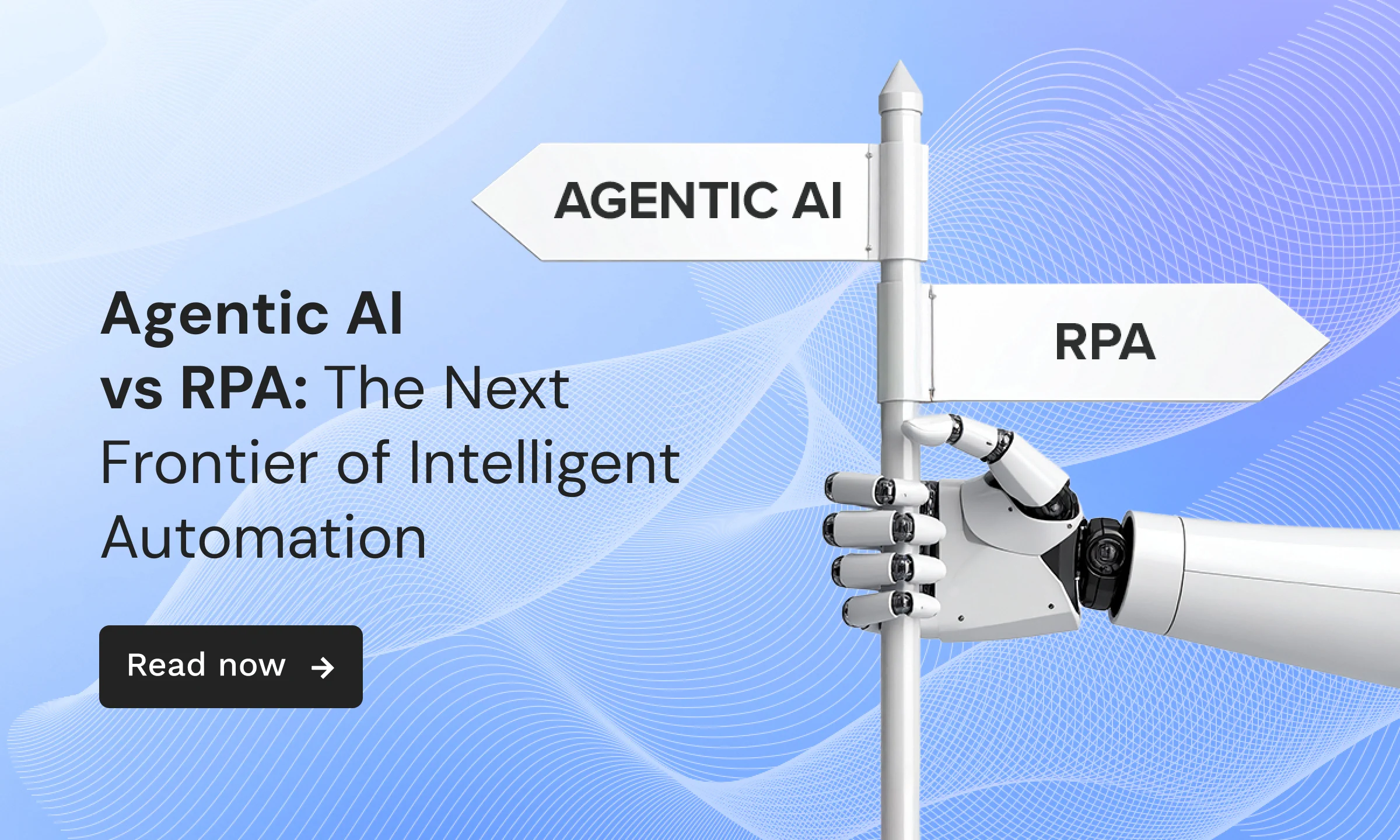
Agentic AI tools are becoming one of the biggest technology shifts of 2026. For years, most AI tools were used mainly for answering questions, writing text, generating images, summarizing documents, or assisting with simple tasks. Agentic AI goes further. Instead of only responding to a prompt, an AI agent can plan steps, use tools, connect with business systems, follow instructions, take actions, check progress, and help complete a workflow with less manual effort.
In simple words, agentic AI tools are AI systems designed to do work, not just talk about work. A basic chatbot may answer, “Here is how to create a sales report.” An AI agent may collect the data, organize it, create the report, summarize the key points, and ask for approval before sending it. That difference is why agentic AI is being described as the next frontier of intelligent automation.
Major technology companies are already building agentic platforms. OpenAI describes ChatGPT agent as a system that can use tools to handle complex tasks from start to finish with user guidance. Google Cloud describes its Gemini Enterprise Agent Platform as a way for developers to build, scale, govern, and optimize enterprise-ready agents. Microsoft Copilot Studio lets businesses build and manage agents connected to business data. Salesforce Agentforce, AWS Bedrock AgentCore, and IBM watsonx Orchestrate are also examples of platforms focused on business agents and workflow automation.
For more future technology topics, visit our Future & Technology category. You can also read our related article on NASA AI navigation systems for deep space because autonomous decision-making is becoming important in both business automation and space technology.
Editorial Note
This article explains agentic AI tools using current industry information and publicly available sources. It does not claim that AI agents are fully reliable replacements for human workers. Agentic AI tools can automate parts of workflows, but they still need proper data, permissions, testing, security, monitoring, and human oversight.
Key Statistics and Facts
Gartner predicted that by 2026, up to 40 percent of enterprise applications would include integrated task-specific AI agents, compared with less than 5 percent in 2025. This shows how quickly agents are moving into mainstream business software.
Gartner also predicted that by 2028, 60 percent of brands would use agentic AI to support streamlined one-to-one customer interactions. This does not mean every company will use fully autonomous AI, but it does show that agentic systems are expected to become part of customer experience, marketing, sales, and service workflows.
McKinsey has emphasized that agentic AI value depends on redesigning workflows, not simply adding agents on top of old processes. In other words, companies cannot expect strong results if they use AI agents without improving data quality, governance, operating models, and workflow design.
Security agencies have also warned that agentic AI introduces new risks because agents can take actions, connect to systems, and operate with permissions. CISA and international partners released guidance recommending careful adoption, low-risk starting use cases, and security planning before agents are connected to sensitive systems.
What Are Agentic AI Tools?
Agentic AI tools are software systems that use artificial intelligence to complete tasks through planning, tool use, and action. Unlike a traditional chatbot, an agentic AI tool can break a goal into steps and interact with other systems to complete those steps.
A simple AI assistant may write an email draft. An agentic AI tool may check the customer record, review previous messages, create a draft response, attach the correct document, log the action in a CRM, and ask a human manager to approve the final message before sending.
That is what makes agentic AI different from normal AI chat. It is not only generating content. It is helping manage workflow execution.
Example: A manager asks an AI agent, “Prepare a weekly sales summary.” A normal chatbot may explain how to prepare one. An agentic tool could connect to the sales database, collect the numbers, compare them with last week, identify top-performing products, generate a summary, create a chart, and prepare an email for review.
This is why agentic AI tools matter. They move AI from passive assistance toward active workflow automation.
Agentic AI vs Traditional Automation
Traditional automation follows fixed rules. If X happens, the system does Y. This is useful for repetitive tasks, but it struggles when the work requires reasoning, interpretation, or changing conditions.
Agentic AI is different because it can interpret goals, choose steps, use tools, and adjust its plan. That makes it more flexible than simple rule-based automation.
Example: traditional automation can send a reminder email when an invoice is overdue. An agentic AI tool could review the invoice history, check whether the customer has already contacted support, draft a polite follow-up, flag unusual payment behavior, and ask a finance employee whether to escalate the case.
| Feature | Traditional Automation | Agentic AI Tools |
|---|---|---|
| Main behavior | Follows fixed rules | Plans and adapts steps |
| Best for | Repetitive tasks | Multi-step workflows |
| Flexibility | Limited | Higher, but needs guardrails |
| Data use | Structured data | Structured and unstructured data |
| Human role | Setup and exception handling | Supervision, approval, governance |
| Risk level | Usually predictable | Higher if connected to sensitive systems |
| Example | Auto-send invoice reminder | Review account, draft response, update CRM, ask for approval |
The important point is that agentic AI does not eliminate the need for human judgment. It changes where human judgment is needed. Instead of manually doing every step, humans may define the goal, review outputs, approve actions, and monitor exceptions.
How Agentic AI Tools Work
Agentic AI tools usually combine several capabilities. The first is a language model that understands instructions. The second is planning, where the system breaks a goal into smaller steps. The third is tool use, where the agent connects to apps, databases, APIs, browsers, or internal systems. The fourth is memory or context, where the agent remembers relevant task information. The fifth is governance, where permissions, approvals, logs, and security controls limit what the agent can do.
Example: If an AI agent is helping with hiring, it may read job requirements, screen resumes, summarize candidate fit, schedule interviews, and prepare notes. But it should not make final hiring decisions alone. Human review is still necessary because hiring involves fairness, privacy, legal risk, and judgment.
A well-designed agentic AI workflow usually includes these steps:
Goal: The user gives the agent a clear objective.
Planning: The agent breaks the objective into tasks.
Tool Access: The agent uses approved tools or data sources.
Execution: The agent completes steps within its permission limits.
Review: The agent checks its output or asks for human approval.
Logging: The system records what the agent did and why.
Monitoring: Humans and security teams review performance and risk.
This is the difference between useful agentic AI and risky automation. The best agents are not simply powerful. They are controlled, explainable, monitored, and limited to the right tasks.
Confirmed Reality vs Hype
Agentic AI is powerful, but it is also surrounded by hype. A high-quality understanding requires separating what is already real from what is still developing.
| Topic | Status in 2026 | Accurate Explanation |
|---|---|---|
| AI agents inside enterprise software | Real and growing | Many platforms now include task-specific agents |
| Agentic coding tools | Real | Tools like Codex-style coding agents can work on code tasks with review |
| Customer service agents | Real but limited | Useful for support, but escalation and monitoring are needed |
| Fully autonomous companies | Mostly hype | Human oversight, governance, and accountability are still required |
| Agents replacing all workers | Misleading | Agents change workflows but do not remove the need for people |
| Secure autonomous agents | Developing | Security, identity, permissions, and auditability remain major challenges |
| Multi-agent workflows | Emerging | Useful in some cases but can become complex and hard to govern |
The safest way to understand agentic AI tools in 2026 is this: they are real, useful, and rapidly improving, but they are not magic employees. They are workflow systems that need good design, data, security, and supervision.
Why Agentic AI Tools Matter in 2026
Agentic AI tools matter because businesses are no longer asking AI only to generate content. They want AI to help complete real work. This includes customer support, marketing, research, software development, sales operations, finance workflows, HR tasks, analytics, and internal knowledge management.
The old model of workplace AI was simple: ask a question, get an answer. The new model is more active: assign a goal, let the system plan steps, connect to tools, and return completed work for review.
Example: A marketing team may ask an agent to research competitors, summarize recent campaign performance, identify weak landing pages, draft ad copy, prepare a content calendar, and send the final plan to a manager for approval. The human team still decides strategy, but the agent reduces repetitive work.
This is why McKinsey’s advice matters. The value of agentic AI does not come from randomly adding agents to every task. It comes from redesigning workflows around better human-agent collaboration.
Examples of Agentic AI Tools in 2026
Several major platforms are shaping the agentic AI tools market. These examples are useful for understanding the landscape, not as a claim that one tool is best for every business.
OpenAI ChatGPT Agent and Codex
OpenAI describes ChatGPT agent as a system that can use tools and its own computer to complete tasks with user guidance. OpenAI also introduced Codex as a cloud-based software engineering agent that can work on tasks such as writing features, fixing bugs, answering questions about a codebase, and proposing pull requests for review.
Example: A developer could ask a coding agent to investigate a bug, suggest a fix, run tests in a sandbox, and propose a pull request. A human developer should still review the code before merging it.
This is a strong example of agentic AI because the tool is not only writing a code snippet. It is working through a software task.
Google Gemini Enterprise Agent Platform
Google Cloud describes the Gemini Enterprise Agent Platform as a platform for developers to build, scale, govern, and optimize enterprise-ready agents. Google’s documentation also describes Vertex AI Agent Builder as a suite of products for building, scaling, and governing AI agents in production.
Example: A company could build an internal research agent that searches approved company documents, summarizes policies, drafts answers for employees, and routes sensitive questions to HR or legal teams.
This type of agent is useful because it can be grounded in company data instead of relying only on general internet knowledge.
Microsoft Copilot Studio
Microsoft describes Copilot Studio as a platform for building and managing agents connected to business data. It allows organizations to create agents with natural language and publish them across channels used by teams and customers.
Example: A support department could build a Copilot Studio agent that answers common customer questions, checks order information, creates support tickets, and escalates complex cases to a human agent.
The important point is that enterprise agents must be designed around permissions and business rules. A support agent should not have unlimited access to every customer record or financial system.
Salesforce Agentforce
Salesforce describes Agentforce as a proactive, autonomous AI application that can answer questions, take actions, and support employees and customers. Because Salesforce is already widely used for CRM, sales, service, and marketing, agentic tools inside the Salesforce ecosystem can connect closely with customer workflows.
Example: A sales agent could summarize account history, identify stalled opportunities, draft follow-up emails, recommend next steps, and update CRM fields after approval.
This is where agentic AI becomes especially practical. Sales and service teams already work through structured workflows, so agents can help reduce repetitive administrative work.
Amazon Bedrock AgentCore and Bedrock Agents
AWS describes Amazon Bedrock AgentCore as a way to deploy and operate AI agents securely and at scale. AWS also describes Bedrock as a platform for building and deploying generative AI applications and agents using managed services.
Example: A company using AWS could build an agent that checks inventory, summarizes product demand, triggers a workflow through approved APIs, and notifies a human operator when stock levels cross a threshold.
This kind of agent needs strict permission control because it may interact with operational systems.
IBM watsonx Orchestrate
IBM describes watsonx Orchestrate as a platform to build, run, discover, control, and govern agents across enterprise tools. IBM emphasizes agent orchestration, governed catalogs, and control over agent ecosystems.
Example: An HR operations team could use an agent to answer employee questions, prepare onboarding checklists, connect to approved HR tools, and route sensitive issues to human specialists.
This shows why governance matters. Agentic AI is not only about building agents. It is also about controlling which agents are trusted, what they can access, and how their actions are monitored.
Best Use Cases for Agentic AI Tools
Agentic AI tools are strongest when a workflow has repeated steps, clear goals, accessible data, and room for human review.
Customer Support
Customer support is one of the most practical areas for agentic AI. A support agent can read a customer message, identify the issue, check the knowledge base, review the customer’s order history, draft a response, and create or update a ticket.
Example: A customer says, “My subscription was charged twice.” An AI agent checks billing records, confirms whether there was a duplicate charge, drafts a response, and sends the case to a human billing specialist for final approval.
This is useful because it saves time while keeping sensitive decisions under human control.
Marketing Workflows
Agentic AI tools can help marketing teams research, plan, draft, analyze, and optimize campaigns. McKinsey has discussed how agentic AI can help marketers accelerate campaigns and enable personalization at scale, but also emphasizes that companies must rebuild workflows to capture value.
Example: A marketing agent could analyze campaign performance, identify weak headlines, suggest new landing page tests, draft email copy, and create a weekly performance report.
For your site, this topic connects naturally with latest science and technology news because AI automation is one of the major technology trends shaping 2026.
Software Development
Coding agents are one of the clearest examples of agentic AI. A coding agent can investigate code, suggest changes, write tests, summarize a repository, and propose fixes.
Example: A developer says, “Find why the checkout page fails on mobile.” The agent searches the codebase, identifies a CSS or JavaScript issue, suggests a fix, runs tests, and prepares a pull request. A human developer then reviews the changes.
This workflow is powerful because software tasks are often structured, testable, and reviewable.
Business Research
Agentic AI can help with research by gathering information, comparing sources, summarizing findings, and preparing reports.
Example: A product manager asks, “Research three competitors and summarize their pricing, features, and market positioning.” An AI agent collects information from approved sources, organizes it into a table, highlights gaps, and prepares a first draft.
Human review is still essential because agents can miss context, misunderstand sources, or rely on incomplete data.
Finance and Operations
Agentic AI tools can help with invoice checks, expense review, vendor comparison, procurement workflows, and operational summaries.
Example: An operations agent reviews incoming invoices, checks purchase order numbers, flags mismatched totals, and prepares a summary for the finance team.
This is useful, but it needs strong controls. An agent that can approve payments or change vendor records should have limited permissions and mandatory human approval.
HR and Internal Knowledge
HR agents can help answer policy questions, prepare onboarding materials, summarize benefits information, and guide employees to the right forms.
Example: A new employee asks, “How do I request equipment?” The agent checks the internal policy, gives step-by-step guidance, prepares the request form, and routes it to the correct department.
This improves employee experience while reducing repetitive HR questions.
What Makes a Good Agentic AI Tool?
A good agentic AI tool is not only smart. It must be reliable, controllable, secure, and useful in real workflows.
A strong agentic AI tool should have:
Clear task boundaries
Approved tool access
Human approval options
Action logs
Role-based permissions
Data privacy controls
Error handling
Easy escalation to humans
Integration with existing systems
Performance monitoring
Security testing
Example: An email-writing agent is low risk if it only drafts messages. It becomes higher risk if it can send emails to customers automatically. It becomes even higher risk if it can issue refunds, change contracts, or approve payments. The more power an agent has, the stronger the controls must be.
Security Risks of Agentic AI Tools
Agentic AI creates new security challenges because agents can take actions. A chatbot that gives a bad answer is a problem. An agent with system access that takes a bad action can become a much bigger problem.
OWASP’s Top 10 for Agentic Applications 2026 identifies critical risks facing autonomous and agentic AI systems. OWASP also explains that agentic systems combine reasoning, memory, tools, and multi-step execution, which introduces risks beyond normal prompt-level attacks.
CISA and international partners recommend careful adoption of agentic AI services, starting with low-risk and non-sensitive use cases, updating security models, and accounting for agentic AI-specific risks before deployment.
Important risks include:
Over-permissioned agents
Prompt injection
Data leakage
Unauthorized actions
Tool misuse
Poor logging
Unclear accountability
Bad decisions at scale
Weak human oversight
Example: If an agent has permission to delete files, update databases, and send messages, a wrong instruction or malicious prompt could cause real damage. That is why agent permissions should be limited, logged, and reversible.
Human Oversight Still Matters
Agentic AI tools should not be treated as independent employees with unlimited authority. The strongest systems keep humans in control of sensitive decisions.
Human oversight is especially important in:
Healthcare
Finance
Legal work
Hiring
Security operations
Customer refunds
Public communication
Contract approval
High-value purchases
Example: An AI agent may prepare a contract summary, but a human legal professional should review it. An AI agent may identify suspicious transactions, but a finance or security team should decide what action to take.
The future of agentic AI is not “humans disappear.” A better model is “humans supervise more intelligent systems.”
How Businesses Should Adopt Agentic AI Tools
The best approach is to start small and choose low-risk workflows first.
A practical adoption path looks like this:
Start with read-only tasks.
Move to draft-only actions.
Add human approval before execution.
Connect limited tools and data.
Monitor every action.
Expand only after testing.
Review security and compliance regularly.
Example: A company should not begin by giving an AI agent permission to approve payments. A safer first step is to let the agent summarize invoices and flag issues. After testing, it may draft payment recommendations, but human approval should remain required.
This approach helps organizations gain value without creating unnecessary risk.
Agentic AI and the Future of Work
Agentic AI tools will change how people work, but the best outcome is not simply replacing humans. The better future is using agents to reduce repetitive work and give people more time for judgment, creativity, strategy, and relationship-building.
Example: A customer service employee may spend less time searching policy documents and more time solving complex cases. A marketer may spend less time building spreadsheets and more time improving strategy. A developer may spend less time on repetitive bug investigation and more time designing better systems.
This is why agentic AI should be seen as workflow transformation, not just software automation. Companies that redesign work carefully may benefit more than companies that simply add agents without changing processes.
Agentic AI Tools vs AI Assistants
Many tools call themselves AI assistants, but not all assistants are truly agentic.
An AI assistant usually helps with a single response or suggestion. An AI agent can take multi-step actions.
| AI Assistant | Agentic AI Tool |
|---|---|
| Answers questions | Plans and executes workflows |
| Generates drafts | Uses tools to complete tasks |
| Needs frequent instructions | Can follow a goal through steps |
| Usually low-risk | Can become high-risk if over-permissioned |
| Best for writing and summarizing | Best for operational workflows |
Example: Asking AI to write a meeting summary is assistant behavior. Asking AI to summarize the meeting, identify action items, create tasks in project management software, draft follow-up emails, and schedule the next meeting is agentic behavior.
What People Often Get Wrong
Many people think agentic AI tools are just better chatbots. That is not accurate. The key difference is action. Agentic AI tools can connect to systems and complete steps.
Another mistake is assuming agents are always autonomous. Many useful agents are semi-autonomous. They prepare work, but humans approve final actions.
A third mistake is believing agents automatically create business value. Without clean data, workflow redesign, security, and adoption planning, agents can create confusion instead of productivity.
A fourth mistake is giving agents too much access too quickly. Over-permissioned agents can create serious risk.
Finally, some businesses treat agentic AI as a replacement strategy instead of a capability strategy. The better approach is to use agents where they improve speed, consistency, and decision support while keeping humans accountable for important outcomes.
Practical Reader Takeaway
Agentic AI tools are becoming a major part of intelligent automation in 2026. They can plan tasks, use tools, connect to data, execute workflows, and support teams across customer service, marketing, software development, research, finance, HR, and operations.
The most important point is this: agentic AI is powerful because it can act, but that same power creates risk. Businesses should start with controlled use cases, limit permissions, require human approval for sensitive actions, and monitor agent behavior closely.
Agentic AI is not just the next chatbot trend. It is a shift toward AI systems that can help complete real work.
Frequently Asked Questions
What are agentic AI tools?
Agentic AI tools are AI systems that can plan tasks, use tools, connect to data, and take actions to complete workflows. They go beyond basic chatbots by helping execute multi-step tasks.
How are agentic AI tools different from chatbots?
A chatbot usually answers questions or generates content. An agentic AI tool can plan steps, use external tools, update systems, prepare reports, draft responses, and complete workflow actions.
Are agentic AI tools safe?
They can be useful, but they need strong security controls. Agents should have limited permissions, human approval for sensitive actions, logging, monitoring, and protection against prompt injection and misuse.
What are the best uses of agentic AI tools?
Good use cases include customer support, sales operations, marketing workflows, software development, internal research, HR support, invoice review, and business reporting.
Can agentic AI replace employees?
Agentic AI can automate parts of work, but it should not be treated as a full replacement for human judgment. The best use is to reduce repetitive work and support employees with faster execution.
What is an example of agentic AI in business?
A sales agent can review customer history, summarize recent conversations, suggest next steps, draft a follow-up email, update CRM fields, and ask a human sales manager for approval before sending.
Which platforms offer agentic AI tools?
Examples include OpenAI ChatGPT agent and Codex, Google Gemini Enterprise Agent Platform, Microsoft Copilot Studio, Salesforce Agentforce, AWS Bedrock AgentCore, and IBM watsonx Orchestrate.
Why is governance important for agentic AI?
Governance is important because agents can access data and take actions. Without controls, an agent may expose sensitive information, perform unauthorized actions, or make errors at scale.
Should small businesses use agentic AI tools?
Small businesses can use agentic AI tools, but they should start with low-risk tasks such as drafting content, summarizing emails, preparing reports, or organizing customer information before connecting agents to sensitive systems.
Conclusion
Agentic AI tools are changing the meaning of intelligent automation in 2026. The shift is not only about smarter chatbots. It is about AI systems that can understand goals, plan steps, use tools, connect with business systems, and help complete real workflows.
This technology can help teams move faster in customer support, marketing, research, sales, software development, finance, HR, and operations. A well-designed agent can save time, reduce repetitive work, improve consistency, and help humans focus on higher-value decisions.
But the same power that makes agents useful also makes them risky. Agentic AI tools need clear boundaries, secure permissions, human oversight, action logs, testing, and governance. The best organizations will not simply add agents everywhere. They will redesign workflows carefully, start with low-risk tasks, and expand only when the system proves reliable.
The simplest way to understand agentic AI is this: traditional AI helps answer questions, while agentic AI helps complete tasks. That shift makes agentic AI tools one of the most important automation trends of 2026 and a major part of the future of work.
Sources and Further Reading
OpenAI: Introducing ChatGPT Agent
Google Cloud: Gemini Enterprise Agent Platform
Google Cloud: Vertex AI Agent Builder Documentation
AWS: Amazon Bedrock Agents and AgentCore
Gartner: Agentic AI and Customer Interactions
Gartner: Task-Specific AI Agents in Enterprise Apps
McKinsey: Reinventing Marketing Workflows with Agentic AI
McKinsey: Building the Foundations for Agentic AI at Scale