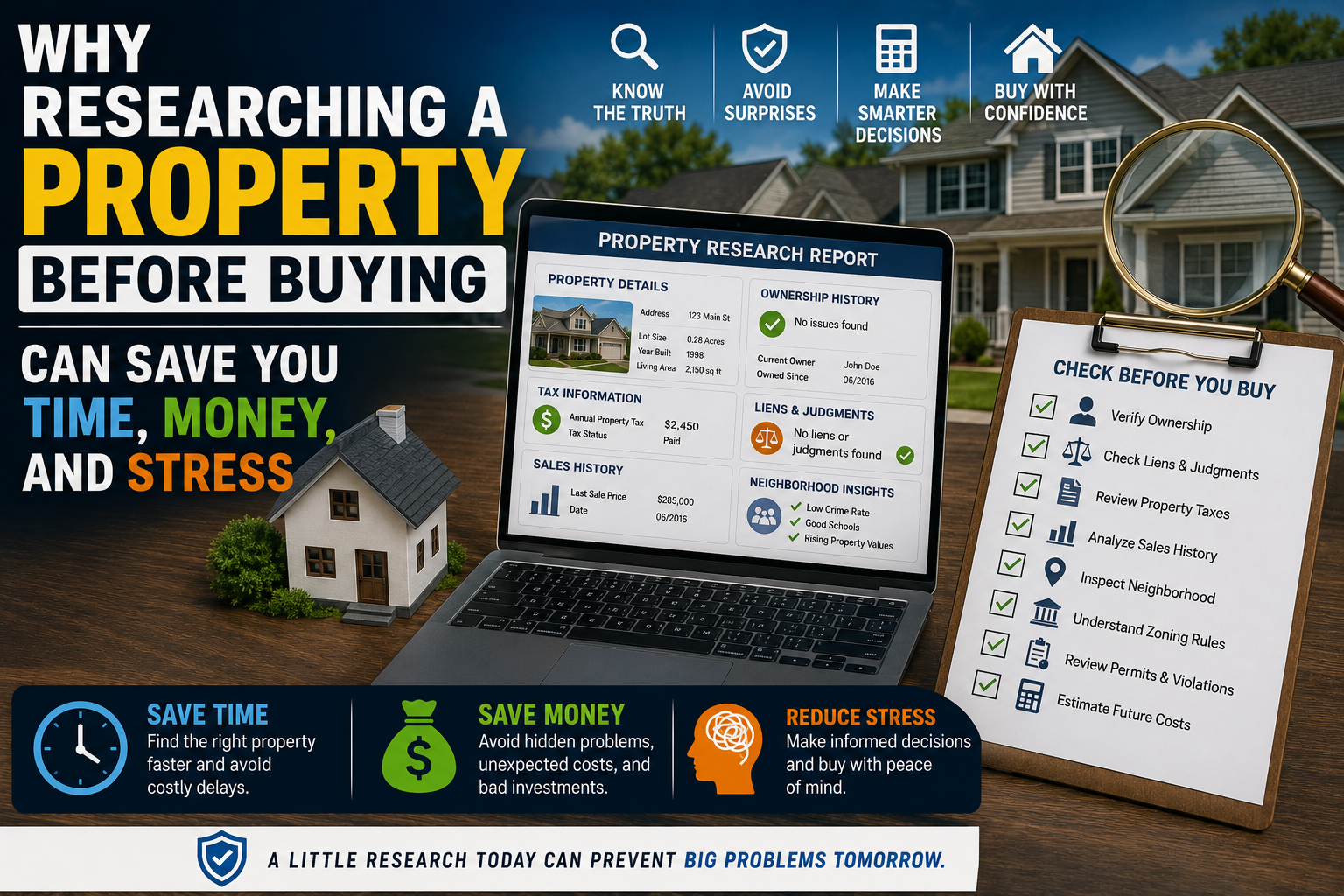
Purchasing a home is one of the most significant financial decisions many people will make. From securing financing to scheduling inspections and negotiating contracts, the buying process involves numerous steps that require careful attention. Amid the excitement of finding the right property, one important habit is often overlooked: conducting thorough research before making an offer.
Modern technology has made property research easier than ever. Buyers can now access a wealth of publicly available information about homes, neighborhoods, and property history before speaking with a real estate professional. Taking advantage of these resources can help identify potential concerns, verify important details, and provide greater confidence throughout the buying process.
While public records cannot replace the guidance of qualified real estate agents, attorneys, inspectors, or appraisers, they offer an excellent foundation for understanding the property you’re considering.
Why Property Research Matters
A home purchase is more than choosing a floor plan or attractive neighborhood. Every property has a history that may include ownership changes, tax assessments, recorded improvements, and other publicly available information.
Researching these details allows buyers to better understand the property before committing to one of life’s largest investments.
Good research helps answer questions such as:
- Has the property changed ownership recently?
- What are the recorded property characteristics?
- How has the assessed value changed over time?
- Are the parcel dimensions consistent with the listing?
- Does the public record match the information being advertised?
Having this knowledge early allows buyers to ask informed questions and avoid unnecessary surprises.
What Information Can Public Property Records Provide?
County property databases often contain valuable information that supports informed decision-making.
Depending on the jurisdiction, available records may include:
- Property address
- Parcel identification number
- Lot size
- Building characteristics
- Assessment history
- Property tax information
- Sales history
- Legal descriptions
- Public ownership information where permitted
These records provide helpful context alongside traditional real estate listings.
Benefits for First-Time Homebuyers
First-time buyers often focus primarily on mortgage approval and monthly payments.
However, understanding publicly available property information can also improve confidence throughout the purchasing process.
Reviewing official records helps buyers become more familiar with the property while developing realistic expectations before closing.
Knowledge reduces uncertainty.
Why Investors Rely on Property Research
Real estate investors frequently evaluate multiple properties before making purchasing decisions.
Public property records help them compare:
- Assessment history
- Parcel characteristics
- Property size
- Sales activity
- Tax information
Although investment decisions require much deeper analysis, official records provide an excellent starting point.
Understanding Property Assessments
Many buyers notice assessed values while researching properties.
It’s important to remember that assessed values are generally established for taxation purposes.
Market value reflects current buyer demand and local market conditions.
Although the two values sometimes appear similar, they often differ because they serve different purposes.
Understanding this distinction helps buyers interpret public information more accurately.
The Importance of Using Official Sources
The internet contains countless real estate websites offering estimates, automated valuations, and property summaries.
While these resources may be helpful, official county databases remain one of the most reliable sources for publicly available property information.
County records are maintained by local government offices responsible for managing assessment data and related public records.
Beginning your research with official sources provides a stronger foundation before reviewing third-party information.
Digital Property Search Has Changed Home Buying
Today’s buyers can often research homes without leaving their computers.
Online county databases have significantly improved access to public records, allowing homeowners and buyers to verify important information whenever it is convenient.
This accessibility supports greater transparency while helping individuals become more informed consumers.
Finding Reliable Property Information
When researching a home, using official county resources is one of the best ways to verify publicly available property information. Many counties provide searchable databases where users can review parcel details, assessment history, and other real estate records maintained by local government offices.
For homeowners and prospective buyers researching properties in Ohio, the Stark County Auditor Property Search system offers an official resource for accessing county property information. Beginning with trusted public records can help buyers build a clearer understanding of a property’s history before making important financial decisions.
Common Mistakes Buyers Should Avoid
Relying Only on Listing Information
Real estate listings provide useful summaries, but official public records often contain additional details worth reviewing.
Confusing Market Value With Assessed Value
These figures are calculated for different purposes and should not be considered interchangeable.
Skipping Independent Research
Even when working with experienced professionals, conducting your own research helps you become a more informed buyer.
Best Practices for Property Research
To make the most of public property information:
- Verify the property address carefully.
- Compare assessment history over multiple years.
- Review parcel dimensions.
- Check publicly available building information.
- Understand local tax records.
- Use official county databases whenever possible.
- Consult qualified professionals before making major financial commitments.
Following these steps can improve confidence throughout the buying process.
Looking Toward the Future
As technology continues to improve public access to government records, property research will likely become even more convenient.
Digital mapping systems, searchable databases, and online public records already make it possible for buyers to gather valuable information before scheduling a showing.
These tools promote transparency while helping individuals make better-informed real estate decisions.
Final Thoughts
Research is one of the most valuable tools available to today’s homebuyers. By reviewing publicly available property information before making an offer, buyers can better understand a home’s characteristics, assessment history, and recorded details while reducing uncertainty throughout the purchasing process.
Although public records should complement—not replace—the guidance of qualified real estate professionals, they remain an excellent starting point for anyone considering a property purchase. Investing a little extra time in research today can lead to more confident decisions and a smoother home-buying experience tomorrow.