The idea of a city on the Moon sounds like science fiction. It brings to mind astronauts living inside glowing habitats, rovers driving across gray lunar dust, solar panels stretching across the surface, and Earth shining above a quiet lunar horizon.
But NASA is not currently building a normal “city” on the Moon in the way people understand cities on Earth. There are no confirmed NASA plans for lunar skyscrapers, shopping streets, schools, hotels, or thousands of permanent residents living on the Moon in the near future.
What NASA is actually working toward is more realistic, more difficult, and more important: a sustained human presence on the Moon.
That means developing the systems astronauts would need to land repeatedly, live longer, move safely, generate power, communicate with Earth, use local resources, conduct science, and prepare for future human missions to Mars. In simple words, before anyone can talk seriously about a Moon city, NASA must first help build the foundation of a Moon base.
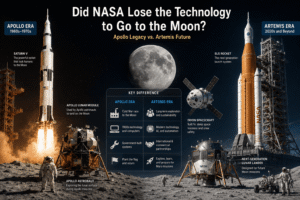
NASA’s Artemis campaign is the center of this effort. NASA describes Artemis as a campaign connected to returning humans to the Moon, supporting scientific discovery, and preparing for future missions to Mars. The program includes deep-space crew transportation, commercial lunar landers, surface mobility, payload delivery, Gateway-related systems, and international partnerships.
For related reading on Sanceen, you can also explore our articles on NASA Lunar Surface Mobility Systems, NASA Lunar Dust Mitigation Tech, and NASA Deep Space Laser Communication.
Editorial Note
This article uses the phrase “city on the Moon” as a future-focused search topic. NASA does not currently have a confirmed near-term plan to build a large Earth-like city on the Moon.
The accurate subject is NASA’s long-term work toward lunar surface infrastructure, Artemis missions, commercial lunar delivery, habitats, rovers, power systems, communication, navigation, resource-use technology, and sustained human presence.
Where a topic is confirmed, it is described as confirmed. Where a topic is a future possibility, concept, or long-term direction, it is clearly explained that way.
Key Facts About NASA’s Moon Base Direction
| Key Area | What It Means | Why It Matters |
|---|---|---|
| Artemis Program | NASA’s campaign for Moon exploration and Mars preparation | It is the main foundation for long-term lunar exploration |
| Moon to Mars Architecture | NASA’s framework for future Moon and Mars exploration systems | It connects lunar infrastructure with future deep-space goals |
| Moon Base Direction | NASA’s phased approach for sustained lunar presence | It shifts the discussion from single landings to infrastructure |
| CLPS | Commercial Lunar Payload Services | It helps deliver science and technology payloads to the Moon |
| Lunar Terrain Vehicle | A rover system for astronauts | It helps crews explore beyond the landing site |
| Pressurized Rover | A mobile habitat-like rover | It could let astronauts travel and work farther from base |
| ISRU | In-situ resource utilization | It focuses on using Moon resources instead of bringing everything from Earth |
| Fission Surface Power | Nuclear surface power technology | It could provide reliable electricity during darkness and extreme conditions |
| Lunar South Pole | A major target region for future exploration | It may offer access to water ice and useful lighting conditions |
NASA’s Moon to Mars Architecture defines the elements needed for long-term human-led scientific discovery in deep space, and Artemis is described as a key step toward learning how to live and work on another world while preparing for Mars.
Is NASA Really Building a City on the Moon?
The honest answer is: not yet.
NASA is not building a full city on the Moon right now. A real city would need permanent residents, large-scale housing, transportation routes, food production, medical services, construction systems, governance, emergency services, economic activity, and long-term civil infrastructure.
NASA’s current lunar direction is much earlier than that. It focuses on creating the conditions that could eventually support longer human activity on the lunar surface.
A better way to understand the process is this:
First comes lunar access.
Then comes repeated landing capability.
Then comes cargo delivery.
Then comes surface mobility.
Then comes power and communication.
Then comes habitats and life support.
Then comes resource use.
Then comes longer crew stays.
Only after those steps could a true lunar settlement become realistic.
So the phrase “Moon city” should be treated carefully. NASA’s real work is not about instantly building a city. It is about building the early infrastructure that could make future lunar living possible.
Why NASA Wants a Long-Term Presence on the Moon
NASA’s long-term lunar work is not only about repeating Apollo or planting flags again. The modern goal is deeper.
The Moon is scientifically valuable because it preserves clues about the early solar system, planetary history, space weathering, and the relationship between Earth and the Moon. It is also close enough to Earth to serve as a testing ground for systems that may later support Mars missions.
Mars is months away. The Moon is about three days away. That makes the Moon a much safer place to test habitats, spacesuits, rovers, power systems, life support, robotic systems, communication networks, and crew operations before attempting longer missions to Mars.
A future lunar base could help NASA answer major questions:
Can astronauts live on another world for weeks or months?
Can local Moon resources reduce dependence on Earth?
Can robots prepare infrastructure before humans arrive?
Can power systems survive long periods of darkness and extreme temperatures?
Can habitats protect astronauts from radiation, dust, and micrometeorites?
Can lunar operations teach NASA how to prepare for Mars?
This is why the Moon is often described as a stepping stone to Mars.
Artemis: The Foundation of NASA’s Lunar Future
NASA’s Artemis program is the main foundation for returning humans to the Moon and building experience for long-term exploration.
Artemis includes several connected systems. The Space Launch System rocket and Orion spacecraft support crew transportation beyond low Earth orbit. NASA is also working with industry to develop human landing systems that carry astronauts from lunar orbit to the surface and back. The program also includes commercial lunar payload delivery, spacesuits, rovers, surface systems, and international partnerships.
This matters because a Moon base cannot be built in one mission. It requires a sequence of missions that test hardware, deliver supplies, improve landing systems, expand mobility, and gradually increase surface capability.
NASA’s Artemis page currently describes early 2028 as the target for the first Artemis lunar landing, with astronauts transferring from Orion to a commercial lunar lander after reaching lunar orbit. Because mission schedules can change, readers should always check NASA’s official Artemis updates for the latest timeline.
NASA’s Moon Base Plan: A Phased Approach
In 2026, NASA described its plan for establishing a sustained lunar presence as a three-phase approach. The public NASA material describes this as “Building the Moon Base,” with phases focused on building, testing, learning, establishing infrastructure, and eventually supporting longer-term human activity.
NASA’s Moon Base Architecture User’s Guide also explains that early Artemis elements may be designed for self-sufficiency, but ongoing exploration creates a need for shared lunar infrastructure such as power, logistics, communications, and navigation.
This is important because it shows that NASA’s lunar strategy is not only about one landing. It is about repeatable operations, shared systems, cargo delivery, surface infrastructure, and long-term development.
Still, this should not be confused with a ready-made city. A Moon base is the practical first step. A Moon city would be a much bigger future possibility.
Phase One: Build, Test, Learn
The first phase is about learning how to operate on the Moon in a reliable way.
This phase includes technology demonstrations, small-scale tests, robotic payloads, surface measurements, mobility experiments, communication tests, and early site evaluation.
Example: Before astronauts can depend on a lunar navigation system, NASA and its partners need to test communication links, terrain mapping, positioning tools, and rover operations. A Moon base cannot work if astronauts and robots do not know exactly where they are or how to return safely.
This phase is like preparing the construction site before building a permanent outpost.
Phase Two: Establish Initial Infrastructure
The second phase moves from testing to early infrastructure.
This could include more regular cargo delivery, semi-habitable systems, power distribution, communication systems, surface mobility, landing support, and partner contributions.
Example: A semi-habitable surface module may not be a full permanent home, but it could provide protected working space, emergency shelter, equipment storage, or crew support during surface missions.
At this stage, the Moon base becomes more visible. It is still not a city, but it begins to act like a functional outpost.
Phase Three: Long-Duration Human Presence
The third phase is the closest to what people imagine when they hear “Moon base.”
This phase would require heavier infrastructure, more reliable logistics, stronger power systems, more capable rovers, habitats, surface maintenance, and longer crew operations.
Example: A crew might live in a lunar habitat, travel in a pressurized rover, use a fission surface power system, send data through communication relays, and rely on robotic systems to inspect equipment when astronauts are not outside.
That is still not a city, but it is a serious step toward humans living and working on the Moon for extended periods.
Artemis Base Camp: The Early Moon Base Concept
NASA’s Artemis Base Camp concept helps explain what an early lunar base could look like.
NASA previously described Artemis Base Camp as including a modern lunar cabin, a rover, and a mobile home-type system. The idea was to give astronauts a place to live and work on the lunar surface, starting with shorter stays and eventually supporting longer stays as the concept evolved.
The important point is simple: a lander is not enough.
A lander can bring astronauts to the surface, but a base needs shelter, mobility, power, supplies, communication, dust control, radiation protection, and emergency backup.
A practical early Moon base may include:
A compact habitat
An unpressurized rover
A pressurized rover
Power systems
Communication equipment
Cargo storage
Scientific instruments
Robotic assistants
Emergency shelter
Dust-control systems
This is how a future lunar settlement begins: not with a city, but with survival infrastructure.
Where Would NASA Build a Moon Base?
NASA has focused heavily on the lunar South Pole.
The South Pole is valuable because some permanently shadowed regions may contain water ice. Water is one of the most important resources for future exploration because it can support astronauts, produce oxygen, and possibly contribute to propellant production if extraction and processing technologies mature.
The South Pole also has areas with long periods of sunlight, which can help solar power systems. But the region is not easy. It has rough terrain, deep shadows, extreme cold, communication challenges, and dangerous dust.
A future lunar base location would need to balance several factors:
Access to sunlight
Possible access to water ice
Safe landing zones
Useful science targets
Rover travel routes
Communication visibility
Distance from hazards
Long-term expansion potential
Example: A base near useful sunlight could support solar panels more easily, while a base closer to permanently shadowed regions could support water-ice research. The ideal site may need to balance both needs.
CLPS: Sending the First Pieces Before Humans Stay Longer
NASA’s Commercial Lunar Payload Services program, or CLPS, is one of the practical systems behind future lunar infrastructure.
NASA says CLPS allows rapid acquisition of lunar delivery services from commercial vendors to send science and technology payloads to the Moon, supporting long-term lunar exploration and helping test technologies for future crewed missions.
This matters because a Moon base will require many deliveries.
Habitats, power systems, tools, scientific instruments, spare parts, communication equipment, construction materials, and resource-use equipment cannot all arrive at once. They must be delivered step by step.
Example: Before astronauts stay for long missions, robotic deliveries can test landing accuracy, measure surface conditions, study dust, test navigation systems, and deliver small technology experiments. This reduces risk before larger human missions arrive.
Habitats: The First Homes on the Moon
A lunar city begins with shelter.
Astronauts cannot survive on the Moon without a controlled environment. The Moon has no breathable air, no liquid surface water, no Earth-like atmosphere, no global magnetic shield, and extreme temperature swings.
A lunar habitat must provide:
Breathable air
Pressure control
Temperature control
Radiation protection
Micrometeorite protection
Sleeping areas
Work areas
Medical support
Food and water storage
Waste management
Emergency systems
Communication equipment
Example: A first-generation Moon habitat may feel less like a house and more like a compact spacecraft-laboratory. Astronauts may sleep, eat, work, communicate, exercise, repair equipment, and monitor life support inside the same protected environment.
For more background on future space living systems, read our article on NASA Regenerative Life Support Systems.
Power: The Biggest Requirement for a Moon Base
A Moon base cannot function without reliable energy.
Power is needed for oxygen systems, heaters, cooling systems, computers, communications, lights, rovers, scientific instruments, water processing, air filtration, dust control, and emergency backup systems.
Solar power is useful, especially in areas with long sunlight exposure. But lunar darkness can last a long time depending on location. Some regions also face extreme cold and shadow. A serious lunar base needs power that can work even when sunlight is limited.
NASA and the U.S. Department of Energy have been working on fission surface power because future lunar systems need reliable electricity even when sunlight or environmental conditions are difficult. NASA says fission systems could enable robust operations on the Moon and Mars, and the project aims toward a 40-kilowatt class power system for the Moon by the early 2030s.
NASA and DOE have also described a lunar surface reactor as a system that could operate for years without refueling and support sustained lunar missions regardless of sunlight or temperature.
Example: A solar panel system may work well during sunlight, but a nuclear surface power system could provide steady energy through long dark periods. That kind of reliability is critical for life support and survival.
Mobility: How Astronauts Will Move Around
A Moon base cannot work if astronauts are stuck near the lander.
Astronauts need to move across the surface to collect samples, inspect equipment, deploy instruments, repair systems, scout terrain, and explore scientifically valuable locations.
NASA’s Artemis page describes its surface mobility work as part of the systems that will allow astronauts to survive and work outside spacecraft while exploring on and around the Moon.
Example: Astronauts may drive a rover to a crater rim, collect rock samples, deploy instruments, map terrain, and return to the habitat. When astronauts leave the Moon, future rovers may also continue some operations remotely.
For related reading, add this internal link: NASA Lunar Surface Mobility Systems.
Pressurized Rovers: A Mobile Home on the Moon
A normal rover helps astronauts travel. A pressurized rover could help them live and work farther from base.
This type of rover matters because a single base location cannot reach every scientific target. A pressurized rover could allow astronauts to travel for longer periods without returning to the main habitat after every short excursion.
Example: Instead of making a short drive and returning quickly, astronauts in a pressurized rover could travel farther, remove their spacesuits inside the rover, sleep, work, communicate, and conduct multi-day exploration missions.
That is a major step toward practical lunar living.
ISRU: Using Moon Resources Instead of Bringing Everything From Earth
ISRU means in-situ resource utilization. In simple words, it means using resources found on the Moon instead of bringing everything from Earth.
This is one of the most important differences between visiting the Moon and living there.
Bringing everything from Earth is expensive and difficult. If astronauts can use local water, oxygen, and construction materials, lunar operations become more sustainable.
Possible lunar resources include:
Water ice
Oxygen locked in lunar soil
Regolith for shielding or construction
Metals and minerals
Solar energy
Cold-trap materials for science
Example: If water ice can be extracted and purified, it could support drinking water, oxygen production, and possibly fuel production. But this is not simple. The water must be located, excavated, heated or processed, cleaned, stored, and used safely.
For related reading, add this internal link: NASA In-Situ Resource Utilization on the Moon.
Lunar Dust: The Small Problem That Becomes Huge
Lunar dust is one of the biggest engineering problems for long-term Moon activity.
It is sharp, sticky, abrasive, and difficult to remove. It can damage spacesuits, seals, tools, solar panels, camera lenses, radiators, filters, and moving parts.
Example: If dust coats solar panels, power output can drop. If dust damages seals, airlocks and spacesuits can become unsafe. If dust enters habitats, it can create health and equipment problems.
A lunar base will need dust control from the beginning. That may include:
Dust-resistant spacesuits
Airlocks and suitports
Electrostatic dust removal systems
Protected mechanical joints
Landing pads to reduce dust blast
Dust-tolerant solar panels
Habitat filtration systems
Surface roads or stabilized paths
For internal linking, add: NASA Lunar Dust Mitigation Tech.
Communication and Navigation on the Moon
A Moon base needs strong communication and navigation.
Astronauts must communicate with Earth, rovers, habitats, landers, orbiters, spacesuits, and robotic systems. Navigation is also a challenge because the Moon does not have a GPS system like Earth.
NASA’s Artemis IV page states that communications and navigation technologies will be critical for the safety, science, and operations of astronauts and missions as Artemis aims to establish sustained lunar presence.
Future lunar operations may need:
Surface communication towers
Lunar orbit relay satellites
Laser communication systems
Navigation beacons
High-speed data links
Emergency channels
Local positioning systems
Autonomous rover navigation
Example: If astronauts drive a rover toward a permanently shadowed region, they need precise navigation, communication relay, power monitoring, and emergency return planning. A lunar base must know where its people and machines are at all times.
For related reading, add: NASA Deep Space Laser Communication.
Robots and Construction: Building Before Humans Stay
A Moon base will not be built by astronauts alone.
Robots will likely scout terrain, deliver payloads, prepare landing areas, inspect equipment, move cargo, clean systems, deploy instruments, and support maintenance when humans are not present.
This is important because early lunar bases may not be continuously occupied. Between crew missions, robotic systems may need to keep the site alive.
Example: Before astronauts arrive, robots could prepare a landing zone, inspect the habitat exterior, move cargo containers, check solar panels, and send condition reports back to Earth.
A future Moon base will likely be a human-robot system, not a purely human settlement.
Gateway and Lunar Surface Strategy
NASA’s Gateway has been described as a small space station around the Moon that supports lunar surface missions, science in lunar orbit, and human exploration beyond the Moon. NASA’s Artemis page describes Gateway as part of the broader Artemis campaign and a multi-purpose outpost supporting lunar surface missions and future exploration.
At the same time, NASA’s Moon Base direction places strong emphasis on surface infrastructure, including power, logistics, communication, navigation, cargo delivery, and long-term lunar operations.
The safest way to explain this is: NASA’s lunar architecture includes both orbital and surface systems, but the “Moon city” idea depends mainly on developing durable surface infrastructure.
For more on orbital support systems, link to: NASA Lunar Gateway Habitat Systems.
Moon Base vs Moon City
| Feature | Early NASA Moon Base | True Moon City |
|---|---|---|
| Population | Small astronaut crews | Large permanent civilian population |
| Purpose | Science, testing, exploration, Mars preparation | Long-term settlement and economic life |
| Infrastructure | Habitats, rovers, power, communication, cargo | Housing, roads, services, governance, industry |
| Timeline | Emerging through Artemis and future missions | Long-term future possibility |
| Status | Planned direction and technology development | Not confirmed as a near-term NASA project |
| Main Challenge | Survival and operations | Permanent society and economy |
This comparison is important for honest writing. A Moon base is a realistic long-term exploration goal. A Moon city is a much bigger future possibility.
What a Future Moon City Would Actually Need
If humanity ever builds something that can truly be called a city on the Moon, it would need far more than early Artemis systems.
A real lunar city would need:
Permanent habitats
Reliable power generation
Radiation shielding
Water extraction and recycling
Food production
Medical facilities
Waste recycling
Landing pads
Roads or prepared travel routes
Manufacturing systems
Repair workshops
Communication networks
Legal and safety rules
Emergency shelters
Economic purpose
Long-term population support
NASA’s early lunar infrastructure could be the beginning of this path, but it would not be the final result.
Example Scenario: A Day at an Early Moon Base
Imagine a future Artemis crew living at an early lunar base near the South Pole.
The crew wakes inside a compact habitat. Life support systems monitor oxygen, temperature, humidity, and carbon dioxide. Outside, solar arrays and a surface power unit keep equipment running. A rover is parked near an airlock. Robotic systems have already inspected the surrounding area overnight.
Two astronauts prepare for a rover trip. They check navigation data, suit systems, dust seals, and communication links. Their goal is to collect samples near a crater rim and deploy a science instrument.
While they drive, mission control monitors their position. A robotic assistant moves cargo near the habitat. Another system checks dust buildup on solar panels. Inside the habitat, the crew’s data system sends science files back to Earth.
This is not a city yet. But it is the kind of practical surface operation that could eventually lead to larger lunar infrastructure.
Why Building on the Moon Is So Difficult
The Moon is beautiful, but it is hostile.
There is no breathable air.
There is no liquid surface water.
There is no Earth-like atmosphere.
There is no global magnetic field like Earth’s.
Temperatures are extreme.
Radiation is dangerous.
Dust is abrasive.
Gravity is only about one-sixth of Earth’s.
Supplies from Earth are expensive.
Hardware failures are difficult to repair.
Every system must work in a place where humans cannot survive without technology. That is why NASA’s approach is gradual. A Moon base is not built like a city on Earth. It is built like a survival system, a research station, and an engineering platform at the same time.
Confirmed Facts vs Future Possibilities
| Topic | Status |
|---|---|
| Artemis is NASA’s campaign connected to Moon exploration and Mars preparation | Confirmed |
| NASA is working on landers, rovers, spacesuits, CLPS payloads, and surface systems | Confirmed |
| NASA has described a phased approach for sustained lunar presence | Confirmed |
| NASA’s Moon Base planning includes shared infrastructure needs such as power, logistics, communication, and navigation | Confirmed |
| NASA and DOE are working on fission surface power for future lunar operations | Confirmed |
| A small lunar base supporting longer astronaut stays | Planned direction |
| A permanent lunar base with continuous human presence | Long-term goal |
| A large Moon city with thousands of residents | Future possibility, not confirmed |
| Independent Moon civilization | Science fiction for now |
This distinction matters. NASA’s real work is impressive enough without exaggeration.
How a Moon Base Helps Future Mars Missions
NASA’s lunar base plans are closely connected to Mars.
Mars missions will require long-duration life support, radiation protection, surface habitats, power systems, mobility, resource use, autonomy, and crew health systems. Testing these technologies on the Moon gives NASA a closer and safer proving ground.
The Moon is close enough for missions to be supported from Earth more realistically than Mars missions. If something goes wrong on the Moon, emergency planning and communication are more manageable than they would be on Mars.
That is why lunar infrastructure is not only about the Moon. It is part of the larger path to deep-space exploration.
What People Often Get Wrong
Many people think NASA is already building a full Moon city. That is not accurate. NASA is building toward sustained lunar exploration and surface infrastructure.
Another mistake is thinking one successful landing means a permanent base. A real base requires logistics, power, maintenance, communication, mobility, and repeated missions.
A third mistake is assuming lunar resources are easy to use. Water ice and regolith may be valuable, but extracting, processing, storing, and using them on the Moon is extremely difficult.
A fourth mistake is thinking astronauts can live on the Moon the same way people live on Earth. They cannot. They need sealed habitats, radiation protection, life support, dust control, and reliable energy.
A fifth mistake is thinking communication, robots, rovers, and power systems are optional extras. For a serious Moon base, these systems are survival infrastructure.
Practical Reader Takeaway
NASA’s plan to build a “city on the Moon” should be understood as a long-term path, not a current construction project.
The real foundation includes Artemis missions, commercial lunar deliveries, habitats, power systems, rovers, communication networks, dust control, ISRU, robotics, and international partnerships.
A future Moon city, if it ever happens, will not appear all at once. It would grow from smaller systems:
A lander
A rover
A habitat
A power unit
A cargo delivery
A communication tower
A robot
A research station
A resource-processing test
A longer crew stay
A permanent surface outpost
That is how humans begin turning the Moon from a place to visit into a place where people may one day live and work.
Frequently Asked Questions
Is NASA building a city on the Moon?
NASA is not currently building a full Earth-like city on the Moon. NASA is working toward sustained lunar exploration, surface infrastructure, and long-term lunar presence through Artemis and related programs.
What is NASA’s Moon base plan?
NASA’s Moon base direction includes repeated lunar missions, commercial cargo deliveries, habitats, power systems, rovers, communication systems, resource-use technology, site preparation, and long-duration human operations.
Where would NASA build a Moon base?
NASA has focused strongly on the lunar South Pole because it may offer access to water ice, useful lighting conditions, and valuable science targets.
Why is water ice important on the Moon?
Water ice could support drinking water, oxygen production, and possibly future propellant production. However, finding, extracting, processing, and storing lunar water is technically difficult.
How will astronauts get power on the Moon?
Future lunar missions may use solar power, batteries, fission surface power, and other energy systems. NASA and DOE are working on fission surface power because a base needs reliable electricity even when sunlight is limited.
Can people live permanently on the Moon?
Permanent human life on the Moon is a long-term possibility, not a current reality. It would require safe habitats, power, life support, water, food, radiation protection, medical support, and reliable supply systems.
Why does NASA want to return to the Moon?
NASA wants to return to the Moon for science, technology testing, international exploration, commercial development, and preparation for future human missions to Mars.
Will robots build the Moon base?
Robots will likely play an important role by scouting terrain, moving cargo, preparing sites, inspecting equipment, and supporting operations between crewed missions.
What is the difference between a Moon base and a Moon city?
A Moon base is a small operational outpost for astronauts, science, and exploration. A Moon city would require permanent residents, large infrastructure, services, governance, and long-term economic systems. NASA is currently much closer to the Moon base stage.
When will there be a real Moon city?
There is no confirmed date for a real Moon city. A smaller lunar base or long-duration surface outpost would come first. A true city would be a much more distant future possibility.
Conclusion
NASA’s plan to build a “city on the Moon” is better understood as a plan to build the foundations of long-term lunar living.
The real story is not about instant cities, luxury colonies, or science-fiction domes. It is about the difficult engineering required to keep humans alive, mobile, powered, connected, protected, and productive on another world.
Through Artemis, NASA is working toward repeated lunar missions, commercial cargo delivery, new spacesuits, rovers, habitats, surface power, communication systems, resource-use technology, and lunar infrastructure. These systems could eventually support a permanent lunar base.
A true Moon city remains a future possibility, not a confirmed near-term NASA project. But every settlement begins with infrastructure. On the Moon, that infrastructure starts with landers, rovers, habitats, power systems, robots, communication networks, and the ability to survive in one of the harshest environments humans have ever tried to enter.
The simplest way to understand NASA’s lunar vision is this: before humans can build a city on the Moon, they must first learn how to live there.
Sources and Further Reading
NASA Artemis Program
https://www.nasa.gov/humans-in-space/artemis/
NASA Moon to Mars Architecture
https://www.nasa.gov/moontomarsarchitecture/
NASA Moon to Mars Architecture Components
https://www.nasa.gov/moontomarsarchitecture-components/
NASA Moon Base Architecture User’s Guide
https://www.nasa.gov/wp-content/uploads/2026/04/moon-base-architecture-users-guide.pdf
NASA Moon Base / National Space Policy Initiatives
https://www.nasa.gov/news-release/nasa-unveils-initiatives-to-achieve-americas-national-space-policy/
NASA Fission Surface Power
https://www.nasa.gov/exploration-systems-development-mission-directorate/fission-surface-power/
NASA and DOE Lunar Surface Reactor
https://www.nasa.gov/news-release/nasa-department-of-energy-to-develop-lunar-surface-reactor-by-2030/
NASA Artemis IV
https://www.nasa.gov/mission/artemis-iv/