Have you ever been asked to spell your name over the phone and found yourself saying something like “B as in Boy” or “M as in Mike”? Most people have experienced situations where letters sound alike, leading to confusion and repeated clarification. While these misunderstandings may seem harmless during casual conversations, they can become serious problems in industries where accuracy is essential.
To solve this challenge, military organizations and aviation authorities use a standardized phonetic spelling system commonly known as the military alphabet. Officially called the NATO phonetic alphabet, this system assigns a unique word to each letter of the English alphabet, ensuring that spoken communication remains clear even in noisy or stressful environments.
Although it was originally developed for military and aviation use, the military alphabet has become a valuable communication tool across many professions and everyday situations. Learning how it works is easier than most people think, and it can improve communication whenever spelling accuracy matters.
What Is the Military Alphabet?
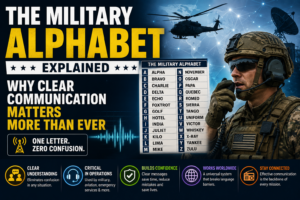
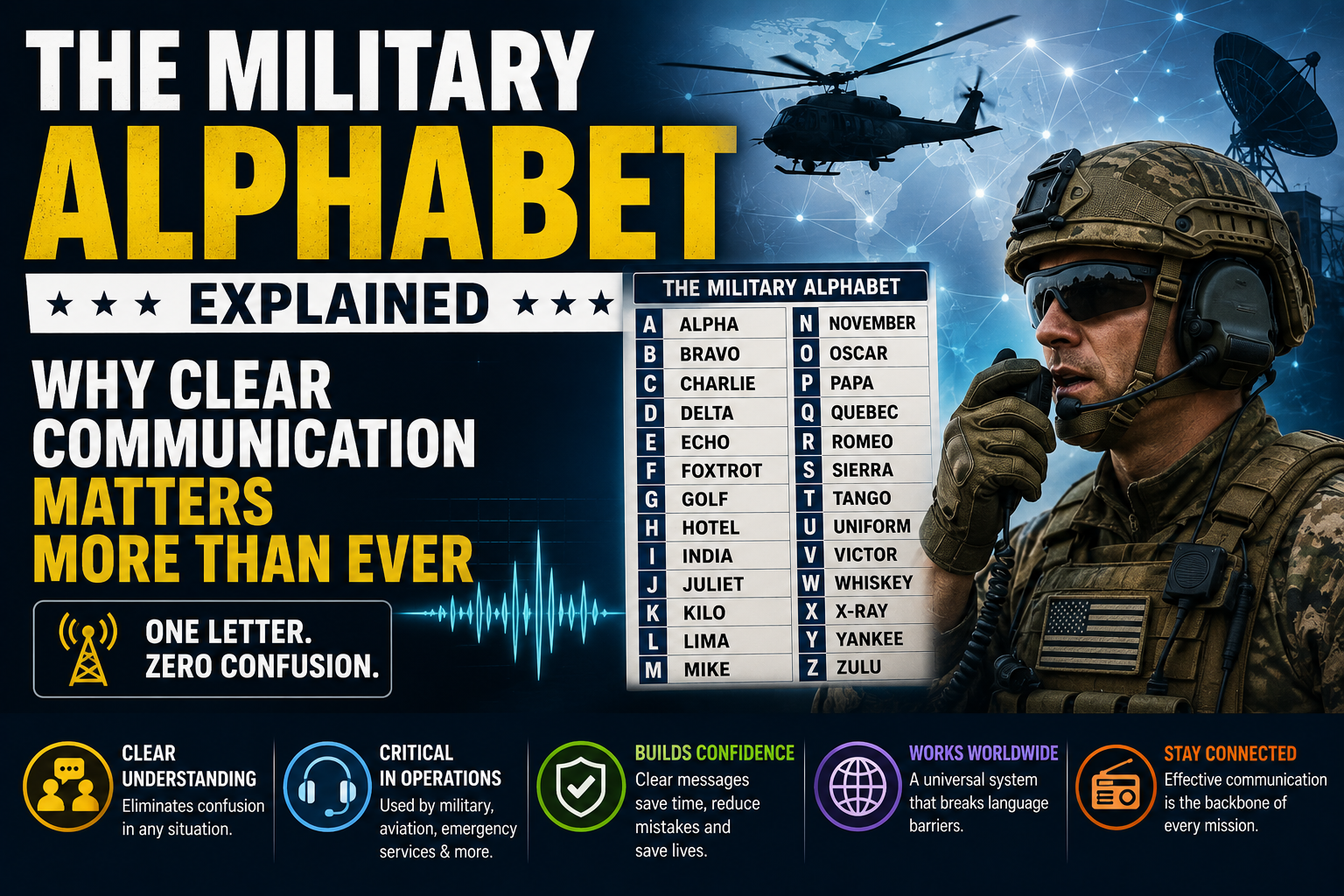
The military alphabet is a standardized set of code words that represent each letter of the English alphabet.
Instead of saying individual letters, speakers use assigned words that are carefully selected because they are easy to recognize and difficult to confuse with one another.
For example:
- A – Alpha
- B – Bravo
- C – Charlie
- D – Delta
- E – Echo
- F – Foxtrot
- G – Golf
- H – Hotel
- I – India
- J – Juliett
- K – Kilo
- L – Lima
- M – Mike
- N – November
- O – Oscar
- P – Papa
- Q – Quebec
- R – Romeo
- S – Sierra
- T – Tango
- U – Uniform
- V – Victor
- W – Whiskey
- X – X-ray
- Y – Yankee
- Z – Zulu
These words are recognized internationally and are used to ensure consistent verbal communication.
Why Was It Created?
Many letters sound remarkably similar when spoken.
Consider these examples:
- B and D
- M and N
- P and T
- F and S
In a quiet room, distinguishing these letters may be easy.
However, noisy environments, poor telephone connections, radio interference, or language differences can make individual letters difficult to understand.
The military alphabet eliminates much of this confusion by replacing similar-sounding letters with distinct words.
Where Is the Military Alphabet Used?
Although many people associate it exclusively with the armed forces, the military alphabet is widely used in civilian industries as well.
Aviation
Pilots and air traffic controllers communicate constantly while coordinating flights.
Using standardized code words helps reduce misunderstandings during radio transmissions.
Emergency Services
Police officers, firefighters, and emergency dispatchers frequently spell names, addresses, and license plate numbers using the military alphabet.
Clear communication saves valuable time during emergencies.
Customer Support
Many customer service representatives use phonetic spelling while confirming names, email addresses, and product serial numbers.
This improves accuracy and reduces frustration.
Logistics and Shipping
Warehouses, shipping companies, and transportation providers often rely on standardized spelling when tracking packages and inventory.
Information Technology
IT professionals regularly communicate passwords, software codes, server names, and technical identifiers where even one incorrect letter can create significant problems.
Everyday Situations Where It Helps
The military alphabet isn’t only useful for professionals.
Many everyday situations benefit from clearer spelling.
Examples include:
- Booking airline tickets
- Making hotel reservations
- Confirming email addresses
- Providing vehicle registration numbers
- Giving customer support information
- Sharing Wi-Fi passwords
- Communicating medical records
- Ordering products by phone
Whenever precise spelling matters, the military alphabet makes conversations faster and more accurate.
Common Misconceptions
Myth 1: It’s Only for Soldiers
The name “military alphabet” causes many people to assume civilians never use it.
In reality, millions of people use it daily without realizing its military origins.
Myth 2: It’s Difficult to Learn
There are only 26 words.
Many people memorize the most common ones naturally after repeated exposure.
Myth 3: It Replaces the English Alphabet
The military alphabet does not replace ordinary letters.
It simply provides a clearer way to pronounce them during verbal communication.
Tips for Learning the Military Alphabet
Learning doesn’t require hours of memorization.
Instead, practice gradually.
Learn Five Words at a Time
Rather than memorizing all 26 at once, begin with small groups.
For example:
Alpha
Bravo
Charlie
Delta
Echo
Once these become familiar, continue with the next group.
Practice Everyday Names
Spell your own name using phonetic words.
Then try family members’ names, city names, or street names.
Listen Carefully
Many aviation videos, emergency response recordings, and documentaries naturally demonstrate the military alphabet in action.
Hearing the words repeatedly reinforces memory.
Why Standardization Matters
Imagine if every person invented their own spelling system.
One caller might say:
“B as in Ball.”
Another might say:
“B as in Banana.”
Someone else might choose:
“B as in Boston.”
While understandable, these different choices create inconsistency.
The NATO phonetic alphabet removes this uncertainty because everyone uses the same internationally recognized words.
This consistency becomes especially important when communicating across countries and languages.
Helpful Reference Resources
Although most people eventually memorize the most frequently used code words, having a reliable reference nearby can be useful while learning.
A well-organized military alphabet reference allows beginners to quickly review each letter and its corresponding code word. Regular practice with a simple reference chart can improve pronunciation, strengthen memory, and build confidence when using the phonetic alphabet in both professional and everyday conversations.
Why Learning It Is a Practical Life Skill
Communication problems often arise from surprisingly small misunderstandings.
A single incorrect letter can affect:
- Medical records
- Flight bookings
- Banking information
- Business contracts
- Shipping addresses
- Technical support requests
Knowing the military alphabet provides a straightforward solution for communicating information accurately.
Even people who only use it occasionally often find it saves time and prevents unnecessary repetition.
Final Thoughts
The military alphabet is far more than a specialized communication system for the armed forces. It is a practical, internationally recognized tool that improves clarity whenever precise spelling is important. From aviation and emergency services to customer support and everyday phone conversations, the NATO phonetic alphabet helps reduce misunderstandings and ensures information is communicated accurately.
Fortunately, learning the military alphabet requires very little effort. With regular practice and occasional reference to a reliable guide, most people quickly become comfortable using it in situations where clear communication matters.
As our personal and professional interactions continue to rely on fast, accurate communication across different regions and technologies, understanding the military alphabet remains a valuable skill that anyone can learn and use.