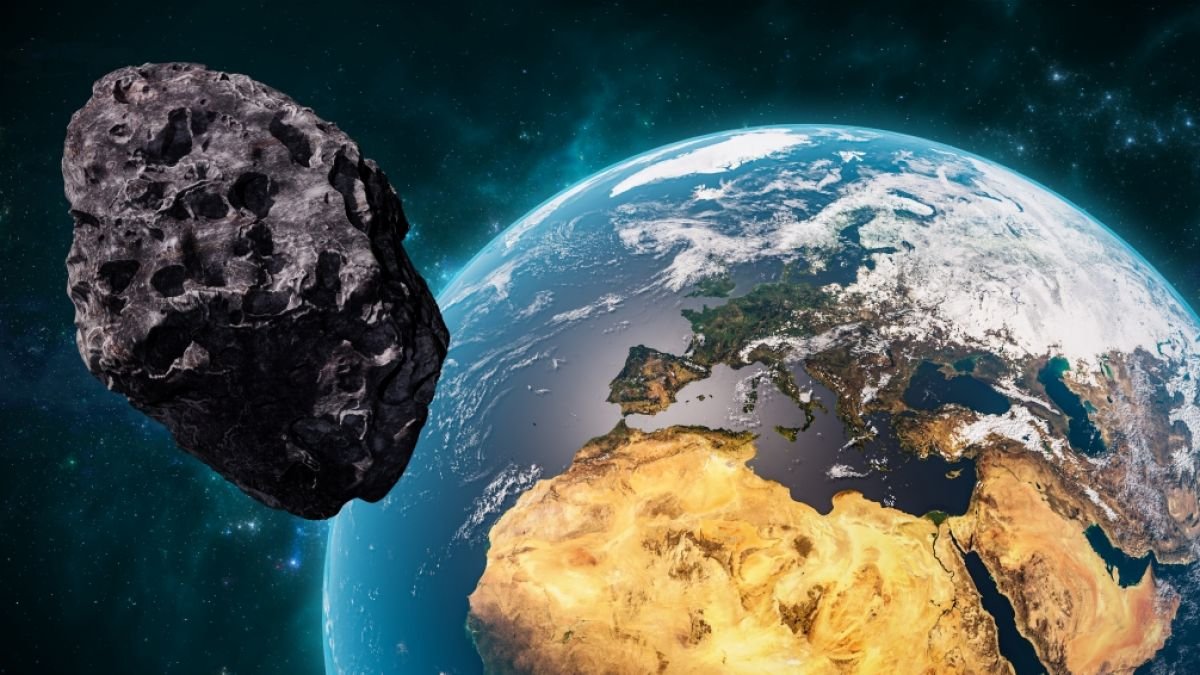
Asteroids may look like silent rocks drifting through space, but they could become some of the most important objects in the future of human exploration. These ancient bodies contain clues about how the solar system formed, how planets grew, and what materials may be available beyond Earth. Some asteroids may contain water-bearing minerals, metals, carbon-rich material, and other resources that could one day support deep space missions.
This is why asteroid mining has become such an exciting topic.
The idea sounds simple: send robots to an asteroid, extract useful material, and use those resources in space. But in reality, asteroid mining is one of the most difficult challenges in space technology. It requires advanced robotics, precise navigation, low-gravity operations, resource processing, power systems, communication, legal frameworks, and strong economic reasons.
NASA asteroid mining mission plans must be explained carefully. As of 2026, NASA is not operating a confirmed asteroid mining mission. NASA has clearly stated that it is not currently mining asteroids and that asteroid mining technologies are not yet well developed. However, NASA does study asteroids, return asteroid samples, investigate metal-rich worlds, develop in-situ resource utilization concepts, and support technologies that could one day help future space resource use.
In simple words, NASA is not mining asteroids in 2026, but NASA’s asteroid missions and space resource research are helping build the knowledge that future asteroid mining would need.
Editorial Note
This article explains confirmed NASA asteroid missions, current space resource research, future asteroid mining possibilities, and the challenges of using asteroid materials. It does not claim that NASA has launched or approved an operational asteroid mining mission in 2026. NASA’s current asteroid missions are focused on science, planetary defense, sample return, and exploration. Asteroid mining remains a future possibility that would require major technological, economic, legal, and operational development.
Key Statistics and Facts
| Fact | Why It Matters |
|---|---|
| NASA says it is not currently mining asteroids. | This prevents misleading claims about active NASA asteroid mining missions. |
| NASA’s OSIRIS-REx mission returned a sample from asteroid Bennu to Earth in 2023. | Sample return helps scientists understand asteroid composition and material properties. |
| NASA’s Psyche mission is traveling to a metal-rich asteroid and is expected to begin its prime mission in 2029. | Psyche may help scientists understand metallic asteroids, but it is not a mining mission. |
| Asteroids are rocky remnants from the formation of the solar system about 4.6 billion years ago. | Their materials can reveal early solar system history. |
| NASA defines in-situ resource utilization as using local resources at mission destinations instead of bringing everything from Earth. | ISRU is central to future Moon, Mars, and possible asteroid resource use. |
| Asteroid mining technologies are not yet mature. | Future mining would need major progress in robotics, processing, economics, and regulation. |
These facts show the accurate picture. NASA is building asteroid knowledge and space resource capability, but asteroid mining is still a future goal rather than a confirmed NASA operation.
What Is Asteroid Mining?
Asteroid mining means extracting useful materials from asteroids or other small bodies in space. These materials could include water, metals, carbon compounds, silicates, or other resources that may support exploration or space industry.
The most valuable near-term resource may not be gold or platinum. It may be water.
Water can support astronauts, but it can also be split into hydrogen and oxygen. Oxygen can be used for breathing, and hydrogen and oxygen can be used as rocket propellant. If future missions can obtain water from space instead of launching all of it from Earth, deep space exploration could become more practical.
Metals are another possible resource. Some asteroids may contain iron, nickel, cobalt, platinum-group metals, and other materials. These could potentially be used for construction, manufacturing, shielding, or industrial activity in space.
However, asteroid mining is not simple. An asteroid has extremely weak gravity. A spacecraft cannot dig or drill the way machines do on Earth. Dust, rocks, rotation, surface structure, and unknown material strength can create serious problems.
For more space exploration topics, visit our Space & Beyond section.
Is NASA Mining Asteroids in 2026?
No. NASA is not mining asteroids in 2026.
This is the most important point for accuracy. NASA has directly answered this question before and explained that it is not mining asteroids. The technologies needed for asteroid mining are not yet well developed.
NASA’s current asteroid missions focus on science, exploration, sample return, and planetary defense. These missions can still support the future of space resources because they teach scientists what asteroids are made of, how they behave, how spacecraft can interact with them, and what technical problems must be solved.
For example, OSIRIS-REx collected a sample from asteroid Bennu and returned it to Earth. Psyche is traveling to study a metal-rich asteroid. OSIRIS-APEX is headed to study asteroid Apophis in 2029. These missions are not mining missions, but they provide knowledge that future resource missions may need.
This distinction is essential. A trustworthy article should not say “NASA will mine asteroids in 2026” unless NASA officially announces such a mission. The accurate phrase is: “NASA asteroid missions and resource research are helping shape the future possibility of asteroid mining.”
Why Asteroids Matter for Space Resources
Asteroids matter because they may contain materials that are difficult or expensive to launch from Earth. Every kilogram launched from Earth requires rocket fuel, engineering, and cost. If future missions can use resources already in space, exploration may become more sustainable.
Asteroids may offer several types of resources.
Some asteroids may contain water-bearing minerals. Water can support life support systems, radiation shielding, fuel production, and industrial processes.
Metal-rich asteroids may contain iron, nickel, and other metals. These materials could potentially support construction or manufacturing in space.
Carbon-rich asteroids may contain organic compounds and volatile materials. These are scientifically valuable and may also matter for future chemistry and resource processing.
Rocky materials could support construction, shielding, or manufacturing if future technology can process them in space.
This is why asteroid mining is often connected to in-situ resource utilization, or ISRU. ISRU means using local materials at a mission destination instead of bringing everything from Earth.
For readers interested in lunar ISRU and surface systems, our article on NASA lunar base power infrastructure explains how future exploration depends on local infrastructure and energy.
NASA’s Role in the Future of Space Resources
NASA’s role in space resources is not mainly commercial mining. NASA’s role is research, exploration, technology development, mission science, and enabling future capabilities.
NASA studies how to use local resources on the Moon, Mars, and other destinations. Its in-situ resource utilization work focuses on reducing dependence on supplies launched from Earth. This includes ideas such as extracting oxygen from lunar materials, using water ice, processing regolith, and developing systems that help humans live and work beyond Earth.
Asteroids are part of the broader resource conversation because they may contain water, metals, and other useful materials. But using asteroid resources would require much more than identifying valuable material. A mission would need to reach the asteroid, anchor to it, extract material, process it, store it, and use or transport it.
NASA’s asteroid science missions help answer the first questions: What are asteroids made of? How are they structured? Are they solid, rubble piles, metallic bodies, or loose collections of fragments? How do they respond when touched, sampled, or impacted?
Without those answers, mining plans would be mostly speculation.
For more NASA mission explainers, visit our NASA category.
Confirmed Facts vs Future Possibilities
| Topic | Status |
|---|---|
| NASA is mining asteroids in 2026 | Not confirmed |
| NASA has returned asteroid material to Earth through OSIRIS-REx | Confirmed |
| NASA’s Psyche mission is studying a metal-rich asteroid | Confirmed |
| OSIRIS-APEX will study asteroid Apophis in 2029 | Confirmed mission plan |
| NASA studies in-situ resource utilization | Confirmed |
| Asteroid mining technologies are mature and ready for routine use | Not confirmed |
| Future robotic asteroid resource missions | Future possibility |
| Commercial asteroid mining industry | Future possibility, not current reality |
| Using asteroid water as fuel in space | Long-term possibility |
This table is important because asteroid mining is often exaggerated online. The real story is exciting enough without false claims: NASA is building the science and technology foundation for future space resources, but mining asteroids remains a future challenge.
NASA’s Psyche Mission and Metal-Rich Asteroids
NASA’s Psyche mission is one of the most important asteroid missions for understanding metal-rich bodies. Psyche launched in 2023 and is traveling to asteroid 16 Psyche, a large metal-rich asteroid located in the main asteroid belt between Mars and Jupiter.
Psyche is scientifically important because it may help scientists understand the building blocks of rocky planets. Some scientists think Psyche could be part of the core of an early planetesimal, although its exact origin remains a scientific question.
The mission will not mine the asteroid. It will orbit Psyche, take images, map the surface, study its composition, and investigate its magnetic and gravitational properties.
This matters for future resource discussions because metal-rich asteroids are often mentioned in asteroid mining concepts. But studying a metal-rich asteroid is not the same as extracting metals from it.
The correct statement is: Psyche may improve scientific understanding of metal-rich asteroids, which could indirectly inform future resource ideas. It is not a mining mission.
OSIRIS-REx: Returning Material from Asteroid Bennu
NASA’s OSIRIS-REx mission is another major step in asteroid science. It collected a sample from asteroid Bennu and returned it to Earth in 2023. This was the first U.S. mission to collect a sample from an asteroid and deliver it to Earth.
Sample return is extremely valuable because scientists can study asteroid material in laboratories with instruments far more powerful than those on a spacecraft. They can examine minerals, carbon compounds, water-bearing materials, textures, and chemical clues.
OSIRIS-REx also taught NASA about asteroid surface behavior. Bennu turned out to be a surprisingly loose rubble-pile asteroid. When the spacecraft touched the surface to collect a sample, the surface behaved differently than a solid rock surface would.
That lesson matters for future mining. If some asteroids are loose rubble piles, mining equipment must be designed differently. Anchoring, drilling, collecting, and processing material in microgravity would be difficult.
After returning the Bennu sample, the spacecraft became OSIRIS-APEX and began a new mission to study asteroid Apophis in 2029.
OSIRIS-APEX and Asteroid Apophis
OSIRIS-APEX is the extended mission of the OSIRIS-REx spacecraft. After delivering the Bennu sample to Earth, the spacecraft was redirected to study asteroid Apophis.
Apophis will make a close approach to Earth in 2029, giving scientists a rare opportunity to study how Earth’s gravity affects an asteroid. OSIRIS-APEX will observe Apophis after that close approach.
This mission is not an asteroid mining mission. Its goal is scientific study. However, it may help scientists learn more about asteroid structure, surface behavior, and physical properties.
That information could matter for planetary defense and future asteroid operations. If humans ever want to mine, redirect, land on, or work near asteroids, they must understand how different asteroids behave.
Why Asteroid Mining Is So Difficult
Asteroid mining is difficult for several reasons.
The first challenge is distance. Asteroids can be far from Earth, and travel times can be long. A mission must use fuel efficiently and survive deep space conditions.
The second challenge is gravity. Asteroids have extremely weak gravity. Mining equipment cannot rely on normal weight or traction. A drill may push the spacecraft away instead of cutting into the asteroid.
The third challenge is anchoring. A mining system may need to attach itself to an asteroid without bouncing away or damaging the surface.
The fourth challenge is unknown material strength. Some asteroids may be solid rock, while others may be loose rubble piles. Mining equipment must handle uncertainty.
The fifth challenge is processing. Extracting useful material is only the first step. The material must be processed into something useful, such as water, oxygen, metal, or propellant.
The sixth challenge is power. Mining and processing require energy. Solar power may work for some asteroids, but distance from the Sun and mission design matter.
The seventh challenge is economics. Even if mining is technically possible, it must make financial and operational sense.
The eighth challenge is law and governance. Space resource use raises questions about ownership, responsibility, safety, and international rules.
These challenges explain why asteroid mining remains a future possibility rather than a routine activity.
Asteroid Mining vs Asteroid Science
Asteroid science and asteroid mining are connected, but they are not the same.
| Area | Asteroid Science | Asteroid Mining |
|---|---|---|
| Main Goal | Understand asteroid origin, composition, and behavior | Extract and use useful materials |
| Current NASA Role | Active missions and research | Future possibility, not active mining |
| Examples | OSIRIS-REx, Psyche, Lucy, OSIRIS-APEX | Future robotic extraction concepts |
| Main Value | Scientific knowledge, planetary defense, solar system history | Resources for space operations |
| Technology Readiness | Proven for flybys, orbiters, and sample return | Not mature for routine mining |
| Near-Term Use | Research and exploration | Concept and technology development |
This comparison helps avoid confusion. NASA can study asteroids in great detail without mining them.
What Resources Could Asteroids Provide?
Asteroids may contain different resources depending on their type.
| Asteroid Type | Possible Materials | Why It Matters |
|---|---|---|
| Carbon-rich asteroids | Carbon compounds, water-bearing minerals, organics | Useful for science and possible future volatiles |
| Metal-rich asteroids | Iron, nickel, cobalt, possible platinum-group metals | Important for future construction or manufacturing concepts |
| Silicate-rich asteroids | Rock-forming minerals | Could support construction, shielding, or industrial processing |
| Water-bearing bodies | Water trapped in minerals or ice-like compounds | Water may support life support and propellant production |
Water is often considered one of the most practical early space resources. It can support astronauts and fuel production. Metals may become more useful later if space manufacturing becomes more developed.
The most realistic early use of asteroid resources may be in space, not on Earth. Returning large amounts of metal to Earth would be difficult and expensive. Using resources in orbit, near the Moon, or for deep space missions may make more practical sense.
The Role of In-Situ Resource Utilization
In-situ resource utilization, or ISRU, is the idea of using resources found at a mission destination instead of carrying everything from Earth.
NASA’s ISRU work is strongly connected to the Moon and Mars, but the same basic idea can apply to asteroids. If future missions can extract water, oxygen, metals, or other useful materials from asteroids, they may reduce the need to launch all supplies from Earth.
ISRU could support:
Fuel production.
Oxygen production.
Radiation shielding.
Construction.
Manufacturing.
Water supply.
Scientific sample processing.
Long-duration exploration.
However, ISRU is not easy. It requires prospecting, extraction, processing, storage, power, maintenance, and reliability. A resource is only useful if it can be accessed and converted into something mission-ready.
This is why asteroid mining depends on much more than finding valuable material. It depends on building a full resource system.
How Asteroid Mining Could Support Deep Space Missions
Future asteroid mining could support deep space missions if it becomes practical.
A spacecraft traveling through deep space might use resources from asteroids as fuel or supplies. A space station or lunar gateway could receive water or propellant from asteroid resources. Construction systems could use metals or rocky material for space infrastructure.
This could reduce dependence on Earth launches. Instead of lifting every kilogram from Earth’s gravity well, future missions might use materials already in space.
Asteroid resources could support:
Orbital fuel depots.
Deep space habitats.
Radiation shielding.
Space manufacturing.
Large telescopes.
Mars mission logistics.
Lunar infrastructure.
Robotic exploration.
This is the long-term vision. It is ambitious, but it requires many steps before becoming real.
Why 2026 Matters for Asteroid Resource Planning
The year 2026 matters because space resource planning is becoming more serious, even though asteroid mining is not yet operational. NASA’s asteroid missions, lunar resource work, commercial space activity, and planetary defense research are all helping build knowledge relevant to future resource use.
In 2026, the accurate statement is not “NASA is mining asteroids.” The accurate statement is “NASA’s asteroid science missions and ISRU research are helping prepare the knowledge base for possible future space resource use.”
This matters because the space economy is changing. More companies are launching satellites, developing lunar systems, building robotics, and exploring commercial space services. Space resources may become more important as missions become longer and more frequent.
However, strong credibility requires careful wording. Asteroid mining should be presented as a future possibility, not a current NASA mission.
Technologies Needed for Future Asteroid Mining
Future asteroid mining would need many technologies working together.
Robotic prospectors would identify useful materials.
Autonomous navigation systems would guide spacecraft to small bodies.
Anchoring systems would attach equipment to low-gravity surfaces.
Excavation tools would collect material.
Processing systems would extract water, metals, or other resources.
Power systems would support mining and processing.
Storage systems would keep materials usable.
Transport spacecraft would move resources where needed.
Communication systems would send data and receive commands.
AI systems could help with autonomy and decision-making.
This is why asteroid mining is a full mission architecture, not a single machine.
Future missions may also depend on high-speed space data links. You can read more about advanced communication systems in our article on NASA deep space laser communication.
Power Systems for Asteroid Resource Missions
Mining and processing require energy. On Earth, mines use huge amounts of power. In space, every watt must be carefully planned.
A future asteroid resource mission may use solar panels if the asteroid is close enough to the Sun. For farther destinations, solar power becomes more difficult. Nuclear power or advanced energy storage may become important for some missions.
Power would be needed for drilling, heating, crushing, processing, communication, navigation, and propulsion.
A mission extracting water might need heat to release water from minerals. A mission processing metals might need even more energy. A mission moving material to another location would need propulsion and storage systems.
Energy is therefore one of the biggest limits on asteroid mining. Without reliable power, resource extraction is impossible.
For related infrastructure topics, read our article on NASA lunar base power infrastructure.
Asteroid Mining and Planetary Defense
Asteroid mining and planetary defense are different fields, but they share some technologies.
Both require understanding asteroid shape, composition, mass, rotation, surface structure, and internal strength. Both may involve spacecraft operating near small bodies. Both may require precision navigation and autonomous systems.
NASA’s DART mission showed that a spacecraft impact can change an asteroid’s motion. That was a planetary defense mission, not a mining mission. But it taught scientists about asteroid response, debris behavior, and mission operations.
Future asteroid mining would also need to understand how asteroids respond to contact, force, excavation, or movement. A loose rubble-pile asteroid might behave very differently from a solid metallic object.
This shows why asteroid science matters for multiple reasons: exploration, defense, resources, and solar system history.
Legal and Ethical Questions
Asteroid mining raises legal and ethical questions. Who has the right to extract resources from an asteroid? How should space resources be governed? What happens if mining activity changes an asteroid’s orbit? How should countries and companies avoid conflict?
The Outer Space Treaty says outer space is not subject to national appropriation. However, space resource rights remain a complex and evolving issue. Some countries have passed national laws recognizing rights to resources extracted in space, but international agreement remains important.
There are also ethical questions. Space resources may become valuable, and access could be unequal. Environmental concerns may arise if humans begin altering small bodies or creating debris.
A responsible future space resources industry would need transparency, safety standards, international coordination, and scientific protection.
A strong article should not present asteroid mining as only a gold rush. It is also a governance challenge.
Economic Reality of Asteroid Mining
Asteroid mining often appears in headlines as a way to access trillions of dollars in metals. These claims can be misleading.
A material may be valuable on paper, but mining it, processing it, transporting it, and selling it is a completely different challenge. Space operations are expensive. Markets can change. Returning large quantities of material to Earth could affect prices. Technical failure risk is high.
The early economic case for asteroid resources may be stronger in space than on Earth. Water used for propellant in orbit may be more valuable than water returned to Earth. Metals used for space construction may make more sense than metals brought down to the surface.
This is why many experts think the first useful space resources may support space infrastructure rather than terrestrial markets.
Asteroid mining will become realistic only if technology, demand, economics, and law align.
Commercial Asteroid Mining
Private companies have shown interest in asteroid mining for years. Some early companies struggled because the technology and market were not ready. The idea remains alive, but the industry is still developing.
Commercial asteroid mining would likely need help from advances in robotics, launch costs, deep space propulsion, autonomous operations, in-space manufacturing, and demand for resources in orbit or on the Moon.
NASA may help indirectly by developing technologies, conducting asteroid missions, supporting ISRU research, and building space infrastructure. But commercial mining would likely involve private companies, investors, governments, and international partners.
The key point is that commercial interest does not mean operational mining exists today. It means the idea remains a long-term part of the space economy.
Asteroid Mining and the Moon-to-Mars Strategy
NASA’s Moon-to-Mars strategy focuses on building capabilities that support long-term human exploration. Resource use is part of that future.
The Moon may be the first major testing ground for ISRU. Lunar water ice, regolith processing, oxygen extraction, surface power, habitats, and mobility systems can help NASA learn how to use local materials.
Those lessons could later support Mars and possibly asteroid resource missions.
Asteroids are different from the Moon, but some principles are similar: prospect, extract, process, store, and use local resources.
This is why asteroid mining fits into the broader future of space resources, even if it is not currently a NASA mining mission.
For more future-focused space technology articles, visit our Future & Technology section.
Comparison: Moon Resources vs Asteroid Resources
| Feature | Moon Resources | Asteroid Resources |
|---|---|---|
| Accessibility | Closer to Earth | Some near-Earth asteroids may be reachable, others are far away |
| Gravity | Low but significant | Extremely weak gravity |
| Main Interest | Water ice, oxygen from regolith, construction materials | Water, metals, carbon-rich materials |
| Infrastructure Potential | Surface bases and power systems | Resource depots, mining probes, space manufacturing |
| Main Challenge | Dust, darkness, terrain, cold traps | Anchoring, unknown structure, microgravity operations |
| NASA Status | Active Artemis and lunar infrastructure development | Scientific asteroid missions, not mining operations |
| Near-Term Practicality | Higher because of Artemis focus | Longer-term possibility |
This comparison shows why the Moon is likely to be the first major resource testbed, while asteroid mining remains more future-focused.
Timeline: NASA Asteroid Resource Pathway
| Period | Development |
|---|---|
| Early asteroid science | Telescopes identified asteroid types, orbits, and compositions |
| 2000s–2010s | NASA and other agencies expanded asteroid missions and sample studies |
| 2020 | OSIRIS-REx collected sample material from Bennu |
| 2023 | OSIRIS-REx returned Bennu sample to Earth |
| 2023 | NASA launched Psyche to study a metal-rich asteroid |
| 2026 | NASA continues asteroid science, ISRU research, and future resource planning |
| 2029 | Psyche expected to begin prime mission at asteroid Psyche; OSIRIS-APEX to study Apophis |
| Future | Robotic prospecting, ISRU demonstrations, and possible commercial resource missions may develop |
This timeline shows that asteroid mining is not a sudden 2026 event. It is a long-term pathway built through science, sample return, technology, and future infrastructure.
What People Often Get Wrong About Asteroid Mining
Many people think NASA is already mining asteroids. That is not correct. NASA is studying asteroids, not mining them.
Another mistake is thinking asteroid mining is easy because asteroids have valuable materials. Valuable material is only useful if it can be extracted, processed, stored, transported, and used economically.
Some people think Psyche is a mining mission. It is not. Psyche is a science mission to study a metal-rich asteroid.
Another misunderstanding is thinking asteroid mining will quickly make everyone rich. The economics are uncertain, and early resources may be more useful in space than on Earth.
Some people also think all asteroids are solid metal rocks. Many asteroids are rubble piles, carbon-rich bodies, rocky fragments, or mixed materials.
A final mistake is ignoring law and responsibility. Space resource use will need clear rules to avoid conflict and ensure safe operations.
Why Asteroid Mining Still Matters
Even though asteroid mining is not happening today, it still matters because it represents a possible future shift in how humans explore space.
Right now, space missions depend heavily on Earth. Fuel, water, metals, habitats, tools, and supplies must be launched from Earth. That limits mission size, cost, and flexibility.
If future missions can use resources already in space, exploration could change. Spacecraft might refuel away from Earth. Habitats might use local materials. Large structures might be built in orbit. Mars missions might use propellant made beyond Earth.
Asteroids could become part of that future because they are natural resource reservoirs. But reaching that future requires careful science and engineering.
NASA’s asteroid missions are important because they help answer the basic questions future resource missions will depend on.
Future Possibilities for Asteroid Mining
Future asteroid mining may begin with small robotic prospecting missions. These spacecraft could visit near-Earth asteroids, analyze surface materials, and test collection methods.
The next step might be small-scale extraction demonstrations. A robotic system could try to collect a small amount of material, heat it, extract water, or process it into a usable form.
Later missions might focus on water extraction for propellant. Water from asteroids could support fuel depots, spacecraft refueling, or deep space operations.
Farther in the future, metal extraction and in-space manufacturing may become possible. Instead of bringing metals back to Earth, future systems might use them to build structures in orbit or near the Moon.
The most advanced future would involve a space resource economy, where asteroids, the Moon, Mars, and orbital infrastructure work together.
But every step depends on technology maturity, cost, safety, law, and real demand.
Practical Reader Takeaway
The most important thing to understand is that NASA asteroid mining mission plans in 2026 are not active mining operations. NASA is not currently mining asteroids.
The real story is more careful and more interesting: NASA is studying asteroids through missions like OSIRIS-REx, Psyche, and OSIRIS-APEX, while also developing the broader idea of in-situ resource utilization. These efforts may support the future of space resources.
Asteroid mining remains a future possibility. It could one day help provide water, metals, fuel, and construction materials for space missions. But before that happens, scientists and engineers must solve major problems in robotics, mining, processing, power, navigation, economics, and law.
A trustworthy way to describe asteroid mining is this: it is not NASA’s current mission, but it may become part of humanity’s future in space.
Frequently Asked Questions
Is NASA mining asteroids in 2026?
No. NASA is not mining asteroids in 2026. NASA studies asteroids through science missions and sample return missions, but asteroid mining is not currently an operational NASA activity.
What are NASA asteroid mining mission plans?
NASA does not have an active asteroid mining mission plan in 2026. However, NASA asteroid missions, sample return research, and ISRU studies may help build knowledge for future space resource use.
Is NASA’s Psyche mission an asteroid mining mission?
No. Psyche is a science mission to study a metal-rich asteroid. It will not mine the asteroid or bring metal back to Earth.
What did OSIRIS-REx do?
OSIRIS-REx collected a sample from asteroid Bennu and returned it to Earth in 2023. The mission helps scientists study asteroid composition and early solar system material.
What is OSIRIS-APEX?
OSIRIS-APEX is the extended mission of the OSIRIS-REx spacecraft. It will study asteroid Apophis after its close approach to Earth in 2029.
What materials could asteroids contain?
Asteroids may contain water-bearing minerals, metals, silicates, carbon compounds, and other materials. Different asteroid types contain different resources.
Why is water important in asteroid mining?
Water can support life support systems and can be split into hydrogen and oxygen for rocket propellant. It may be one of the most useful early space resources.
Why is asteroid mining difficult?
Asteroid mining is difficult because of distance, weak gravity, anchoring problems, unknown surface properties, power needs, processing challenges, cost, and legal questions.
Could asteroid mining help Mars missions?
Possibly in the future. If asteroid resources can be used for fuel, water, or materials in space, they could support deeper exploration, including Mars missions.
When will asteroid mining become real?
There is no confirmed date. Asteroid mining depends on technology, economics, mission demand, legal frameworks, and successful demonstrations.
Conclusion
NASA asteroid mining mission plans in 2026 should be understood carefully. NASA is not currently mining asteroids, and no confirmed NASA asteroid mining operation is underway. Claims that NASA is already extracting gold, platinum, or other materials from asteroids are misleading.
The real story is that NASA’s asteroid science missions are building the foundation for future space resource knowledge. OSIRIS-REx returned material from Bennu. Psyche is traveling to study a metal-rich asteroid. OSIRIS-APEX will study Apophis in 2029. NASA’s broader ISRU work explores how future missions may use local resources instead of carrying everything from Earth.
Asteroid mining remains one of the most exciting long-term possibilities in space exploration. It could one day provide water, fuel, metals, and construction materials for missions beyond Earth. But it will require major advances in robotics, power, processing, mission economics, and space law.
The simplest way to understand the topic is this: NASA is not mining asteroids today, but NASA is helping humanity learn what asteroids are made of, how they behave, and how future missions might use space resources. That knowledge could become the first step toward a future space economy.
Sources and Further Reading
NASA: Is NASA Mining Asteroids? We Asked a NASA Scientist
NASA: In-Situ Resource Utilization
NASA: Overview of In-Situ Resource Utilization
NASA Spinoff: Simulated Space Dirt Supports Future Asteroid Mining