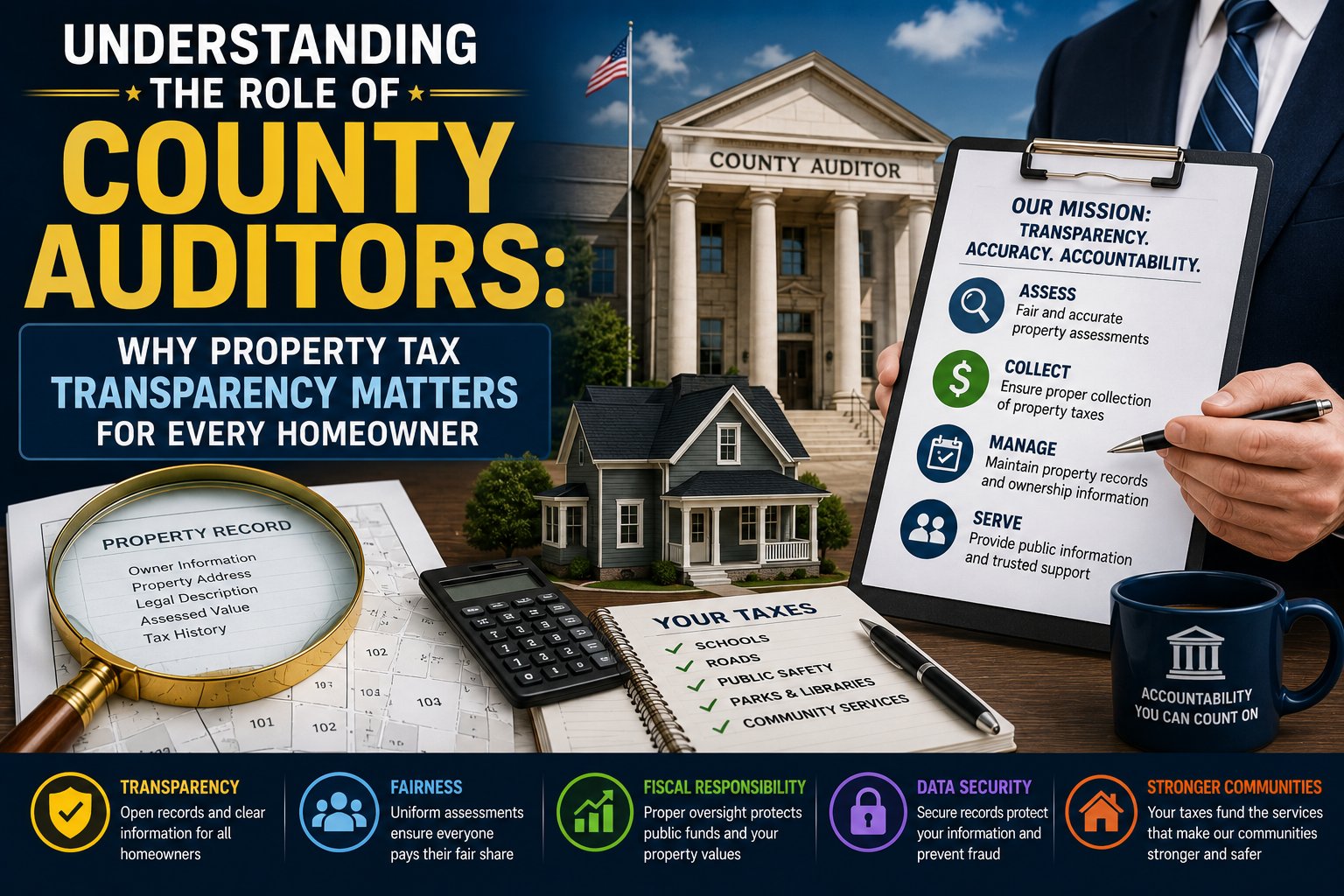
For most homeowners, property taxes are a regular part of owning a home. Each year, local governments assess taxes that help fund essential public services, including schools, roads, emergency response, libraries, and community infrastructure. While many people pay their property taxes without giving the process much thought, understanding how property assessments and public records work can make homeowners more informed and confident.
One of the key public offices involved in this process is the county auditor. Although the responsibilities of county auditors vary slightly from one jurisdiction to another, they generally play an important role in maintaining property records, administering assessments, and providing public access to real estate information.
Learning how county auditors contribute to transparency in local government can help homeowners better understand property values, tax assessments, and the public records associated with real estate ownership.
What Does a County Auditor Do?
A county auditor is a public official responsible for maintaining a variety of records related to property ownership and taxation. In many counties, the office oversees property assessments, updates ownership information, maintains parcel records, and provides public access to real estate data.
Depending on local laws and administrative structures, county auditors may also manage financial reporting, assist with budget oversight, and support other government functions.
For homeowners, however, the most familiar responsibilities typically relate to property records and assessments.
Why Property Assessments Are Important
Property assessments are used to estimate the taxable value of real estate.
These assessments help determine how property taxes are calculated, ensuring that tax responsibilities are distributed according to local regulations.
It’s important to understand that an assessed value is not necessarily the same as the market value of a home.
Market value reflects what buyers are willing to pay in current market conditions, while assessed values are determined according to established assessment procedures.
Recognizing this difference helps homeowners better interpret tax notices and public property records.
The Value of Public Property Information
Access to public property records promotes transparency within the real estate market.
Homeowners, buyers, lenders, researchers, and investors often rely on publicly available information to understand important characteristics of a property.
These records may include:
- Parcel identification numbers
- Property dimensions
- Assessment history
- Building characteristics
- Sales history
- Ownership information where publicly available
- Legal descriptions
Easy access to these records helps individuals make informed decisions when buying, selling, refinancing, or researching real estate.
How County Auditors Support Homeowners
Many homeowners only interact with the county auditor’s office when receiving an assessment notice.
However, the office provides valuable resources throughout the entire homeownership journey.
Homeowners may use county resources to:
- Review assessment information
- Verify parcel details
- Confirm ownership records
- Research neighborhood properties
- Access public real estate information
- Better understand local property taxation
These services contribute to a more transparent real estate environment.
Digital Services Have Improved Accessibility
Modern county offices increasingly provide online access to property information.
Instead of visiting government buildings during business hours, many homeowners can research assessment data and property records from home.
Digital access has improved convenience while encouraging greater public understanding of local property information.
Why Transparency Benefits Everyone
Transparent public records benefit more than individual homeowners.
They also help:
- Buyers research potential homes.
- Sellers verify property information.
- Appraisers evaluate comparable properties.
- Lenders review collateral.
- Researchers analyze housing trends.
- Local governments maintain public confidence.
Open access to accurate information strengthens trust throughout the real estate market.
Common Misunderstandings About County Auditors
“County Auditors Set My Property’s Market Price”
County auditors generally administer assessments for taxation purposes. Market prices are determined by buyers and sellers within the real estate market.
“Property Records Never Change”
Property information may change after sales, improvements, subdivisions, reassessments, or ownership transfers.
Reviewing current records is always advisable.
“Only Property Owners Use County Records”
Public property information is also used by investors, surveyors, financial institutions, insurance companies, legal professionals, and researchers.
Understanding Your Local Resources
When researching property information, homeowners should begin with official county sources whenever possible. Government-maintained records are typically the most reliable source for assessment information, parcel details, and publicly available ownership records.
For residents and property researchers in Ohio, the Stark County Auditor office provides access to property-related resources that support transparency and informed decision-making. Official county websites can serve as valuable starting points when reviewing assessment information or researching real estate within a specific jurisdiction.
Tips for Homeowners
To make better use of public property information:
- Review assessment notices carefully.
- Verify property details periodically.
- Understand the difference between assessed and market value.
- Keep records of significant property improvements.
- Use official government resources for research.
- Seek professional advice when making important financial decisions.
Taking these simple steps can improve confidence while reducing misunderstandings about property taxation.
The Future of Public Property Information
Technology continues to make public records more accessible than ever before.
Online databases, digital mapping systems, and searchable property records allow homeowners to access valuable information quickly and conveniently.
As these systems continue to improve, transparency within local government is likely to increase, giving homeowners even greater access to information about one of their most important financial assets.
Final Thoughts
County auditors play an essential role in supporting transparency within local government by maintaining property records, administering assessments, and providing public access to valuable real estate information. While many homeowners interact with these offices only occasionally, understanding their responsibilities can make navigating property ownership much easier.
Whether you’re buying a home, reviewing your property’s assessment, researching neighborhood information, or simply learning more about local government services, official county resources provide a reliable foundation for informed decision-making. By becoming familiar with the role of county auditors, homeowners can better understand the systems that support fair property taxation and transparent public records.