NASA autonomous spacecraft repair is one of the most important future technology areas in space exploration. Every spacecraft launched into orbit or deep space faces the same basic problem: once it is far from Earth, repair becomes extremely difficult. A broken valve, damaged sensor, empty fuel tank, stuck mechanism, or aging component can shorten a mission that took years and millions of dollars to build.
For most of space history, spacecraft were treated as machines that had to work perfectly after launch. If something failed, engineers on Earth could send software commands, change operating procedures, or use backup systems. But physical repair in space was rare, expensive, and usually required astronauts.
That approach is beginning to change. NASA autonomous spacecraft repair is connected to a broader field called in-space servicing, assembly, and manufacturing, often shortened to ISAM. NASA describes servicing as activities such as refueling, fixing, and upgrading spacecraft to make spaceflight more sustainable, affordable, and resilient.
In 2026, the most accurate way to understand this topic is that NASA is advancing robotic servicing, autonomous tool use, robotic arms, refueling demonstrations, inspection systems, and maintenance technologies. It does not mean that every NASA spacecraft can already repair itself completely. Instead, NASA is building and testing the technologies that could allow future spacecraft and robots to inspect, refuel, maintain, upgrade, or repair space systems with less direct human intervention.
Editorial Note
This article uses careful wording for accuracy. NASA autonomous spacecraft repair does not mean there is already one universal NASA spacecraft in 2026 that can fix every problem by itself. The more accurate explanation is that NASA is developing robotic servicing and autonomous maintenance technologies that may support future missions.
Confirmed examples include NASA’s history of robotic refueling demonstrations, ISAM technology development, robotic servicing arms, Dextre-based servicing work on the International Space Station, the Fly Foundational Robots demonstration planned for the future, and lessons from OSAM-1. Future possibilities include autonomous inspection, robotic refueling, modular repairs, spacecraft life extension, on-orbit upgrades, lunar surface maintenance, and robotic helpers for astronauts.
Key Facts About NASA Autonomous Spacecraft Repair
| Key Point | Simple Explanation |
|---|---|
| Spacecraft repair is difficult | Once a spacecraft is in orbit or deep space, physical access is limited. |
| NASA studies ISAM technologies | ISAM includes in-space servicing, assembly, and manufacturing. |
| Robotic servicing can extend mission life | Future systems may refuel, inspect, repair, or upgrade spacecraft. |
| Dextre has supported robotic servicing demonstrations | NASA’s Robotic Refueling Mission used the ISS robotic system to test servicing tasks. |
| OSAM-1 was discontinued | NASA canceled OSAM-1 due to cost, schedule, technical challenges, and a shift away from refueling unprepared spacecraft. |
| Robotic arms are central to repair | Servicing robots need dexterity, sensors, tools, software, and precise control. |
| Future robots may use autonomous tool use | NASA’s Fly Foundational Robots mission is planned to test robotic capabilities that could support repair, refueling, and construction. |
| 2026 is a development stage | NASA is advancing the field, not claiming routine universal autonomous repair is already complete. |
Why Spacecraft Repair Matters
Spacecraft are expensive, complex, and difficult to replace. A satellite may support weather forecasting, science, communication, Earth observation, or national infrastructure. A deep-space probe may take years to reach its destination. A space telescope may be impossible to replace quickly. A lunar system may be too far away for easy human repair.
If a spacecraft fails, the mission may end early. If it can be inspected, refueled, upgraded, or repaired, it may continue operating longer.
This is the basic reason NASA autonomous spacecraft repair matters. It could make space missions more flexible and less wasteful. Instead of throwing away spacecraft when fuel runs low or one part degrades, future servicing systems may allow mission teams to extend operational life.
NASA’s ISAM program explains that servicing, including refueling, fixing, and upgrading spacecraft, can make spaceflight more sustainable, affordable, and resilient.
What Is Autonomous Spacecraft Repair?
Autonomous spacecraft repair refers to the use of robotic systems, sensors, software, artificial intelligence, and remote-control tools to inspect, service, maintain, or fix spacecraft in space.
This may include:
Visual inspection
Robotic grasping
Tool use
Refueling
Coolant replenishment
Component replacement
Solar array repair
Antenna deployment support
Docking or capture
Fault detection
Autonomous decision support
Modular part swapping
Surface maintenance on the Moon or Mars
The word “autonomous” does not always mean fully independent. In many real missions, autonomy works together with human supervision. A robot may perform precise movements, use sensors to align with a target, or follow a programmed sequence, while mission controllers monitor and approve key steps.
This connects naturally with NASA AI navigation system for deep space because future repair robots may need smarter navigation, hazard detection, image recognition, and autonomous planning.
The Problem With Traditional Spacecraft Design
Most spacecraft are not designed like cars, aircraft, or machines on Earth. They are not easy to repair after launch. Many satellites were never built with refueling ports, standard access panels, replaceable modules, or robotic handling fixtures.
That creates a major challenge. A servicing spacecraft may need to approach a satellite that was never designed to be serviced. It may need to understand the shape, motion, materials, and access points of the target. It may need to cut insulation, remove caps, connect hoses, or handle delicate parts.
This is one reason autonomous spacecraft repair is so hard. The repair robot must work in microgravity, with limited visibility, communication delay, thermal changes, and no simple way to send a technician outside with normal tools.
Future spacecraft may be designed differently. If satellites and exploration systems are built with servicing in mind, repair becomes easier. Standard ports, modular parts, robotic interfaces, and service-friendly layouts could make future missions more maintainable.
NASA’s ISAM Vision
NASA’s In-Space Servicing, Assembly, and Manufacturing work is broader than repair alone. ISAM includes servicing spacecraft, assembling structures in space, and manufacturing components beyond Earth.
NASA’s ISAM page frames the field as a way to fix, refuel, upgrade, build, and maintain space systems more sustainably.
This matters because future space missions may not be limited to one sealed spacecraft launched from Earth. Instead, large telescopes, habitats, antennas, platforms, and transport systems could be assembled, maintained, or upgraded in space.
A simple example is a large space telescope. If it is too large to launch fully assembled, future robots may help assemble it in orbit. If one part fails later, another robotic system may inspect or replace a module. That would be very different from today’s mostly “launch and hope it lasts” model.
For a related future infrastructure topic, read NASA space habitat technology.
Robotic Refueling Mission: A Major Step Toward Servicing
NASA’s Robotic Refueling Mission, or RRM, is one of the most important examples of spacecraft servicing research. RRM used the International Space Station’s robotic systems to test tools and techniques for servicing spacecraft.
NASA explains that the ISS twin-armed Canadian Dextre robot acted as a skilled spacecraft refueling and servicing technician during RRM activities. The mission included a module with activity boards and stowed robotic tools designed for servicing demonstrations.
This is important because refueling is one of the most valuable forms of spacecraft servicing. Many satellites are limited by fuel. If a satellite runs out of propellant, it may no longer maintain its orbit, point instruments correctly, or avoid debris.
A future servicing robot that can refuel spacecraft could extend mission life and reduce the need to replace satellites as quickly.
Robotic Refueling Mission 3 and Long-Duration Exploration
NASA’s Robotic Refueling Mission 3, or RRM3, focused on advancing satellite servicing capabilities and enabling long-duration deep space exploration. NASA describes spacecraft consumables such as propellant and coolant as critical resources that eventually run out, and explains that RRM3 was designed to help advance the ability to replenish those supplies in space.
This connects repair with refueling. A spacecraft may not be “broken” in the normal sense, but if it runs out of consumables, its useful life may end. Replenishing propellant or coolant can be a form of mission-saving maintenance.
This also connects with NASA cryogenic propulsion advancement because future deep-space transportation may depend on better fluid transfer, storage, refueling, and servicing systems.
Robotic Servicing Arms: The Hands of Space Repair
A repair robot needs hands. In space, those hands are usually robotic arms, grippers, tools, sensors, and control software.
NASA’s robotic servicing arm work explains that the NASA servicing robot has seven degrees of freedom, similar to a human arm. It includes a three-axis shoulder, pitch actuator at the elbow, and a three-axis spherical wrist. NASA also describes features such as a six-axis force/torque sensor and a harness for data, power, and video.
This matters because repair requires precision. A robot may need to grab a spacecraft, turn a tool, connect a hose, remove a cap, cut material, or hold a component steady. Without dexterity and force feedback, the robot could damage the spacecraft it is trying to help.
A simple example is opening a stuck bottle cap while wearing thick gloves. The task is easy with bare hands, but difficult with limited touch and motion. Space repair is much harder because the robot must work in microgravity with expensive hardware and no room for careless movement.
Fly Foundational Robots: A Future Step Toward Autonomous Repair
One of the most relevant newer NASA technology efforts is Fly Foundational Robots, or FFR. NASA announced in December 2025 that the FFR mission would use a robotic arm from Motiv Space Systems capable of dexterous manipulation, autonomous tool use, and walking across spacecraft structures in zero or partial gravity. NASA said the mission could enable future ways to repair and refuel spacecraft, construct habitats and infrastructure in space, maintain life-support systems on lunar and Martian surfaces, and assist astronauts during extended missions.
This is one of the strongest current examples for a 2026 article because it directly connects robotic autonomy with repair, refueling, construction, and maintenance.
The important wording is “could enable.” FFR is not proof that routine autonomous repair is already operational everywhere. It is a technology demonstration that may help build the foundation for future robotic maintenance.
OSAM-1: An Important Lesson in Spacecraft Servicing
NASA’s OSAM-1 mission was once one of the most ambitious examples of robotic spacecraft servicing. It was designed to demonstrate on-orbit servicing, assembly, and manufacturing capabilities, including refueling a satellite that was not originally designed for servicing.
However, NASA decided to discontinue OSAM-1 in 2024 after an independent review identified technical, cost, and schedule challenges. NASA also cited a broader community evolution away from refueling unprepared spacecraft and a lack of a committed partner.
This is important to include because it keeps the topic accurate. NASA autonomous spacecraft repair is promising, but it is difficult. OSAM-1 shows that servicing old or unprepared spacecraft can be extremely complex and expensive.
The lesson is not that autonomous repair is impossible. The lesson is that future servicing may work better if spacecraft are designed from the beginning to be repaired, refueled, upgraded, or handled by robots.
Why Repairing “Unprepared” Spacecraft Is So Hard
An unprepared spacecraft is a spacecraft that was not designed for repair or refueling after launch. It may not have standard docking fixtures, accessible fuel ports, replaceable modules, or robotic handles.
Repairing this kind of spacecraft is extremely challenging. A robot may need to:
Approach without collision
Match the target’s motion
Identify safe grasping points
Avoid fragile components
Remove protective covers
Access hidden valves
Cut through insulation
Use specialized tools
Prevent contamination
Avoid creating debris
Complete the task without human hands nearby
This is why the future of spacecraft repair may depend on service-ready design. If spacecraft include standardized servicing ports, robotic interfaces, and modular components, future repair becomes safer and more practical.
Autonomous Inspection: The First Step Before Repair
Before a spacecraft can be repaired, it must be inspected. Autonomous inspection may become one of the most common early uses of repair technology.
A servicing robot or inspection spacecraft could approach a satellite, take images, scan surfaces, measure damage, check deployed structures, and help engineers understand the problem.
This can help with issues such as:
Damaged solar arrays
Failed antenna deployment
Thermal blanket damage
Micrometeoroid impacts
Docking port inspection
Fuel system assessment
External contamination
Unknown spacecraft behavior
End-of-life planning
Inspection may be less complex than physical repair, but it is still valuable. A mission team cannot fix what it cannot diagnose.
This connects with NASA deep space laser communication because high-quality data links can help send inspection images, telemetry, and repair status back to mission teams.
Refueling as a Form of Repair
Refueling is not always thought of as repair, but it can save a mission. Many spacecraft are still functional when they begin running low on propellant. Their instruments may work, their power systems may work, and their computers may work, but without fuel they cannot maintain orbit or attitude control.
A refueling mission could extend spacecraft life by adding propellant or coolant. This is especially valuable for satellites that are expensive to replace.
NASA’s RRM3 materials describe the challenge directly: spacecraft use consumables such as propellant and coolant for key functions, but these supplies eventually run out. RRM3 was developed to advance servicing capabilities and help enable longer missions.
In the future, spacecraft could be designed with standard refueling ports so robotic servicing becomes easier and more reliable.
Modular Spacecraft: Making Future Repairs Easier
One of the most practical ideas for future autonomous spacecraft repair is modular design. A modular spacecraft is built with parts that can be replaced more easily.
Instead of trying to fix a tiny component inside a sealed spacecraft, a robot could remove and replace a module. This is similar to replacing a computer part instead of rebuilding the entire machine.
Future spacecraft may include:
Replaceable battery modules
Standardized docking ports
Robotic handling fixtures
Accessible fuel ports
Swappable instruments
Modular avionics boxes
Service-friendly thermal panels
External inspection markers
Repair-compatible software interfaces
This design philosophy could make repair more practical. The robot does not need to perform every delicate task. It only needs to remove and replace units designed for servicing.
Autonomous Repair for Space Telescopes
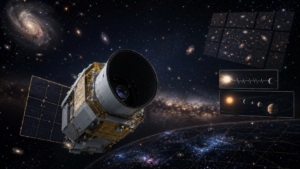
Space telescopes are especially important because they can be extremely expensive and scientifically valuable. The Hubble Space Telescope became famous partly because astronauts serviced it multiple times, repairing and upgrading its instruments.
Future telescopes may not always be reachable by astronauts. If they are placed far from Earth, robotic servicing may become more important.
Autonomous repair could help future telescopes by inspecting mirror systems, replacing instruments, adjusting components, or extending mission life. This would be especially useful for large observatories that are too expensive to abandon after a single failure.
The future may not repeat the exact Hubble servicing model. Instead of astronauts flying to a telescope, robots may perform some maintenance tasks, while engineers on Earth supervise operations remotely.
Autonomous Repair for Lunar and Mars Systems
Repair technology is not only for satellites in Earth orbit. Future Moon and Mars missions may need robotic maintenance on the surface.
A lunar habitat, rover, power station, communication tower, or life-support system may need inspection or maintenance when astronauts are unavailable. Robots could help check equipment, tighten connectors, clean surfaces, replace parts, or assist crew members.
NASA’s FFR announcement specifically mentions that such robotic capabilities could support maintaining life-support systems on lunar and Martian surfaces and serve as robotic assistants during extended missions.
This connects directly with NASA lunar surface mobility systems because lunar rovers and surface equipment will need long-term maintenance if humans are going to operate on the Moon for longer periods.
Practical Example: A Satellite Running Low on Fuel
Imagine an Earth-observing satellite that still has working cameras, solar panels, computers, and instruments. Its main problem is that its fuel is nearly gone.
Without propellant, it may not be able to maintain its orbit or point its instruments correctly. Traditionally, the mission might end even though most of the spacecraft still works.
A future servicing spacecraft could approach, dock or capture safely, connect to a refueling interface, transfer propellant, and allow the satellite to keep operating longer.
This is the basic promise of autonomous spacecraft servicing: extend the life of useful machines instead of replacing them immediately.
Practical Example: A Stuck Solar Array
Now imagine a spacecraft whose solar array does not fully deploy. The spacecraft may receive less power than planned, limiting its mission.
A robotic inspection vehicle could approach and examine the problem. If the spacecraft is designed for servicing, a robot may be able to push, pull, release a latch, remove an obstruction, or attach a helper device.
This kind of repair would be difficult and risky, but it shows why robotic servicing matters. Some mission failures may be physical problems that software alone cannot solve.
Practical Example: A Lunar Habitat Maintenance Robot
Imagine a future lunar habitat with a damaged external sensor, a dusty radiator, or a stuck connector. Sending astronauts outside for every small repair could be risky and time-consuming.
A robotic assistant could inspect the problem, use tools, send images to mission control, and perform basic maintenance. Astronauts could supervise from inside the habitat or from Earth when communication delay allows.
This type of robotic helper would not replace astronauts. It would reduce risk and save crew time.
For more background on future habitats, read NASA space habitat technology.
Confirmed Facts vs Future Possibilities
| Confirmed Fact | Future Possibility |
|---|---|
| NASA works on ISAM technologies for servicing, assembly, and manufacturing in space. | Future spacecraft may be designed from the start for robotic repair and upgrades. |
| NASA’s Robotic Refueling Mission used ISS robotic systems to test servicing tasks. | Future satellites may use standard refueling ports for easier robotic servicing. |
| RRM3 advanced satellite servicing and replenishment concepts. | Future spacecraft may receive propellant, coolant, or other consumables in space. |
| NASA has developed robotic servicing arm technologies with dexterous movement and force sensing. | Future repair robots may use more autonomous tool use and modular replacement systems. |
| NASA discontinued OSAM-1 after technical, cost, and schedule challenges. | Future servicing missions may focus more on prepared spacecraft and commercial servicing models. |
| NASA’s FFR mission is planned to test robotic manipulation, autonomous tool use, and movement across structures. | Similar robots may one day repair spacecraft, maintain habitats, or assist astronauts on the Moon and Mars. |
What People Often Get Wrong
One common misunderstanding is that NASA already has spacecraft that can completely repair themselves in 2026. That is not correct. NASA is developing robotic servicing and autonomous repair-related technologies, but routine self-repair is still a future goal.
Another misunderstanding is that repair only means fixing broken parts. In space, repair can also include refueling, inspection, coolant replenishment, software-supported troubleshooting, tool use, or replacing modular components.
A third misunderstanding is that any satellite can easily be repaired. Many satellites were not designed for servicing, which makes repair much harder.
A fourth misunderstanding is that OSAM-1 cancellation means spacecraft repair is no longer important. The better lesson is that servicing must be technically practical, cost-controlled, and aligned with spacecraft designs and real mission needs.
Benefits for the Reader
Understanding NASA autonomous spacecraft repair helps readers understand how the future of space missions may change.
First, it explains why spacecraft are hard to repair after launch.
Second, it shows how robotic servicing could extend satellite life and reduce waste.
Third, it explains why refueling, inspection, and modular design are part of the repair story.
Fourth, it helps readers understand why NASA’s robotic arm and ISAM work matters.
Fifth, it shows why future Moon and Mars missions may need robotic maintenance assistants.
Sixth, it gives a realistic view of 2026 progress without treating future concepts as already finished systems.
Why Autonomous Spacecraft Repair Could Revolutionize Space Missions
NASA autonomous spacecraft repair could revolutionize space missions because it changes the way spacecraft are designed and operated.
Instead of building every spacecraft as a single-use machine, engineers may design spacecraft to be inspected, refueled, upgraded, and maintained. This could extend mission life, reduce replacement costs, lower space debris risk, and support more ambitious missions.
The biggest change may be cultural. Spacecraft could become more like infrastructure. Just as aircraft, ships, and power stations are maintained over time, future spacecraft may also be serviced during their operating life.
That would make space operations more sustainable and flexible.
Challenges NASA Must Still Solve
Autonomous spacecraft repair still faces major challenges.
Robots must operate safely near expensive spacecraft. They must avoid collisions, understand target motion, use tools precisely, and prevent damage. They must work in microgravity, vacuum, radiation, temperature extremes, and complex lighting conditions.
Software must be reliable. Sensors must be accurate. Robotic arms must have enough dexterity. Servicing tools must fit the target spacecraft. Communication delay must be managed. Human supervisors must understand what the robot is doing.
Cost is also a challenge. OSAM-1 showed that ambitious servicing missions can become expensive and technically difficult. Future repair systems must prove that they can deliver practical value.
These challenges explain why autonomous repair is developing step by step.
Future Outlook: From Disposable Spacecraft to Maintainable Space Infrastructure
The future of space missions may move from disposable spacecraft toward maintainable space infrastructure.
This does not mean every spacecraft will be repaired. Some small satellites may still be cheaper to replace. But expensive scientific observatories, large communication platforms, lunar systems, Mars infrastructure, and long-duration spacecraft may benefit from servicing.
Future repair systems may include robotic inspectors, servicing spacecraft, modular spacecraft parts, refueling vehicles, autonomous tool-use robots, and surface maintenance robots for the Moon and Mars.
The most realistic future is not one robot that fixes everything. It is a network of design standards, repair-friendly spacecraft, servicing vehicles, robotic arms, mission planning, and autonomous software working together.
Frequently Asked Questions
What is NASA autonomous spacecraft repair?
NASA autonomous spacecraft repair refers to robotic and semi-autonomous technologies that may inspect, refuel, service, maintain, upgrade, or repair spacecraft in orbit, deep space, or on planetary surfaces.
Can NASA spacecraft repair themselves in 2026?
Not completely. NASA is developing robotic servicing and autonomous repair-related technologies, but a universal self-repairing spacecraft system is not operational in 2026.
What is ISAM?
ISAM stands for In-Space Servicing, Assembly, and Manufacturing. It includes technologies for servicing spacecraft, assembling structures in space, and manufacturing components beyond Earth.
What was NASA’s Robotic Refueling Mission?
NASA’s Robotic Refueling Mission used the International Space Station’s robotic systems to test tools and techniques for satellite servicing and refueling.
What was OSAM-1?
OSAM-1 was a NASA mission intended to demonstrate on-orbit servicing, assembly, and manufacturing. NASA discontinued the project in 2024 because of technical, cost, and schedule challenges.
Does OSAM-1 cancellation mean NASA stopped working on servicing?
No. OSAM-1 cancellation shows that some servicing approaches are difficult and expensive, but NASA continues broader ISAM and robotic servicing technology work.
What is Fly Foundational Robots?
Fly Foundational Robots is a NASA technology demonstration planned to use a robotic arm capable of dexterous manipulation, autonomous tool use, and movement across spacecraft structures. NASA says it could support future repair, refueling, construction, and astronaut assistance.
Why is robotic refueling important?
Robotic refueling can extend spacecraft life by replenishing propellant or other consumables that eventually run out.
Why are many spacecraft hard to repair?
Many spacecraft were not designed with repair in mind. They may lack standard access ports, docking fixtures, robotic handles, or replaceable modules.
Could autonomous repair help Moon and Mars missions?
Yes. Future lunar and Mars systems may need robotic maintenance for habitats, rovers, power systems, life support, and science equipment.
Conclusion
NASA autonomous spacecraft repair could change the future of space missions by making spacecraft easier to inspect, refuel, maintain, upgrade, and extend after launch. The idea is simple but powerful: instead of treating spacecraft as disposable machines, future missions may treat them as serviceable infrastructure.
In 2026, this field is still developing. NASA is not operating a universal self-repairing spacecraft system, but it is advancing many of the required technologies. Robotic refueling missions, ISAM research, robotic servicing arms, autonomous tool-use demonstrations, and lessons from OSAM-1 all show how complex and important this field has become.
The future may include satellites designed for refueling, spacecraft built with modular parts, robotic inspectors, servicing vehicles, lunar maintenance robots, and autonomous assistants for astronauts. These systems could help reduce waste, extend mission lifetimes, lower replacement costs, and support deeper exploration.
For readers, the key lesson is clear: the next revolution in space may not only be about launching farther. It may also be about learning how to repair, maintain, and upgrade what we have already sent into space.
Sources and Further Reading
NASA ISAM
NASA Robotic Refueling Mission 1 & 2
NASA Robotic Refueling Mission 3
NASA Robotic Servicing Arm
NASA Fly Foundational Robots
NASA OSAM-1 Mission
NASA Update on OSAM-1 Status
NASA Goddard ISAM Capabilities