Space travel is not like driving on Earth. A spacecraft cannot use road signs, traffic lights, or normal GPS once it travels far beyond our planet. It must understand its position, avoid hazards, follow a mission path, and sometimes make decisions while millions of miles away from human controllers.
This is why NASA AI navigation systems for deep space are becoming an important part of future space exploration. Artificial intelligence, autonomous navigation, optical sensing, onboard route planning, and spacecraft decision-making can help missions travel farther with less dependence on constant human instructions from Earth.
But this topic must be explained carefully. NASA has not announced one single fully operational “AI navigation system for deep space” that replaces all human mission control in 2026. The real story is more accurate and more interesting: NASA and JPL are already using autonomous navigation and AI-assisted planning in real missions, while future deep-space spacecraft may depend even more on onboard intelligence.
NASA says artificial intelligence allows spacecraft to make decisions and keep working when they are out of contact with Earth. NASA also states that Perseverance has done most of its driving autonomously by using cameras, onboard computing, hazard detection, and self-navigation tools.
Editorial Note
This article uses careful wording for accuracy. “NASA AI Navigation System for Deep Space 2026” should be understood as a developing technology pathway, not as a single finished GPS-like system already controlling every deep-space spacecraft.
Confirmed progress includes NASA’s autonomous Mars rover driving, JPL’s 2026 AI-planned Perseverance drive demonstration, Mars Global Localization, earlier deep-space AutoNav work, DART’s SMART Nav system, and distributed spacecraft autonomy research. Future possibilities include more autonomous spacecraft, AI-assisted mission planning, smarter lunar and Mars navigation, and spacecraft swarms that can coordinate with less delay from Earth.
This careful wording is important for reader trust, AdSense, Journey by Mediavine, Mediavine, and Raptive-quality publishing.
Key Facts About NASA AI Navigation Systems
| Key Point | Simple Explanation |
|---|---|
| GPS does not work normally in deep space | Spacecraft beyond Earth need other navigation methods. |
| NASA already uses autonomy in real missions | Perseverance can drive using onboard hazard detection and navigation. |
| AI is being tested for rover route planning | JPL demonstrated AI-planned drives for Perseverance in 2025 and announced them in 2026. |
| Mars Global Localization helps Perseverance find itself | The rover can match camera images with orbital maps to locate itself on Mars. |
| AutoNav is an older but important deep-space technology | It uses optical data to help spacecraft navigate without waiting for Earth. |
| DART used SMART Nav | The spacecraft autonomously targeted Dimorphos before impact. |
| Future spacecraft may need more autonomy | Communication delays make instant human control impossible in deep space. |
Why Deep Space Navigation Is So Difficult
On Earth, navigation feels simple because GPS, maps, internet signals, roads, and communication networks are available almost everywhere. In deep space, those systems do not exist in the same way.
A spacecraft traveling to Mars, an asteroid, Jupiter, or the outer solar system faces several problems.
First, there is no normal GPS network covering deep space. GPS satellites are designed mainly for Earth and near-Earth users. Second, communication takes time. A signal from Mars can take several minutes to reach Earth, depending on the distance between the planets. For outer solar system missions, communication delays can be much longer. Third, spacecraft must operate in environments where hazards can appear suddenly, such as rough terrain, dust, rocks, shadowed regions, or fast-moving targets.
NASA’s NESC Academy explains that because GPS is not available in deep space, autonomous navigation can use passive optical data and reduce delays caused by round-trip light time and ground processing. This can reduce navigation reaction time from much longer delays to minutes or even seconds in some mission situations.
In simple words, deep-space missions need spacecraft that can “think” more for themselves.
What Is an AI Navigation System in Space?
An AI navigation system in space is not the same as a human pilot. It is a combination of sensors, software, cameras, maps, onboard computers, algorithms, and decision-making rules that help a spacecraft or rover understand where it is and how to move safely.
Such a system may use:
Cameras
Star trackers
Optical navigation images
Terrain maps
Hazard detection software
Machine learning models
Generative AI planning tools
Autonomous guidance algorithms
Inertial sensors
Radio tracking updates
Mission-control commands
The AI part usually helps with pattern recognition, route planning, image analysis, hazard detection, and decision support. The navigation part helps determine position, direction, velocity, and safe paths.
A simple example is a rover on Mars. It may take images of the ground, identify rocks or slopes, compare the terrain with maps, select a safe route, and drive without waiting for humans to plan every small movement.
For a related future-navigation topic, read our article on NASA quantum navigation in space, because future spacecraft may combine AI, atomic clocks, optical navigation, and quantum sensors.
NASA’s Confirmed AI Work in Space Navigation
NASA’s use of AI is not only theoretical. NASA has already used autonomous and AI-supported systems in Mars exploration.
The clearest recent example is Perseverance. In January 2026, NASA’s Jet Propulsion Laboratory announced that Perseverance completed the first drives on another world that were planned by artificial intelligence. The demonstration used generative AI to create waypoints for the rover, a task usually performed by human rover planners.
This does not mean the rover became uncontrolled or independent from NASA. The AI helped plan safe route options using mission data. NASA still applied careful mission operations, testing, validation, and responsible use. That distinction is important because real space AI must be reliable, tested, and carefully controlled.
The benefit is clear: AI can reduce workload, help missions respond faster, and allow rovers to travel more efficiently across difficult terrain.
Perseverance: A Real Example of AI-Assisted Navigation
Perseverance is one of the best examples for explaining NASA AI navigation in simple words.
On Mars, there is no road network and no normal GPS. The rover must move across rocks, slopes, sand, craters, and uneven surfaces. Human planners on Earth cannot control it like a remote-control car because of communication delays.
Perseverance uses cameras and onboard systems to detect terrain and avoid hazards. NASA says the rover can acquire terrain images, analyze them with onboard computing, identify hazards, and navigate around obstacles. NASA also notes that a large share of Perseverance’s driving has been autonomous.
The 2026 AI-planned drive demonstration added another layer. Instead of humans manually selecting every waypoint, the AI system helped create a safe route using the same types of data that human planners use. JPL said this demonstration could help future missions operate more efficiently, respond to difficult terrain, and increase science return as distance from Earth grows.
For readers, the practical lesson is simple: AI can help a rover explore more ground while reducing unnecessary waiting time.
Mars Global Localization: Giving a Rover Better Self-Location
Another important 2026 development is Mars Global Localization.
In February 2026, JPL announced that Perseverance could autonomously pinpoint its location on Mars using a new technology called Mars Global Localization. The system compares panoramic images from the rover’s navigation cameras with onboard orbital terrain maps. JPL said the algorithm can locate the rover within about 10 inches, or 25 centimeters, and was first used successfully in regular mission operations in February 2026.
This is important because location errors build up as a rover drives. If a rover becomes uncertain about where it is, it may stop and wait for instructions from Earth. That slows down exploration.
Mars Global Localization helps solve this by allowing the rover to compare what it sees with stored orbital maps. JPL describes it as similar to giving the rover GPS on Mars, although Mars does not have a normal GPS satellite network.
This is one of the strongest real examples for your article because it connects directly with the idea of smarter navigation beyond Earth.
AutoNav: NASA’s Earlier Deep Space Navigation Foundation
AI navigation did not appear suddenly in 2026. NASA and JPL have worked on autonomous spacecraft navigation for decades.
One important example is AutoNav. NASA’s NESC Academy explains that onboard autonomous navigation was developed to overcome ground-based navigation delays. The system uses passive optical data and can operate in a self-contained way because GPS is not available in deep space. It was used in missions such as Deep Space 1, Stardust, and Deep Impact.
AutoNav helps explain the deeper history of the topic. Modern AI systems may feel new, but the basic goal has existed for a long time: help spacecraft determine their position and adjust mission behavior without waiting for slow Earth-based updates.
A simple example is a spacecraft approaching a comet. The target is moving, the spacecraft is moving, and communication is delayed. Autonomous navigation can help the spacecraft use onboard images to refine its path more quickly than waiting for every calculation to be done on Earth.
DART and SMART Nav: Autonomous Targeting in Action
NASA’s DART mission is another powerful example of autonomous navigation.
DART was a planetary defense test designed to impact the asteroid moonlet Dimorphos. During the final phase, the spacecraft had to identify the correct target and guide itself with extreme precision. NASA explains that SMART Nav was a set of computational algorithms on DART that worked with the guidance and navigation system to independently find Dimorphos and guide the spacecraft into it. NASA also noted that the final hours of the mission required operation without human intervention.
This matters because deep space is full of situations where real-time human control is impossible. A spacecraft may need to make final navigation decisions faster than humans on Earth can respond.
For a related internal topic, read our article on NASA planetary defense missions, because DART’s autonomous targeting is one of the strongest examples of smart spacecraft navigation.
Distributed Spacecraft Autonomy: Smarter Swarms for the Future
Future deep-space navigation may not involve only one spacecraft. NASA is also studying distributed spacecraft autonomy, where multiple spacecraft coordinate as a swarm.
NASA Ames explains that enhanced autonomy can make swarm operation in deep space feasible because spacecraft far from Earth may face communication delays of minutes or hours. NASA’s distributed spacecraft autonomy work includes software that allows a swarm to make collaborative decisions and optimize its mission with less constant communication from Earth.
NASA also describes simulations of lunar swarms that could provide position, navigation, and timing services around the Moon, similar in concept to how GPS supports location services on Earth. A second round of testing was expected to begin in 2026 using larger swarms and flight computers that could later support orbiting missions.
This is a good 2026 angle, but it must be worded carefully. It does not mean NASA already has a complete lunar GPS swarm operating in 2026. It means NASA is testing and scaling autonomy technologies that could support future navigation services.
How AI Navigation Could Help Deep Space Missions
AI navigation can help deep-space missions in several ways.
First, it can reduce delay. If a spacecraft can analyze its own surroundings and make safe decisions, it does not need to wait for every instruction from Earth.
Second, it can improve safety. AI can help detect rocks, slopes, craters, dust hazards, target objects, and possible navigation problems.
Third, it can increase science return. If a rover spends less time waiting and more time moving safely, it can explore more locations and collect more data.
Fourth, it can reduce workload for mission teams. Human planners still remain important, but AI can assist with repetitive or time-consuming route planning.
Fifth, it can support future missions farther from Earth, where communication delays become more serious.
This connects with NASA deep space laser communication because smarter navigation and stronger communication will both be needed for future Moon, Mars, asteroid, and outer solar system missions.
Practical Example: A Mars Rover Using AI Navigation
Imagine a rover on Mars approaching a rocky hill. Human planners want it to reach a scientific target, but the route includes stones, slopes, and loose soil.
A traditional workflow may require the rover to stop, take images, send data to Earth, wait for analysis, receive commands, and then move again.
An AI-assisted workflow could be faster. The rover takes images, analyzes the terrain, identifies hazards, compares its location with onboard maps, selects safer waypoints, and continues driving while still following mission rules.
This does not remove human oversight. It helps the rover use time more efficiently.
This is especially useful because Mars days are limited. Every hour spent waiting is an hour not spent exploring.
Practical Example: An Asteroid Mission Using Autonomous Targeting
Asteroids are small, irregular, and often difficult to target. A spacecraft approaching an asteroid may need to react quickly during final approach.
DART’s SMART Nav is a real example of this type of problem. The spacecraft had to identify Dimorphos, distinguish it from the larger asteroid Didymos, and guide itself into the correct target. NASA’s explanation of SMART Nav shows how autonomous guidance can be essential when timing and precision matter.
Future asteroid missions may need similar autonomy for landing, sampling, orbiting, mapping, or impact-deflection tests.
Practical Example: A Lunar Navigation Swarm
Future Moon missions may need reliable positioning services. Astronauts, rovers, landers, habitats, and cargo systems may all need accurate location information.
NASA’s distributed spacecraft autonomy work includes simulated lunar swarms that could provide position, navigation, and timing services. This could become important because lunar operations may involve multiple assets working together in orbit and on the surface.
A lunar swarm could support missions in regions where direct Earth communication is limited, such as the lunar far side or shadowed polar regions.
This topic connects naturally with your article on NASA Mars atmospheric entry technologies, because accurate navigation is also essential before landing on another world.
AI Navigation vs Traditional Space Navigation
| Traditional Space Navigation | AI-Assisted Space Navigation |
|---|---|
| Relies heavily on Earth-based tracking and human planning | Uses onboard analysis and autonomous decision support |
| Can be slowed by communication delays | Can respond faster in some mission situations |
| Works very well for many missions | Adds flexibility for complex or distant missions |
| Requires human teams to process large amounts of data | Can help filter, analyze, and recommend route options |
| Uses radio tracking, optical data, and mission calculations | Can combine those methods with machine learning and autonomy |
| Still essential today | Likely to become a stronger support layer in future missions |
The safest way to explain this is that AI will not instantly replace traditional navigation. It will likely work beside human mission control, radio tracking, optical navigation, star trackers, mapping systems, and onboard sensors.
Confirmed Facts vs Future Possibilities
| Confirmed Fact | Future Possibility |
|---|---|
| NASA uses AI and autonomy in space operations. | Future spacecraft may use more advanced onboard AI for deep-space navigation. |
| Perseverance has performed autonomous driving on Mars. | Future Mars rovers may travel farther with less human route planning. |
| JPL demonstrated AI-planned Perseverance drives in 2025 and announced them in 2026. | Generative AI may become a more common planning assistant for planetary rovers. |
| Mars Global Localization helps Perseverance locate itself without human help. | Similar map-matching systems could support future rovers on the Moon and Mars. |
| AutoNav was developed for autonomous deep-space navigation using optical data. | Future spacecraft may combine optical navigation with AI, quantum sensors, and autonomous planning. |
| DART used SMART Nav for autonomous targeting. | Future planetary defense missions may use even smarter autonomous guidance. |
| NASA is testing distributed spacecraft autonomy. | Future spacecraft swarms may provide navigation and timing support around the Moon or Mars. |
This section is important because it protects the article from exaggerated claims. NASA AI navigation is real, but it should not be described as a completed universal system replacing all existing navigation methods in 2026.
Why AI Navigation Matters for Astronauts
Future astronauts traveling to the Moon, Mars, or deep space will need reliable navigation. They may operate in places where communication with Earth is delayed, blocked, or limited.
AI navigation could support crew safety by helping spacecraft and surface vehicles:
Avoid hazards
Plan safer routes
Identify landing risks
Support emergency maneuvers
Reduce crew workload
Improve situational awareness
Assist with docking or rendezvous
Help rovers and habitats coordinate
For astronaut safety, AI navigation is only one part of the system. Radiation protection, life support, communication, power, medical planning, and mission design are also essential. For a related safety topic, read our article on NASA magnetosphere observation missions, because space weather and magnetic environments can affect spacecraft systems.
Why AI Navigation Matters for Robotic Missions
Robotic spacecraft often go where humans cannot easily go. They explore Mars, asteroids, icy moons, comets, and distant planets.
AI navigation can help robotic missions by making them more flexible. A rover can decide how to move across rough ground. An asteroid spacecraft can adjust its approach. A satellite swarm can coordinate tasks. A deep-space probe can react faster to changing conditions.
This can increase science return. Instead of waiting for Earth to analyze every image and command every movement, a spacecraft can perform some decisions onboard.
This does not mean robots replace scientists. It means scientists can use robots more effectively.
Reader Benefits: Why This Topic Matters
Understanding NASA AI navigation systems for deep space gives readers several benefits.
First, it explains why normal GPS is not enough beyond Earth.
Second, it shows how spacecraft can travel smarter when communication delays make real-time control impossible.
Third, it helps readers understand why Mars rovers need autonomy to explore safely.
Fourth, it connects AI with real NASA missions instead of treating it like science fiction.
Fifth, it explains how smarter navigation could support future Moon, Mars, asteroid, and outer solar system missions.
Sixth, it helps readers understand the future of space exploration in a realistic way: not magic, not hype, but step-by-step improvements in autonomy, sensing, computing, and mission planning.
Challenges of AI Navigation in Deep Space
AI navigation is promising, but it is not simple.
Space systems must be extremely reliable. A navigation mistake can waste fuel, damage equipment, miss a target, or end a mission. That is why NASA tests autonomy carefully before using it in real operations.
Major challenges include:
Radiation effects on electronics
Limited onboard computing power
Communication delays
Unexpected terrain
Dust, shadows, and lighting changes
Sensor errors
Thermal stress
Software validation
Mission safety requirements
Need for human oversight
Difficulty of testing every possible scenario
AI systems also need trustworthy data. If a system misinterprets an image or underestimates a hazard, the spacecraft could make a poor decision. This is why AI in space must be controlled, validated, and integrated with traditional engineering safeguards.
What People Often Get Wrong
One common misunderstanding is that AI navigation means a spacecraft becomes fully independent from NASA. That is not true. AI can support decisions, but mission teams still design, monitor, validate, and control mission objectives.
Another misunderstanding is that NASA has already launched a universal AI navigation system for all deep-space missions in 2026. That is not confirmed. NASA has demonstrated important AI and autonomy technologies, but a single universal system does not yet replace traditional navigation.
A third misunderstanding is that AI is only useful for robots. In reality, AI navigation could also support future crewed missions by reducing workload and improving safety.
A fourth misunderstanding is that GPS works normally everywhere in space. NASA’s own autonomous navigation training material explains that GPS is not available in deep space, which is why other methods are needed.
How AI Navigation Connects With Other Future Space Technologies
AI navigation will not work alone. It will connect with many other systems.
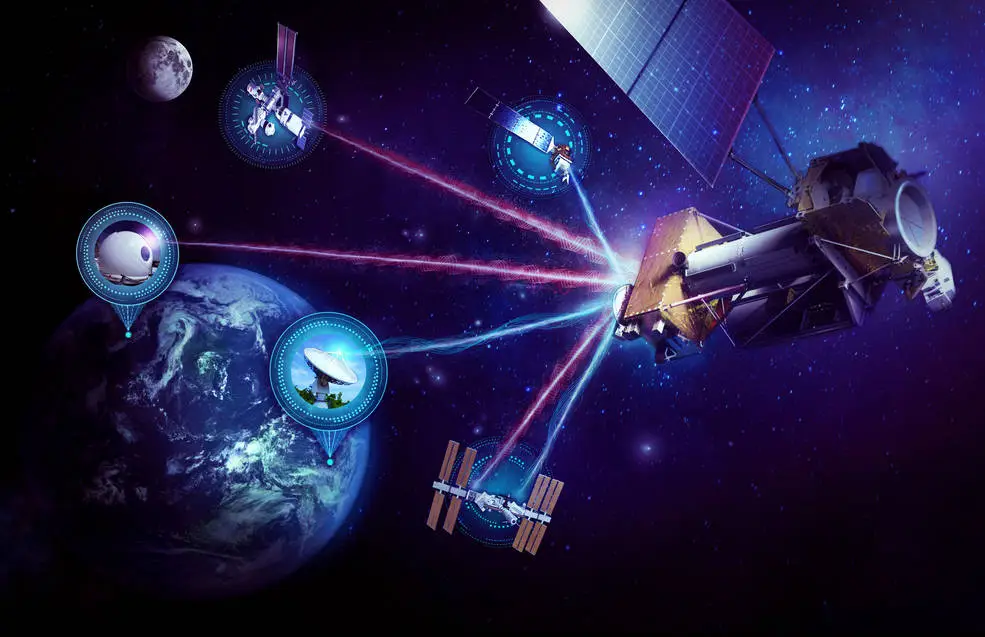
Deep space communication will help send data between spacecraft and Earth. Optical communication may increase data capacity for future missions. Onboard sensors will help spacecraft understand their environment. Quantum navigation may improve timing and measurement. Space weather forecasting may help protect electronics. Autonomous planning software may help spacecraft respond faster to risks.
This is why NASA’s future space exploration is not about one single invention. It is about a network of technologies working together.
Internal reading suggestion: after this article, readers should also explore NASA deep space laser communication and NASA quantum navigation in space.
Future Outlook: Will AI Control Deep Space Missions?
AI will likely become more important in deep-space missions, but it will not remove human mission control.
The realistic future is shared control. Human teams will set mission goals, safety rules, science priorities, and operational limits. AI systems will help with local decisions, route planning, hazard avoidance, image analysis, and fast reactions when Earth is too far away for instant control.
For example, a future Mars rover may receive a science target from Earth, then use AI to choose the safest route. A future asteroid probe may use autonomous targeting during final approach. A lunar swarm may coordinate navigation and timing services with less constant instruction from Earth.
This is the future of smarter journeys beyond Earth: not uncontrolled robots, but carefully tested autonomous systems working with human experts.
Frequently Asked Questions
What is NASA AI navigation for deep space?
NASA AI navigation for deep space refers to autonomous systems, algorithms, sensors, cameras, onboard computers, and AI-assisted planning tools that help spacecraft and rovers navigate far from Earth.
Does NASA have a complete AI navigation system in 2026?
NASA has confirmed important AI and autonomous navigation progress, including Perseverance AI-planned drives and Mars Global Localization. However, there is no single universal AI navigation system replacing all deep-space navigation in 2026.
Why does deep space need AI navigation?
Deep space needs smarter navigation because GPS does not work normally far beyond Earth, and communication delays make instant human control impossible.
What is Perseverance’s AI-planned drive?
In 2026, JPL announced that Perseverance completed drives on Mars that were planned using artificial intelligence. The AI helped generate waypoints for safe rover travel across Martian terrain.
What is Mars Global Localization?
Mars Global Localization is a JPL technology that helps Perseverance determine its precise location on Mars by comparing rover camera images with onboard orbital maps.
What is AutoNav?
AutoNav is an autonomous navigation system developed for deep-space missions. It uses optical data and can help spacecraft navigate without relying entirely on delayed Earth-based processing.
What was SMART Nav?
SMART Nav was the autonomous navigation system used by NASA’s DART mission to identify and target Dimorphos during the final approach.
Can AI replace human mission control?
No. AI can assist with navigation, planning, and decision-making, but human teams still define mission goals, safety limits, and scientific priorities.
How does AI help Mars rovers?
AI can help Mars rovers detect hazards, plan routes, identify safe waypoints, reduce waiting time, and explore more efficiently.
Could AI navigation help astronauts?
Yes. Future AI navigation systems could help astronauts with route planning, hazard detection, docking support, emergency decisions, and surface exploration on the Moon or Mars.
Conclusion
NASA AI navigation systems for deep space are helping shape the future of smarter space exploration. The most accurate way to explain this topic is not to claim that NASA has already replaced all navigation with one finished AI system in 2026. The real story is that NASA is carefully building and testing autonomy step by step.
Confirmed examples already exist. Perseverance has used autonomous driving on Mars. JPL demonstrated AI-planned rover drives and Mars Global Localization. AutoNav showed how spacecraft can use optical data for deep-space navigation. DART’s SMART Nav proved that autonomous targeting can work in a high-pressure mission. NASA’s distributed spacecraft autonomy research points toward future swarms that may support navigation and timing services around the Moon and beyond.
For readers, the benefit is clear: AI navigation can help spacecraft travel farther, react faster, avoid hazards, reduce delays, and collect more science. It is not science fiction. It is a practical technology pathway that will likely become more important as missions move deeper into the solar system.
The future of space travel will not depend on AI alone. It will depend on human expertise, spacecraft engineering, communication networks, optical navigation, sensors, atomic clocks, mission control, and carefully tested autonomous systems working together.
That is what makes NASA AI navigation for deep space so important: it is not about replacing humans. It is about helping future missions make smarter journeys beyond Earth.
Sources and Further Reading
NASA Artificial Intelligence
JPL: Perseverance Completes First AI-Planned Drive on Mars
JPL: Perseverance Now Autonomously Pinpoints Its Location on Mars
NASA NESC Academy: Autonomous Deep Space Navigation
NASA SMART Nav
NASA Distributed Spacecraft Autonomy
NASA Deep Space Optical Communications
JPL Deep Space Network