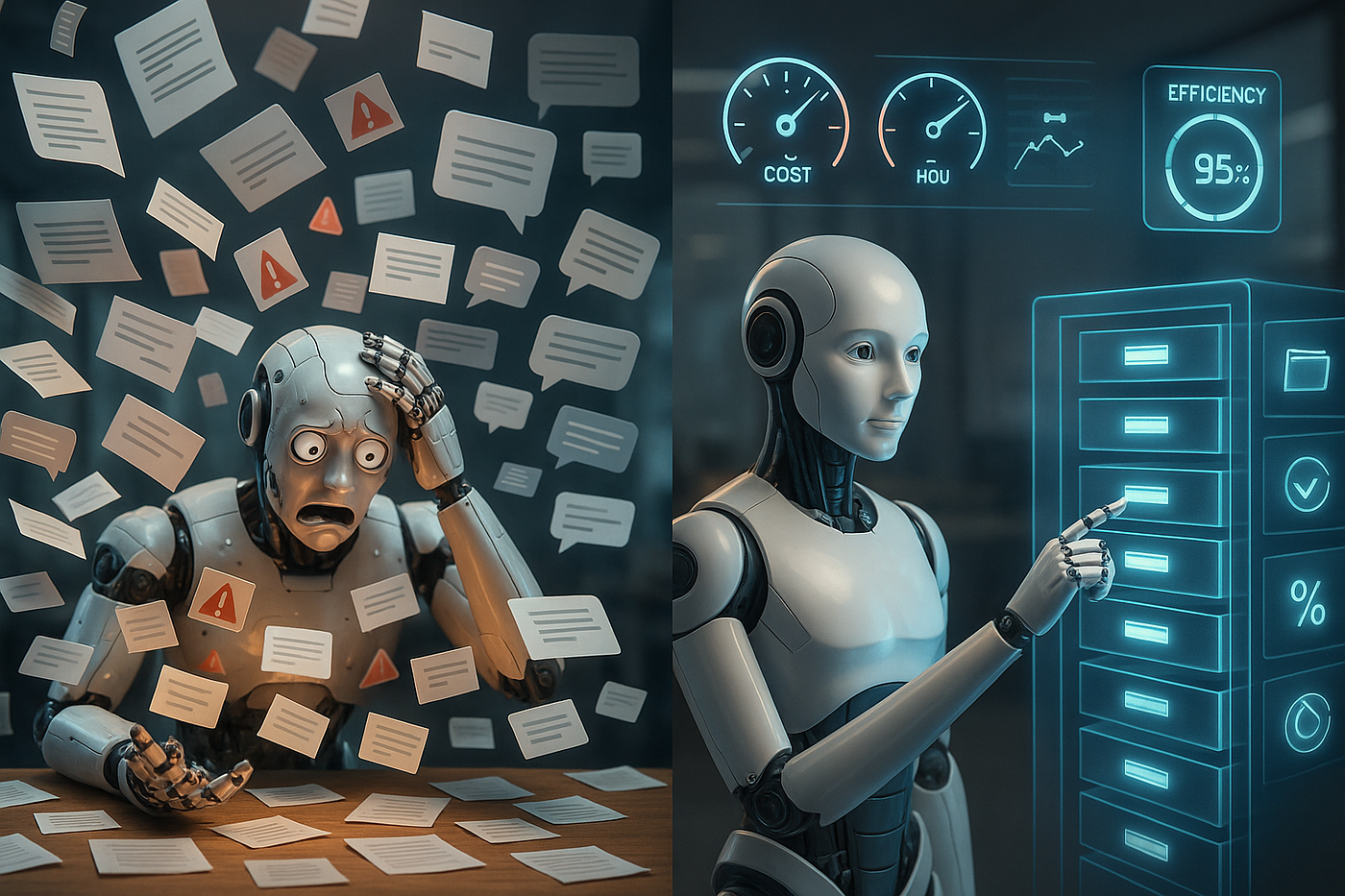
Artificial intelligence is no longer only about fast answers. The next major step is memory. A machine that can answer a question is useful, but a machine that can remember context, continue long-term work, understand user preferences, and adapt over time becomes far more powerful.
For years, many AI tools felt impressive but forgetful. They could write an article, explain a topic, summarize a document, generate code, or answer a question, but users often had to repeat the same instructions again and again. A student had to explain their learning level repeatedly. A writer had to repeat the required tone and structure. A business owner had to restate brand rules. A developer had to reload project context. The AI could perform well in the moment, but it often lacked continuity.
AI with long-term memory changes that experience.
Instead of starting from zero every time, a memory-enabled AI system can remember useful details across conversations and tasks. It can remember user preferences, goals, writing style, project history, work habits, learning needs, and previous instructions. This makes AI feel less like a one-time tool and more like a long-term digital assistant.
This does not mean AI has become conscious. It does not mean machines think, feel, or understand life like humans. But it does mean AI is becoming more practical, more personal, and more capable of supporting real work over time. In 2026, AI with long-term memory is one of the clearest signs that artificial intelligence is moving from short-term chatbots toward truly useful intelligent machines.
Editorial Note
This article explains current AI memory features, industry trends, benefits, risks, and future possibilities. It does not claim that AI systems are conscious, alive, or human-like. The phrase “truly intelligent machines” is used to describe AI systems that can remember context, adapt to users, support long-term tasks, and behave more like reliable digital assistants. Current AI memory is powerful, but it is still different from human memory and human understanding.
Key Statistics and Facts
| Fact | Why It Matters |
|---|---|
| Stanford HAI reported that 78% of organizations used AI in 2024, up from 55% in 2023. | AI is becoming a normal part of work, not just an experiment. |
| Stanford HAI reported that global private investment in generative AI reached $33.9 billion in 2024. | Businesses and investors are putting major resources into advanced AI systems. |
| OpenAI says ChatGPT memory can include saved memories and chat history reference, with user controls to manage or delete memory. | Long-term memory is already a real user-facing AI feature. |
| Microsoft says Copilot Memory can remember preferences, working style, and recurring topics for personalization. | Enterprise AI is moving toward workplace memory and controlled personalization. |
| Google describes Gemini Personal Intelligence as AI help that can use user context across Google apps and chat history preferences. | AI memory is expanding beyond single chat sessions into broader digital ecosystems. |
| Anthropic documents memory tools for agent and developer workflows. | Memory is becoming important for AI agents and long-running tasks. |
These facts show why AI memory matters in 2026. AI is no longer only a tool for quick answers. It is becoming part of daily work, education, research, writing, software development, business operations, and personal productivity. The more people use AI repeatedly, the more valuable long-term memory becomes.
What Is AI with Long-Term Memory?
AI with long-term memory means an artificial intelligence system can store useful information and use it again in future interactions. This memory may include user preferences, project details, writing style, goals, previous decisions, repeated instructions, business rules, learning needs, or task history.
In simple words, AI long-term memory helps a machine remember what matters.
A basic AI chatbot can answer a single prompt. A memory-enabled AI assistant can answer with awareness of previous context. For example, if a user regularly asks for detailed educational articles, the AI can remember the preferred structure. If a student is preparing for exams, the AI can remember the subject level. If a business owner prefers a formal writing tone, the AI can apply that style in future work.
This makes the AI more useful because the user does not need to explain everything again each time. The system can produce answers that feel more relevant, more consistent, and more aligned with the user’s real needs.
Long-term memory can appear in different forms. Some AI systems save direct user preferences. Some use previous chat history. Some connect to files, apps, emails, documents, or company databases. Some developer tools allow AI agents to store and retrieve memory during long-running workflows. The main purpose is the same: preserve useful context so future responses become better.
AI memory is also closely connected to the rise of autonomous AI systems. To understand that connection more deeply, you can read this explanation of Agentic AI Tools and intelligent automation.
Why Long-Term Memory Is a Big Step for Artificial Intelligence
Memory is one of the biggest differences between a simple tool and a useful assistant. A tool only performs a task when asked. An assistant understands context, remembers preferences, and helps over time.
Without memory, AI is limited. It may be powerful, but it is disconnected from the user’s long-term goals. It cannot easily remember what work has already been done, what the user prefers, or what direction a project is taking.
With memory, AI becomes more continuous. It can support repeated work, long-term planning, learning, writing, research, business processes, and multi-step projects. This is why long-term memory is so important for the future of intelligent machines.
A memory-enabled AI assistant can remember useful details such as:
The user’s preferred writing style.
The user’s explanation level.
The user’s project goals.
The user’s previous corrections.
The user’s preferred formatting.
The user’s repeated tasks.
The user’s long-term strategy.
The user’s important instructions.
This kind of continuity changes the experience completely. The AI no longer feels like a new tool every time. It starts to feel like a digital assistant that understands the user’s workflow.
How AI Long-Term Memory Works
AI long-term memory does not work exactly like human memory. Human memory is biological, emotional, sensory, and connected to lived experience. AI memory is digital. It stores, retrieves, and applies information through software systems.
The basic process usually has three stages.
First, the AI identifies useful information. This may be a user preference, a project detail, a recurring instruction, or an important fact.
Second, the system stores that information. Depending on the platform, it may be stored as a saved memory, chat history reference, file, database record, vector entry, or enterprise knowledge object.
Third, the system retrieves relevant memory when needed. When the user asks a new question, the AI can check whether any stored context helps produce a better answer.
For example, if a user says they prefer detailed explanations with tables, FAQs, sources, and careful wording, a memory-enabled AI can remember that preference. Later, when the user gives only a topic, the AI can apply the remembered style automatically.
This is not magic. It is context management. But context management is extremely important because better context often leads to better answers.
Types of AI Memory
AI memory can be understood in several categories.
| Type of Memory | Meaning | Example |
|---|---|---|
| Short-term context | Information remembered only inside the current conversation | The AI remembers what the user said earlier in the same chat |
| Saved memory | Specific information stored for future conversations | The AI remembers a user’s preferred writing format |
| Chat history reference | The system uses previous conversations to personalize future responses | The AI recalls previous project direction |
| External memory | Information stored in files, apps, documents, or databases | A company knowledge base or project folder |
| Vector memory | Searchable memory based on meaning and similarity | The AI finds previous notes related to the current request |
| Agent memory | Memory used by AI agents to track goals and completed steps | An AI agent remembers what task it completed yesterday |
This matters because “AI memory” is not a single thing. It can be personal, professional, technical, temporary, long-term, private, or enterprise-controlled depending on how the system is designed.
Confirmed AI Memory Features vs Future Possibilities
AI memory is real, but it is important to avoid exaggeration. Some features already exist. Other ideas are still developing.
| Area | Current Status |
|---|---|
| AI assistants remembering user preferences | Already available in several modern AI products |
| ChatGPT saved memories and chat history reference | Confirmed feature with user controls |
| Microsoft Copilot Memory for workplace personalization | Confirmed enterprise feature direction |
| Gemini personalization through Google apps and chat history preferences | Confirmed personalization direction |
| Claude memory tools for developer and agent workflows | Confirmed in Anthropic documentation |
| AI with human consciousness | Not confirmed |
| AI that understands exactly like a human brain | Not confirmed |
| Fully autonomous lifelong AI workers with perfect memory | Future possibility |
| AI memory with perfect accuracy and no privacy risk | Not current reality |
This distinction is important for trust. AI memory can make machines more useful and more intelligent in behavior, but it does not prove that AI has human awareness. A strong understanding of this topic should be clear: memory improves continuity, personalization, and usefulness, but it does not make AI human.
This is also important in broader debates about whether machines may eventually become smarter than humans. For more context on that debate, read Will AI Ever Be Smarter Than Humans?.
Why 2026 Is a Turning Point for AI Memory
The year 2026 is important because AI is moving from simple chat toward long-term assistance. In the early stage of generative AI, most people used AI for single tasks: write this email, summarize this paragraph, explain this topic, create this code, or generate this idea.
Now the focus is changing. Users want AI that can support ongoing work. Businesses want AI that understands company context. Students want AI tutors that remember weak areas. Writers want AI assistants that remember tone and structure. Developers want coding agents that understand project history. Professionals want digital assistants that can handle complex workflows.
This shift requires memory.
Without memory, an AI system remains powerful but repetitive. With memory, it can become adaptive. It can remember what has been done, what matters, and what should happen next.
The rise of AI agents also makes memory more important. AI agents are systems that can plan, use tools, and complete multi-step tasks. For agents, memory is not just a comfort feature. It is part of reliability. An agent that cannot remember goals, steps, or user preferences cannot manage complex work effectively.
How AI Memory Makes Machines More Useful
AI memory makes machines more useful because it reduces repetition and improves relevance. The system can adjust answers based on what it already knows about the user or task.
A writing assistant can remember article structure and tone.
A study assistant can remember weak topics and preferred explanation style.
A business assistant can remember brand rules and workflow preferences.
A coding assistant can remember project architecture and coding standards.
A research assistant can remember source preferences and research questions.
A customer support AI can remember previous support issues and user history.
This is why long-term memory can make AI feel more intelligent. The intelligence is not only in the model’s ability to generate text. It is also in the system’s ability to use context properly.
A forgetful AI may give a good answer once. A memory-enabled AI can become better aligned with the user over time.
Practical Uses of AI with Long-Term Memory
AI with long-term memory can be useful in many real situations. It is not only a futuristic idea. It can already help people organize work, reduce repetition, and improve consistency.
| Use Case | How Long-Term Memory Helps |
|---|---|
| Education | Remembers student level, weak areas, and preferred explanation style |
| Writing | Remembers tone, structure, audience, and editing preferences |
| Business | Remembers brand rules, customer context, workflows, and project details |
| Software development | Remembers coding standards, architecture, and debugging history |
| Research | Remembers source preferences, research questions, and previous findings |
| Customer support | Remembers past issues, user history, and support preferences |
| Personal productivity | Remembers goals, habits, schedules, and recurring tasks |
The value of AI memory is not only that it stores information. The value is that it brings the right information back at the right time.
AI Memory and Personalization
Personalization is one of the strongest benefits of AI memory. A personalized AI can shape its answers based on the user’s needs, goals, and preferences.
For example, two users may ask the same question: “Explain machine learning.” A beginner may need simple language and basic examples. A software engineer may need technical depth. A business owner may need practical use cases. A student may need exam-focused points.
AI memory helps the system understand which type of answer is best for each user.
Google’s Gemini Personal Intelligence shows how AI personalization is moving toward broader personal context. Instead of relying only on one chat message, AI systems are increasingly being designed to understand user preferences, past conversations, and connected digital activity when the user allows it.
However, personalization must be handled carefully. Users need control. The AI should not remember sensitive information without permission. It should not make people feel watched. It should not store unnecessary details. Good AI memory should be useful, transparent, editable, and optional.
AI Memory and the Rise of AI Agents
AI agents are one of the biggest reasons long-term memory matters. A chatbot can answer a single question with little memory. An agent that manages work over time needs continuity.
An AI agent may need to remember:
The user’s goal.
The project deadline.
The tools it can use.
The work already completed.
The mistakes already found.
The user’s preferred output format.
The next step in the plan.
Without memory, an agent becomes unreliable. It may repeat steps, forget instructions, or lose track of the larger goal. With memory, it can operate more like a real assistant.
This is especially important for business automation. Companies want AI agents that can help with customer support, data analysis, marketing, document review, scheduling, sales, software development, and internal operations. In these areas, memory helps the system act with continuity instead of isolated responses.
AI agents are one of the major technology shifts shaping the future. You can also explore this broader trend in Latest Science and Technology News: 7 Breakthroughs Shaping 2026.
Benefits of AI with Long-Term Memory
AI with long-term memory can benefit many areas of life and work.
The first benefit is productivity. Users spend less time repeating instructions and more time getting useful results.
The second benefit is consistency. AI can maintain the same tone, structure, rules, and preferences across multiple tasks.
The third benefit is better learning. A memory-enabled tutor can remember what a student struggles with and adjust explanations accordingly.
The fourth benefit is stronger writing support. Writers can maintain consistent voice, structure, and quality across long projects.
The fifth benefit is improved business support. AI can remember company policies, customer history, internal procedures, and project context.
The sixth benefit is better software development. Coding assistants can remember architecture, naming rules, libraries, and previous debugging steps.
The seventh benefit is better long-term planning. AI can help users track goals, compare progress, and continue projects over time.
These benefits explain why memory is becoming a core part of modern AI systems. It is not only about making AI “smarter.” It is about making AI more useful in real work.
Risks of AI Long-Term Memory
AI memory also creates serious risks. A system that remembers more can help more, but it can also create privacy, security, and accuracy concerns.
The first risk is privacy. If AI remembers personal information, users must know what is stored and how it is used.
The second risk is inaccurate memory. AI may remember something incorrectly or apply an old preference when it no longer fits.
The third risk is over-personalization. If AI becomes too shaped by past behavior, it may reduce variety or reinforce existing assumptions.
The fourth risk is security. In business settings, memory may include sensitive company information. Strong access controls are necessary.
The fifth risk is compliance. Enterprises may need retention policies, audit controls, eDiscovery, and data governance.
The sixth risk is user trust. If AI remembers information without clear control, users may feel uncomfortable. Memory should not feel hidden or forced.
Good AI memory must balance usefulness with safety. The best systems will remember the right things, at the right time, with user permission and clear controls.
Privacy and User Control
Privacy control is one of the most important parts of AI memory. Users should be able to see what the AI remembers, edit it, delete it, turn memory off, or use temporary conversations when they do not want information saved.
OpenAI says ChatGPT users can control saved memories and chat history reference, ask ChatGPT to forget information, and use Temporary Chat for conversations that do not use or update memory. This kind of control is important because memory should serve the user, not trap the user.
This is an important point for anyone using AI. Memory settings matter. Different AI systems may store and use information in different ways. Users should understand what is being remembered and how to manage it.
In the future, trust may become one of the main competitive advantages in AI. Users will not only ask which AI is smartest. They will ask which AI remembers responsibly.
Human Memory vs AI Memory
AI memory can be useful, but it is not human memory.
Human memory is connected to emotion, experience, identity, senses, and biological processes. People remember moments, feelings, relationships, and meaning. Human memory is not just data storage. It is part of consciousness and personal life.
AI memory is different. It stores information in digital systems and retrieves it when useful. It does not experience the memory. It does not feel nostalgia, regret, happiness, fear, or attachment. It does not understand personal meaning like a human being does.
This difference matters because AI memory should not be confused with human awareness. A machine may remember that a user prefers detailed explanations, but it does not care about that preference in a human emotional sense. It uses the information to produce a better response.
The simplest way to explain it is this: AI memory gives machines continuity, not humanity.
How AI Memory Could Change Education
Education may become one of the biggest areas affected by AI memory. A memory-enabled AI tutor can remember a student’s level, weak areas, learning style, and exam goals.
For example, if a student struggles with algebra, the AI can provide more basic steps in future math explanations. If a student prefers short notes, the AI can avoid long paragraphs. If a student is preparing for board exams, the AI can keep answers exam-focused.
This can make learning more personalized. Instead of giving the same explanation to every student, AI can adapt to each learner’s needs.
However, AI should support teachers, not replace them. Teachers provide motivation, discipline, emotional understanding, classroom experience, and human guidance. AI memory can help students practice and revise, but human education remains essential.
How AI Memory Could Change Business
Businesses depend on context. A company has policies, brand rules, customers, products, workflows, documents, and long-term goals. Without memory, business AI must be repeatedly told the same information.
A memory-enabled business AI can remember brand guidelines, customer preferences, meeting summaries, project history, and internal processes. This can improve productivity and reduce repeated explanations.
For example, a marketing team could use AI that remembers campaign tone, target audience, brand restrictions, and previous content direction. A customer support team could use AI that remembers past issues and support rules. A management team could use AI that remembers project status and company priorities.
But business memory also needs strong control. Companies must decide what AI can remember, who can access it, how long it is stored, and how sensitive information is protected.
This is why enterprise AI memory is both a productivity tool and a governance challenge.
How AI Memory Could Improve Creative Work
AI with long-term memory could change creative work by helping writers, designers, educators, marketers, researchers, and teams maintain continuity across projects. Creative work is not only about producing one draft. It often depends on style, audience, research, previous decisions, revisions, and long-term direction.
A memory-enabled AI assistant could remember the creator’s preferred tone, common themes, audience level, formatting style, and previous feedback. This can reduce repeated instructions and help the creative process move faster.
For example, a writer may prefer clear explanations, short paragraphs, careful wording, and strong source checking. A memory-enabled AI could remember these preferences and apply them in future drafts. A designer may prefer a clean visual style, specific color direction, or certain brand rules. A memory-enabled AI could help keep future ideas aligned with that creative identity.
AI memory can also help with research continuity. A person working on a long topic may collect sources, notes, definitions, statistics, and expert references over time. AI memory can help organize that information and bring it back when needed. This can make future work more accurate and easier to continue.
Another benefit is editing. If the system remembers common mistakes, preferred formatting, or previous corrections, it can help avoid repeating the same problems. Over time, this can lead to cleaner drafts, stronger explanations, and better reader experience.
However, AI memory should not replace human judgment. Creators still need to check facts, add original thinking, review sources, and make sure the final work genuinely helps the audience. The best use of AI memory is not automatic mass production. Its best use is better planning, stronger consistency, and higher-quality creative support.
In simple words, AI memory can help creative work move from one-time drafting to long-term collaboration. It can remember what works, support the creator’s process, and help produce work that is clearer, more consistent, and more useful.
AI Memory in Healthcare, Finance, and High-Stakes Fields
AI memory could also help in high-stakes fields, but these areas require extra caution.
In healthcare, memory could help an assistant remember patient preferences, medical history, or care instructions. But health data is sensitive, and mistakes can be serious. Any healthcare AI memory system must follow strict privacy, security, and professional standards.
In finance, memory could help track goals, risk preferences, spending habits, and investment constraints. But financial advice must be accurate, regulated, and carefully controlled.
In legal work, memory could help organize case context and documents. But confidentiality, privilege, and accuracy are critical.
This means AI memory is not equally simple in every field. The more sensitive the information, the stronger the safety rules must be.
Comparison: AI Without Memory vs AI with Long-Term Memory
| Feature | AI Without Long-Term Memory | AI with Long-Term Memory |
|---|---|---|
| User preferences | Must be repeated often | Can be remembered and reused |
| Long projects | Harder to continue smoothly | Easier to continue across sessions |
| Personalization | Limited to current prompt | Can improve over time |
| Productivity | More repeated setup | Less repeated explanation |
| Risk level | Lower memory privacy risk | Requires stronger privacy controls |
| Best use | One-time tasks | Ongoing work, learning, planning, and assistance |
This comparison shows why memory is a major step forward, but also why it needs careful design. More memory can create more usefulness, but only when users remain in control.
What People Get Wrong About AI with Long-Term Memory
Many people misunderstand AI memory.
The first mistake is thinking memory means consciousness. It does not. AI can remember useful facts without being aware or alive.
The second mistake is thinking AI memory is always perfect. It is not. Memory can be incomplete, outdated, or incorrectly applied.
The third mistake is thinking more memory is always better. Sometimes less memory is safer. Not every detail should be stored.
The fourth mistake is assuming personalization always improves answers. Personalization can help, but it can also create bias if the AI only reinforces what the user already believes.
The fifth mistake is ignoring privacy. Long-term memory is powerful, but it must come with clear user control.
The sixth mistake is treating future possibilities as current facts. AI memory is improving quickly, but fully autonomous lifelong AI workers with perfect memory are not today’s reality.
These misunderstandings matter because public trust depends on accurate explanation. AI memory should be presented as a useful technological advancement, not as science fiction.
Timeline: How AI Memory Is Evolving
| Period | Development |
|---|---|
| Early chatbot era | AI mostly answered isolated prompts with little or no long-term memory |
| Generative AI boom | AI became strong at writing, coding, summarizing, and reasoning inside a conversation |
| Memory features emerge | AI assistants started saving preferences and using past conversations |
| AI agents expand | AI began moving toward multi-step tasks, tool use, and workflow automation |
| 2026 direction | Long-term memory becomes central to personalization, productivity, and agent reliability |
| Future possibility | AI assistants may manage long-term projects with stronger memory, permissions, and governance |
This timeline shows that AI memory is not a sudden miracle. It is a gradual shift from short-term chat toward persistent assistance.
The Future of Truly Intelligent Machines
The future of intelligent machines will not depend only on larger models. It will depend on how well AI can combine reasoning, memory, tools, personalization, and trust.
A useful AI assistant should understand the task, remember relevant context, use tools when needed, respect privacy, and improve the user’s workflow over time. Long-term memory is a major part of that future.
However, the best future is not an AI that remembers everything. That could become intrusive and risky. The best future is an AI that remembers the right things, forgets when asked, protects sensitive data, and keeps the user in control.
In 2026, AI with long-term memory is not the final destination. It is a major step. It moves artificial intelligence closer to becoming a reliable digital partner for work, learning, creativity, and everyday life.
This development also connects with many other future technologies, including robotics, automation, personal assistants, and advanced computing. For a broader look at future innovation, read 5 Future Inventions That Could Change the World.
Frequently Asked Questions
What is AI with long-term memory?
AI with long-term memory is artificial intelligence that can remember useful information across conversations or sessions. This may include user preferences, project details, writing style, goals, previous instructions, or work history.
Does AI long-term memory mean AI is conscious?
No. AI long-term memory does not mean consciousness. It means the system can store and retrieve useful context. Current AI systems do not have human experiences, emotions, or biological awareness.
Why is long-term memory important for AI?
Long-term memory helps AI become more personalized, consistent, and useful. It allows AI assistants to support ongoing projects instead of treating every conversation as a completely new task.
How does AI memory work?
AI memory can work through saved memories, chat history reference, files, databases, vector search, connected apps, or enterprise knowledge systems. The AI stores useful context and retrieves it when relevant.
Can users control AI memory?
In many modern AI systems, users can manage memory settings. For example, ChatGPT allows users to control saved memories and chat history reference, ask it to forget information, or use temporary chats for conversations that do not use or update memory.
What are the risks of AI memory?
The main risks include privacy concerns, inaccurate memory, outdated information, over-personalization, security issues, and weak governance in business settings.
How can AI memory help businesses?
AI memory can help businesses by remembering brand guidelines, project history, customer context, internal policies, and workflow rules. This can improve productivity, but it requires strong data protection.
Is AI with long-term memory available now?
Yes. Memory and personalization features already exist in several AI systems, including ChatGPT, Microsoft Copilot, Gemini, and Claude developer tools. However, the technology is still developing and should not be confused with human-like understanding.
Conclusion
AI with long-term memory is one of the most important developments in artificial intelligence in 2026. It changes AI from a one-time answering tool into a more continuous assistant that can remember context, adapt to users, support long-term projects, and reduce repeated work.
This does not mean AI has become human. It does not mean machines are conscious. But it does mean AI is becoming more useful in practical ways. Memory allows AI to understand what matters to a user over time, maintain consistency, and provide better support with less repeated explanation.
The future of AI will depend heavily on how memory is designed. If memory is accurate, transparent, secure, and controlled by users, it can make AI assistants far more powerful. If memory is unclear, intrusive, or poorly governed, it can damage trust.
The simplest way to understand this shift is this: intelligence without memory is limited. AI with long-term memory is not human intelligence, but it is a major step toward machines that can act like reliable long-term digital assistants. In 2026, that may be one of the biggest changes shaping the future of artificial intelligence.
Sources and Further Reading
OpenAI: Memory and New Controls for ChatGPT
Google Gemini: Personal Intelligence
Anthropic Claude Docs: Memory Tool