The internet has transformed almost every aspect of modern life, including the way people research real estate. Not long ago, gathering information about a property often meant visiting government offices, requesting paper records, or relying entirely on real estate agents. Today, much of that information is available online through official county databases and public record systems.
Whether you’re purchasing your first home, comparing neighborhoods, researching an investment opportunity, or simply learning more about your own property, online property search tools provide valuable information that can support better decision-making.
While these databases aren’t intended to replace professional advice from real estate agents, attorneys, or appraisers, they offer an excellent starting point for understanding a property’s history, characteristics, and publicly available assessment information.
What Is an Online Property Search?
An online property search is a digital tool provided by many local governments that allows users to search publicly available real estate records.
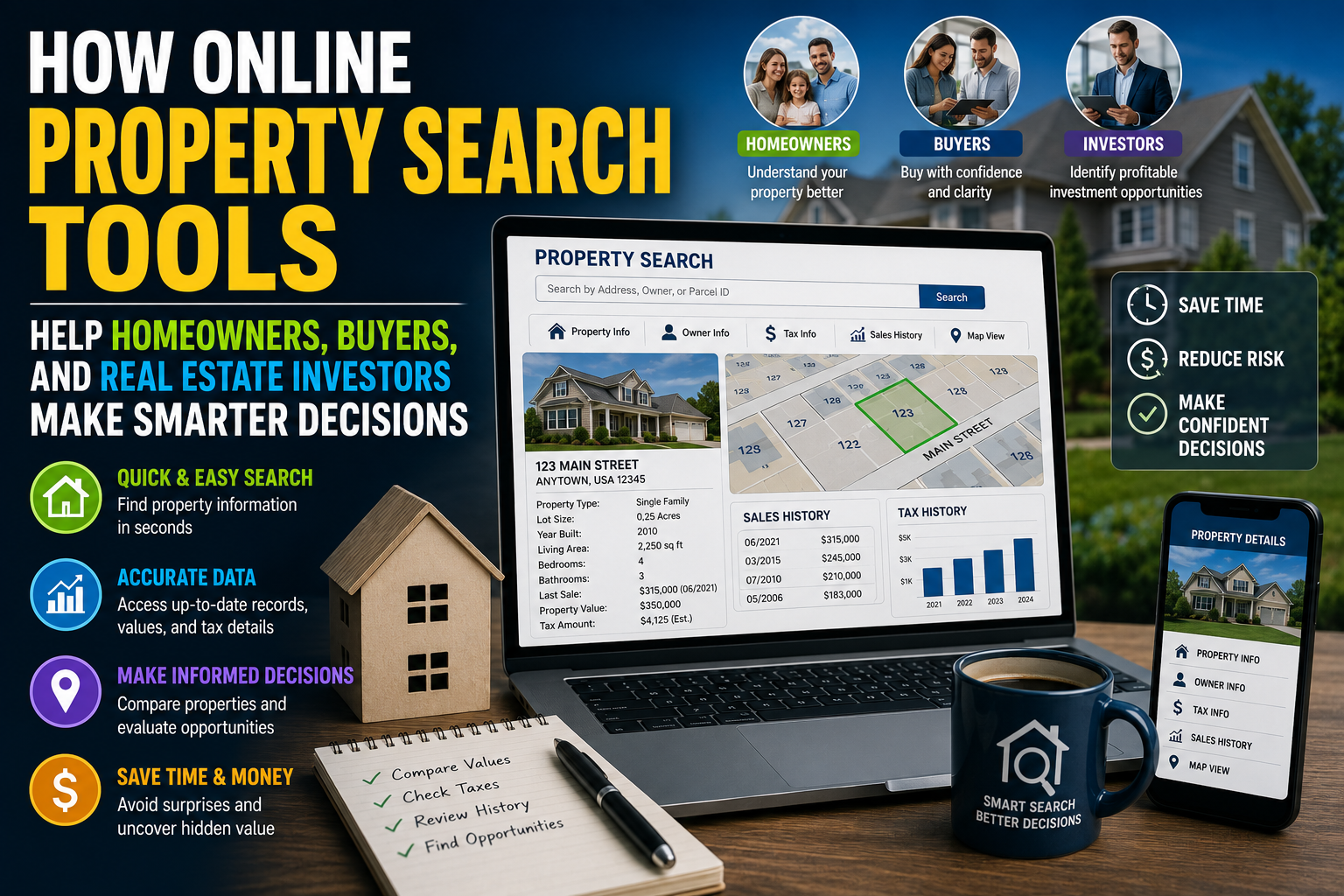
Depending on the county, these systems may include information such as:
- Property address
- Parcel number
- Owner information (where publicly available)
- Land size
- Building details
- Property characteristics
- Assessed value
- Tax history
- Sales history
- Legal descriptions
Because the information comes directly from county records, these systems help improve transparency while making property research far more convenient than traditional paper-based methods.
Why Property Search Tools Matter
Before making one of the biggest financial decisions of your life, having access to reliable information is essential.
Online property search systems allow users to verify important details independently instead of relying solely on marketing materials or verbal descriptions.
Having access to official records can help answer questions such as:
- Has the property changed ownership recently?
- What is the assessed value?
- How large is the parcel?
- What improvements have been recorded?
- What does the property tax history look like?
These insights provide valuable context before making financial commitments.
Benefits for Homebuyers
Buying a home involves much more than finding an attractive listing.
Property search tools allow buyers to better understand what they’re purchasing.
For example, buyers can:
- Confirm lot dimensions.
- Compare neighboring properties.
- Review assessment history.
- Verify publicly available building information.
- Better understand local tax records.
Conducting this research early can help buyers ask better questions during the purchasing process.
Benefits for Current Homeowners
Property search tools aren’t just for buyers.
Current homeowners often use them to:
- Review annual assessments.
- Verify property information.
- Prepare refinancing applications.
- Research neighborhood sales.
- Plan future improvements.
- Monitor publicly available records.
Checking your property’s public information periodically helps ensure records remain accurate.
Benefits for Real Estate Investors
Investors frequently analyze multiple properties before making purchasing decisions.
Online search systems allow them to gather consistent information efficiently.
By comparing assessment history, parcel characteristics, and publicly available property details, investors can identify opportunities that deserve further professional evaluation.
Property Search Supports Greater Transparency
Public access to property information promotes fairness within the real estate market.
Instead of relying solely on advertisements or unofficial sources, buyers and homeowners can review information maintained by local government offices.
Greater transparency encourages more informed decisions while reducing misunderstandings during transactions.
Understanding Assessment Information
One of the most commonly viewed sections within property search systems is the assessed value.
It’s important to remember that assessed value is generally established for taxation purposes.
Market value, on the other hand, reflects what buyers are currently willing to pay.
Although these values sometimes align closely, they often differ because they serve different purposes.
Recognizing this distinction helps users interpret property information more accurately.
Digital Access Makes Research Easier
Modern online systems allow homeowners to conduct property research from virtually anywhere.
Instead of traveling to government offices during business hours, users can often access property information online whenever it is convenient.
This improved accessibility benefits homeowners, buyers, researchers, lenders, and professionals alike.
Using Official County Resources
When researching real estate, official government sources are generally the most reliable place to begin. County offices maintain property databases that are regularly updated and designed to provide accurate public information about parcels, assessments, and ownership records where permitted by law.
For homeowners researching real estate in Ohio, the Cuyahoga County Auditor Property Search tool offers an official starting point for locating publicly available property records and assessment information. Beginning with county-maintained resources helps users access consistent information before seeking additional professional guidance.
Common Misunderstandings
“Everything Online Is Automatically Accurate”
Although official county databases are among the most reliable sources available, records can occasionally change following ownership transfers, reassessments, or property improvements.
Always review the most current available information.
“Property Search Replaces Professional Advice”
Online records are excellent research tools but should complement—not replace—the advice of qualified real estate professionals, attorneys, surveyors, or tax experts when making major financial decisions.
“Only Buyers Use Property Search”
Homeowners, lenders, insurance companies, investors, appraisers, contractors, and researchers all use public property databases for different purposes.
Best Practices When Researching Property
To make the most of online property search tools:
- Verify the property address carefully.
- Review multiple years of assessment history.
- Compare nearby properties when appropriate.
- Understand the difference between assessed and market value.
- Use official county resources whenever possible.
- Consult professionals before making significant financial decisions.
These practices improve both accuracy and confidence during the research process.
Looking Ahead
As more government services continue moving online, digital property search systems are becoming increasingly valuable for homeowners and real estate professionals alike.
Easy access to reliable public information supports transparency, encourages informed decision-making, and helps individuals better understand one of their most important financial investments.
Final Thoughts
Online property search tools have made researching real estate faster, more convenient, and more transparent than ever before. Whether you’re buying your first home, monitoring your current property’s assessment, comparing neighborhoods, or evaluating an investment opportunity, these resources provide valuable insights drawn from official public records.
While they should always be used alongside professional advice when necessary, county property search systems remain one of the best starting points for understanding real estate information. By learning how to use these tools effectively, homeowners and buyers can approach property decisions with greater confidence and a stronger understanding of the information that matters most.